These spice storage ideas for tiny kitchens will end the daily dig through a jumbled cabinet for the paprika. If your spices live in a crowded pile — half in packets, half in jars you can’t tell apart — you are not alone. Spices are small, they multiply fast, and in a tiny kitchen there is no spare shelf for them. The fix is not a bigger kitchen. It is giving every spice one visible home, close to the stove, so cooking takes minutes and hunting takes seconds.
Good spice storage does three things: it keeps every jar visible at a glance, it uses space your kitchen is already wasting (doors, walls, the side of the fridge), and it keeps spices fresh — away from heat, light and damp. Here are 15 spice storage ideas for tiny kitchens — most cost under $25, and all of them work in rentals.
1. Decant Into Matching Uniform Jars
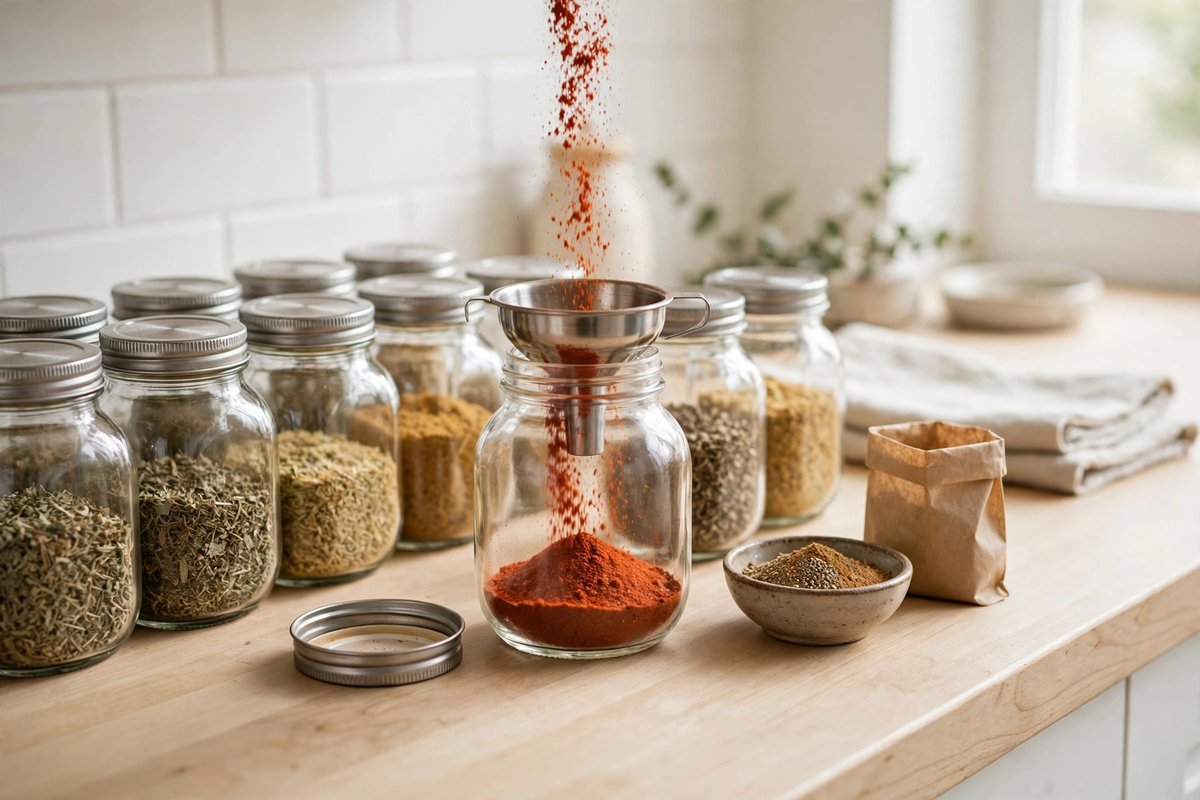
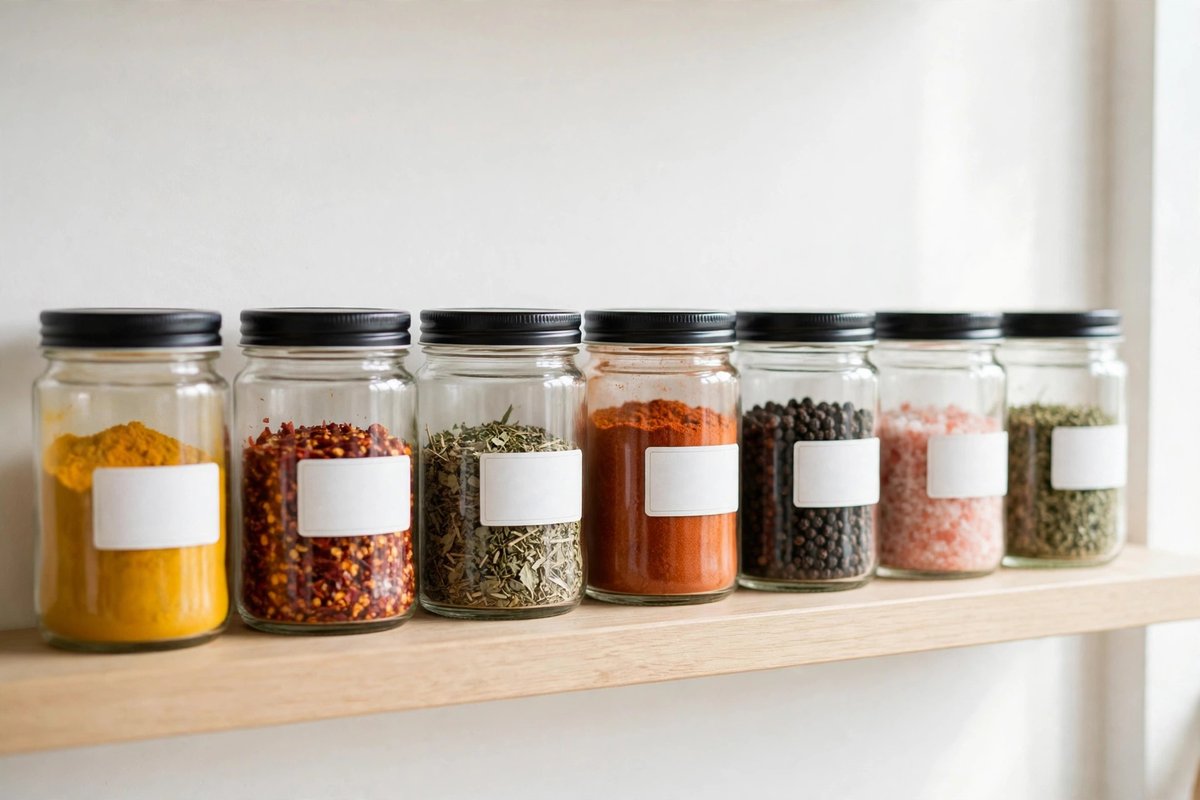
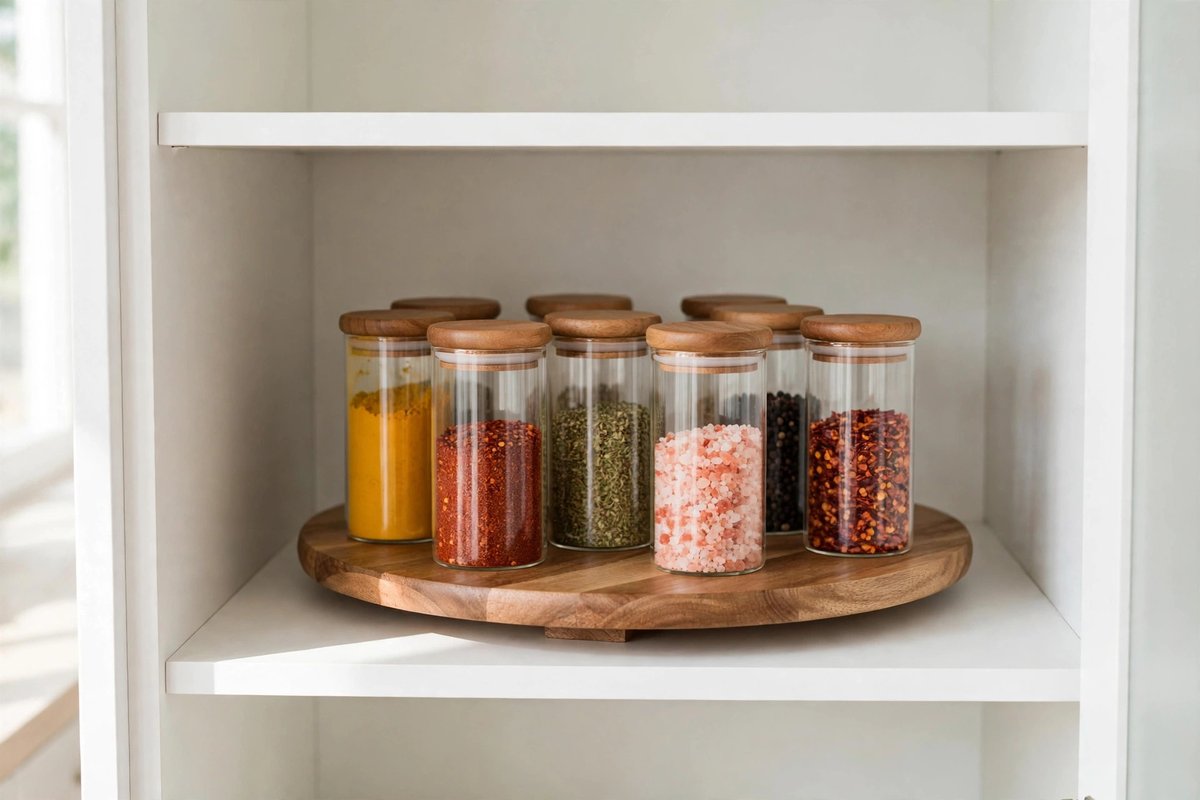
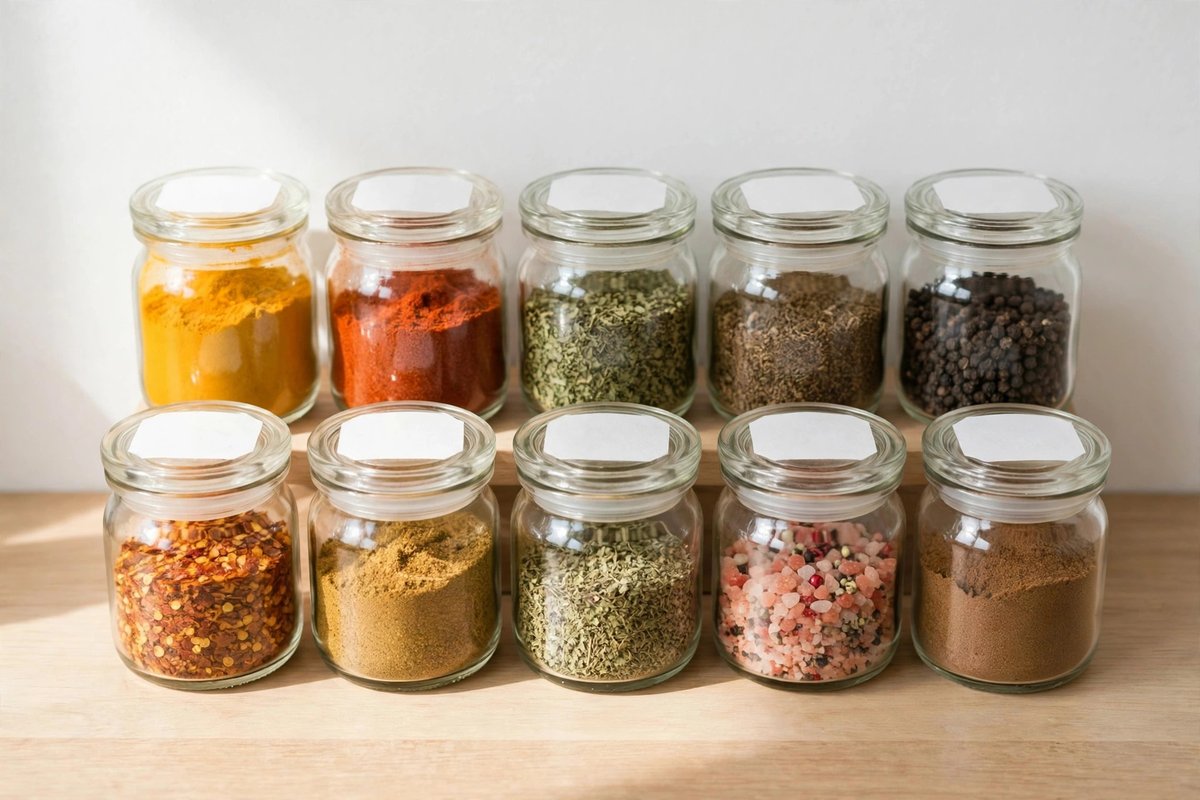
The single biggest upgrade for spice storage ideas for tiny kitchens is also the cheapest: get the spices out of their mismatched packets and into identical jars. Matching glass jars ($12–$20 for a set of 12) stack neatly, sit level on a shelf, and let you see at a glance what is inside and how much is left. Pick one jar size — 4 oz works for most spices — and use it for everything. Buy jars with airtight lids, because a loose lid is how spices go stale in a month. Decant one evening, label as you go, and the shelf will look twice as organized before you buy a single rack.
2. Stick a Magnetic Strip on the Wall
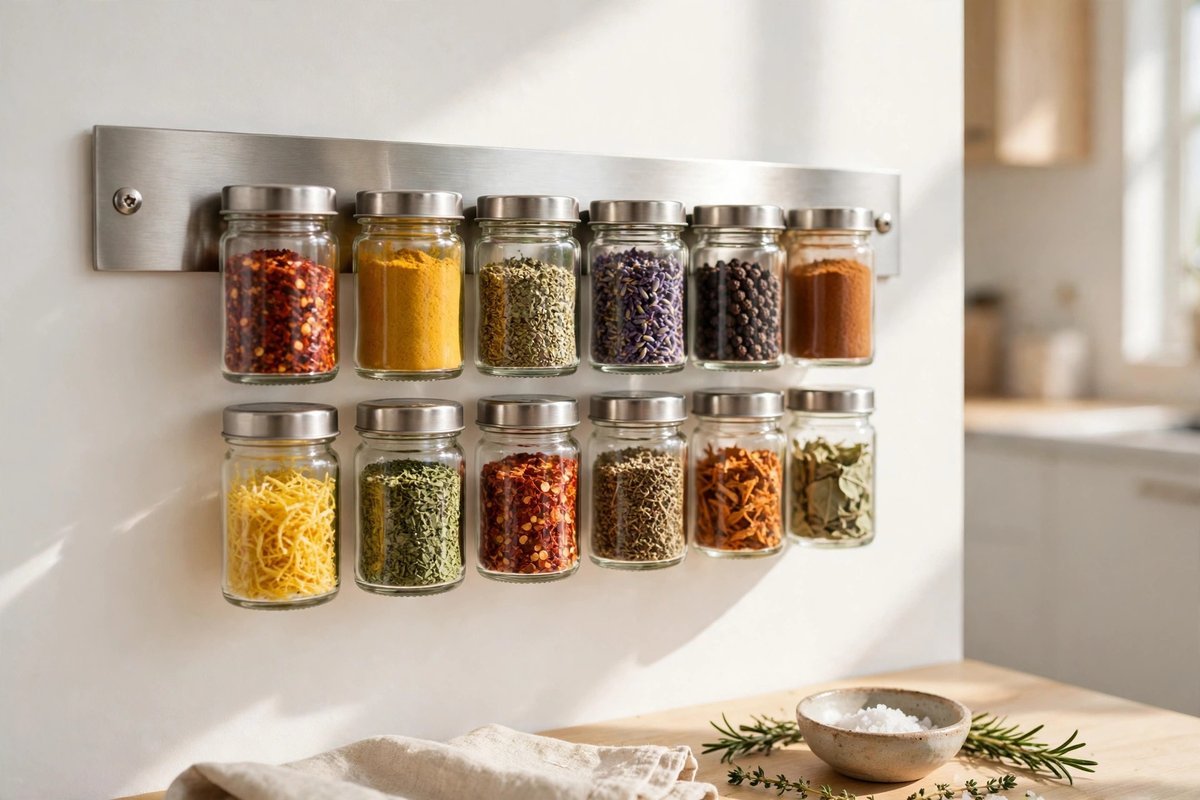
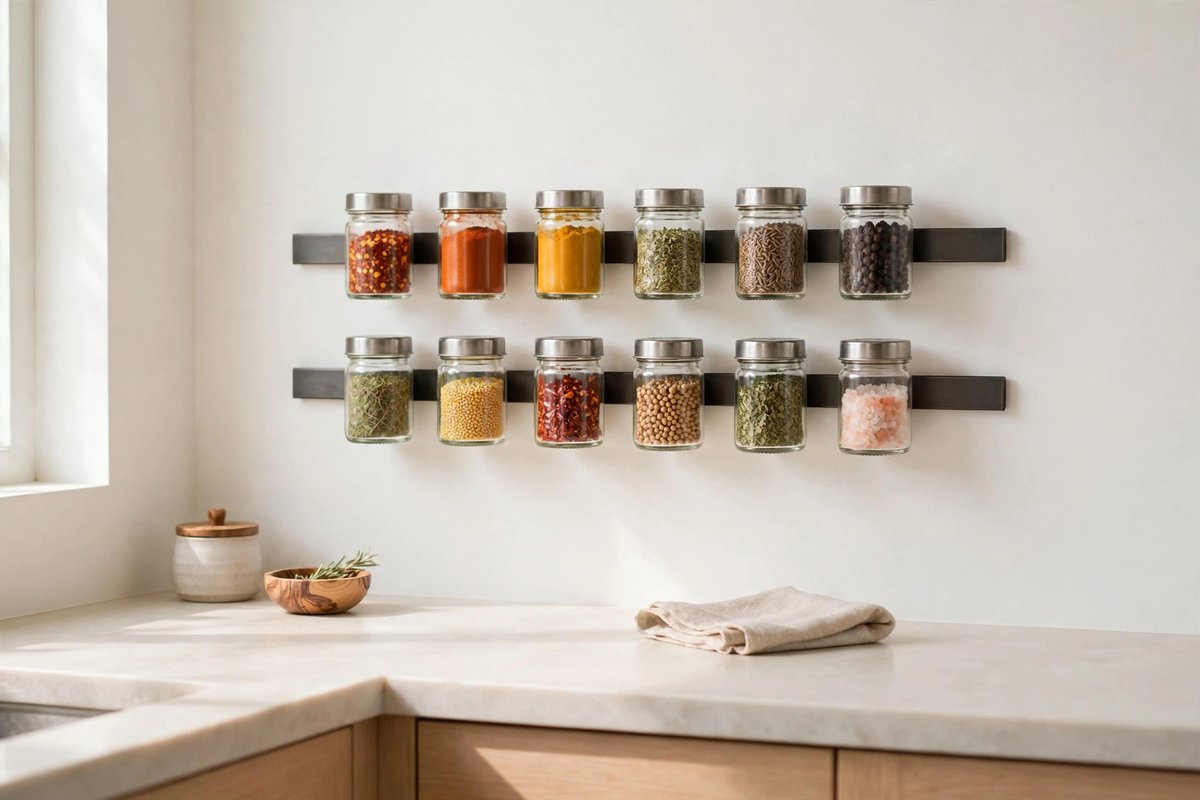
Walls are free storage in a tiny kitchen, and a magnetic spice strip uses them perfectly. Mount a magnetic metal strip ($10–$18) on a bare stretch of wall or the side of a cabinet, then fill small magnetic jars ($15–$25 for a set of 12) with your everyday spices. The jars click on and off in one motion, and the whole collection is visible while you cook. Keep the strip within arm’s reach of the stove but not directly above it — steam and heat fade spices fast. In a rental, use heavy-duty adhesive strips or a freestanding magnetic board instead of screws.
3. Spin a Turntable Inside the Cabinet
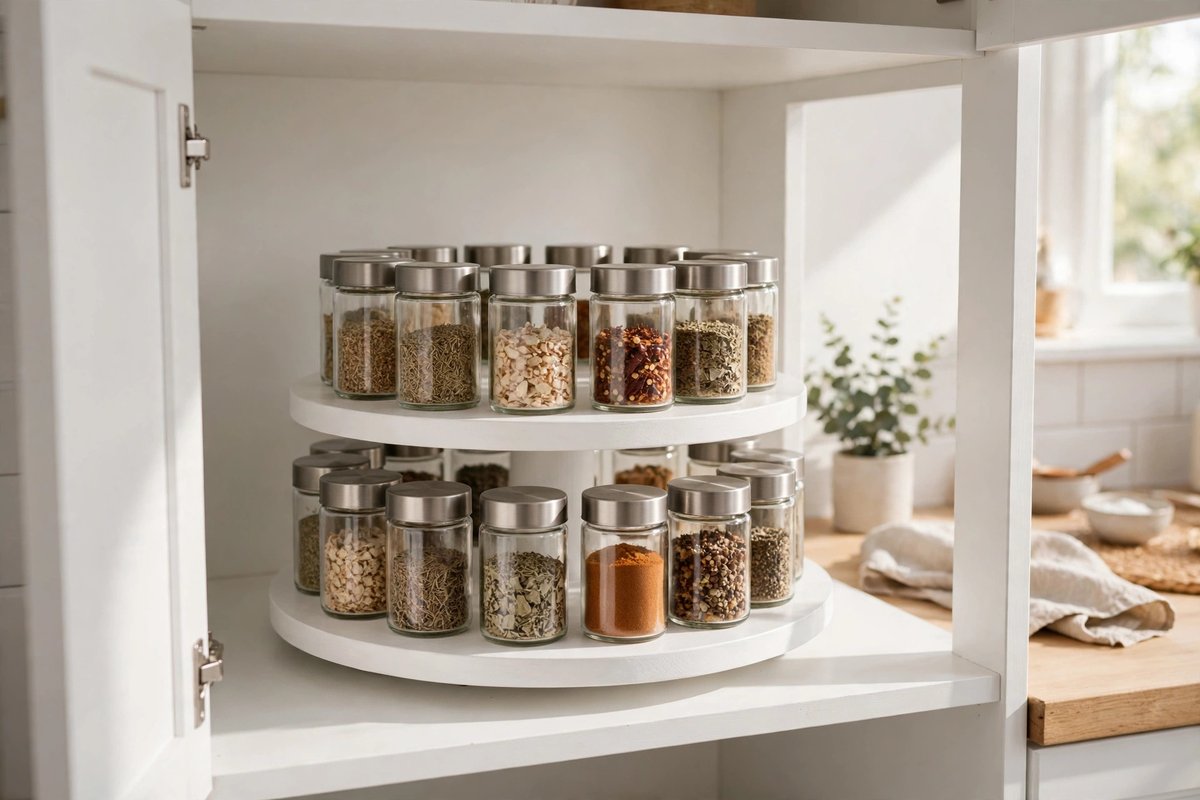
If your spices live in a cabinet, a turntable fixes the back-row problem. A two-tier lazy Susan ($12–$22) holds 15–20 jars and spins so the spice at the back comes to you — no more pulling six jars out to reach the cumin. Measure your cabinet first: most fit a 10-inch turntable, and a two-tier version doubles capacity in the same footprint. This is the same go-up-not-out trick behind our pantry organization ideas for small spaces — a spinning shelf beats a deep dark cabinet every time.
4. Hang a Rack on the Inside of a Cabinet Door
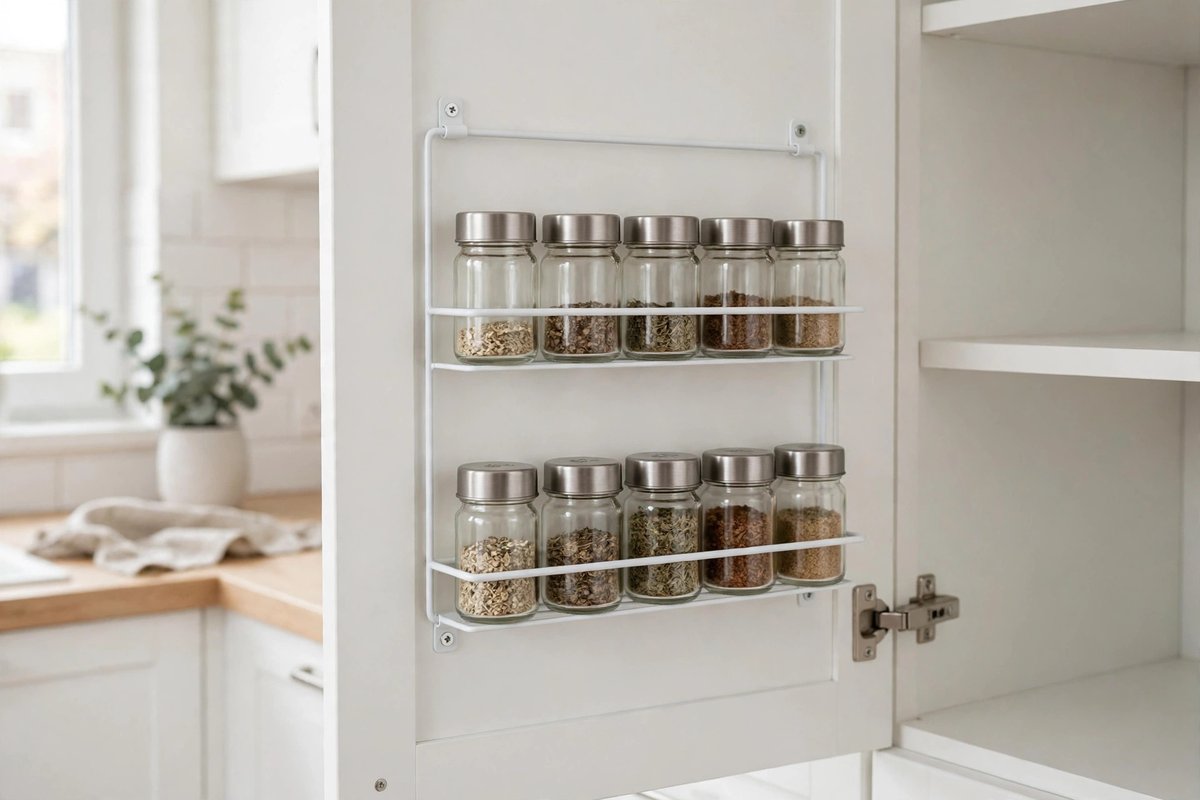
The inside of a cabinet door is the most wasted space in a tiny kitchen. A slim door-mounted spice rack ($10–$20) screws or sticks onto that door and holds 8–12 jars in a space that was holding nothing. It keeps spices hidden, cool and dark — exactly how they stay fresh — while freeing a whole shelf inside the cabinet. Check the door’s clearance before you buy: the rack plus jars must clear the shelf edge when the door closes. In a rental, choose a no-drill rack with strong adhesive mounts.
5. Add a Tiered Shelf Riser Inside the Cabinet
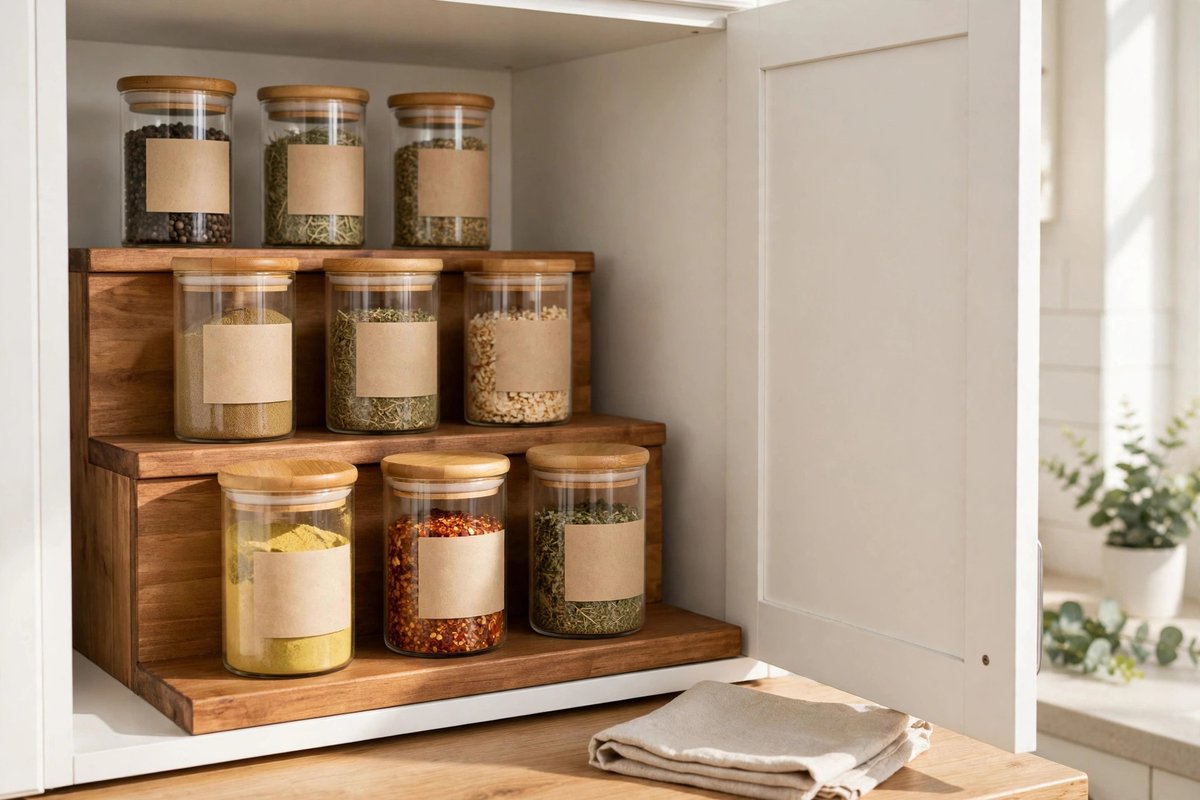
A flat cabinet shelf hides every jar behind the front row. A tiered shelf riser or spice stair ($12–$18) lifts the back rows up like stadium seating, so every label is visible from the front. It is the lowest-effort upgrade on this list: set it in, line the jars up, and the whole cabinet reads like a shop shelf. Pair it with uniform jars and you will never pull the wrong spice again. The same riser works in pantries too — it fixes cans and small bottles just as well.
6. Slide a Narrow Pull-Out Beside the Stove
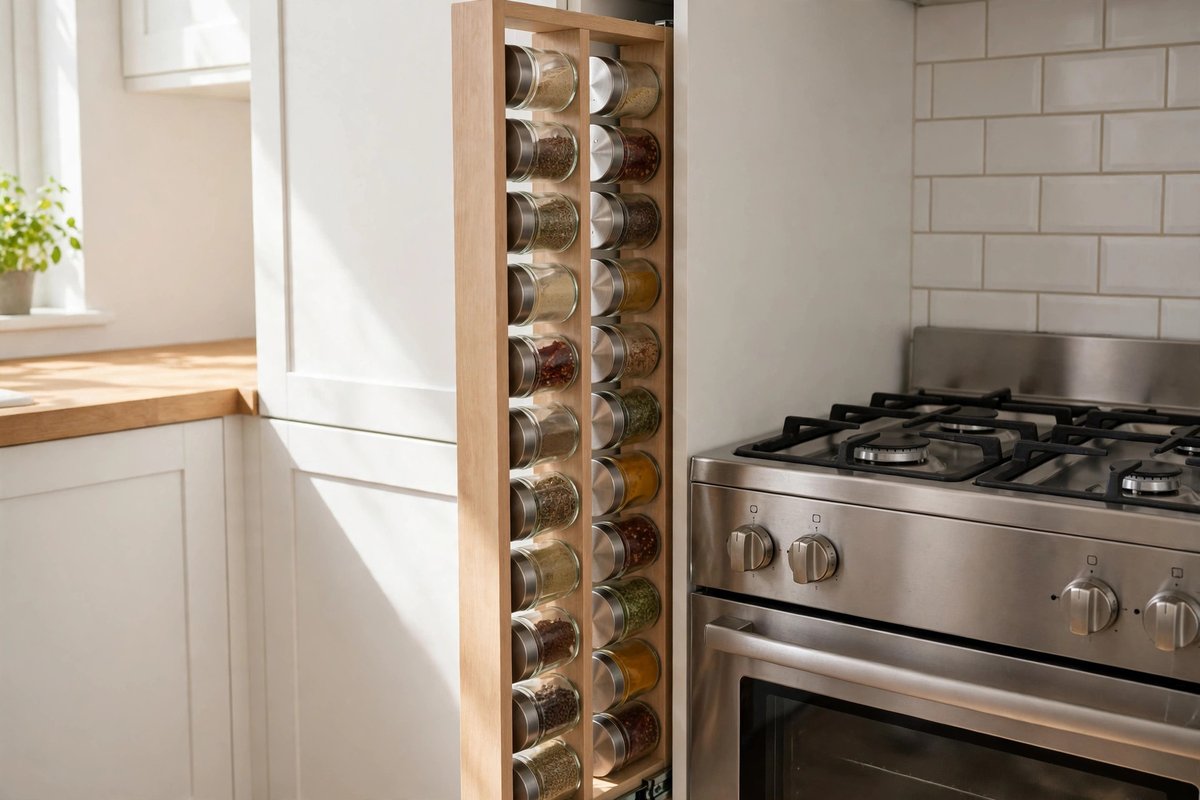
The gap between the stove and the counter — often just three to six inches wide — is the perfect home for a spice pull-out. A slim rolling pull-out rack ($20–$35) slides into that gap and holds a full spice collection in a vertical row, right where you cook. Pull it out, grab the oregano, slide it back — the whole thing takes five seconds. Measure the gap carefully, including any stove knobs that stick out, and buy the pull-out to fit the gap, not the other way around. If there is no gap beside your stove, the same rack fits between the fridge and the wall.
7. Put a Floating Shelf Above the Counter
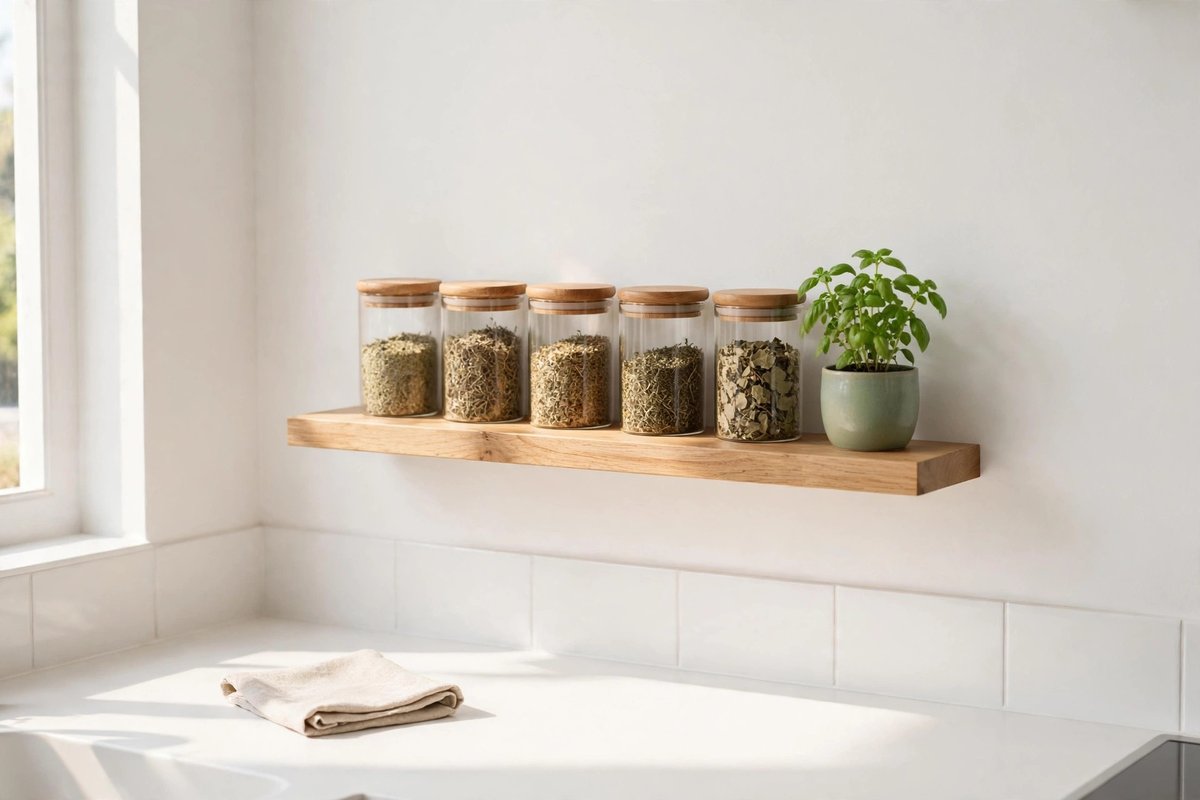
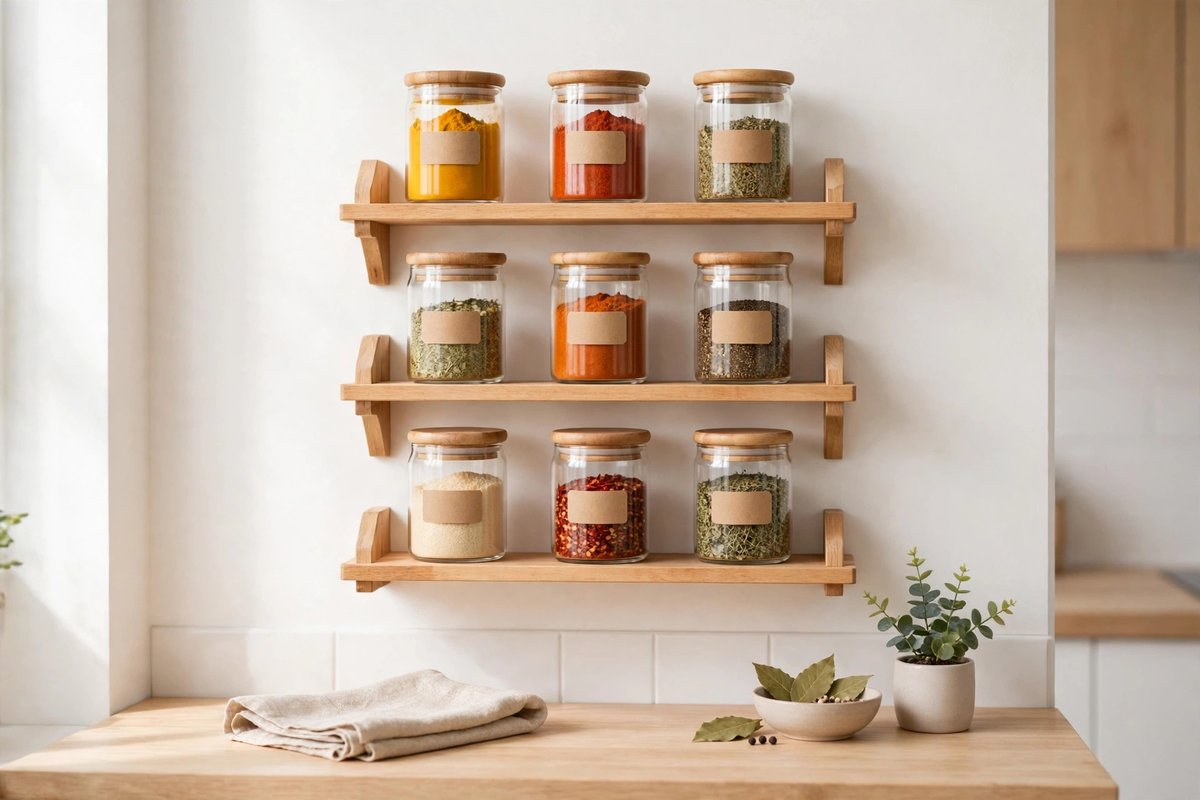
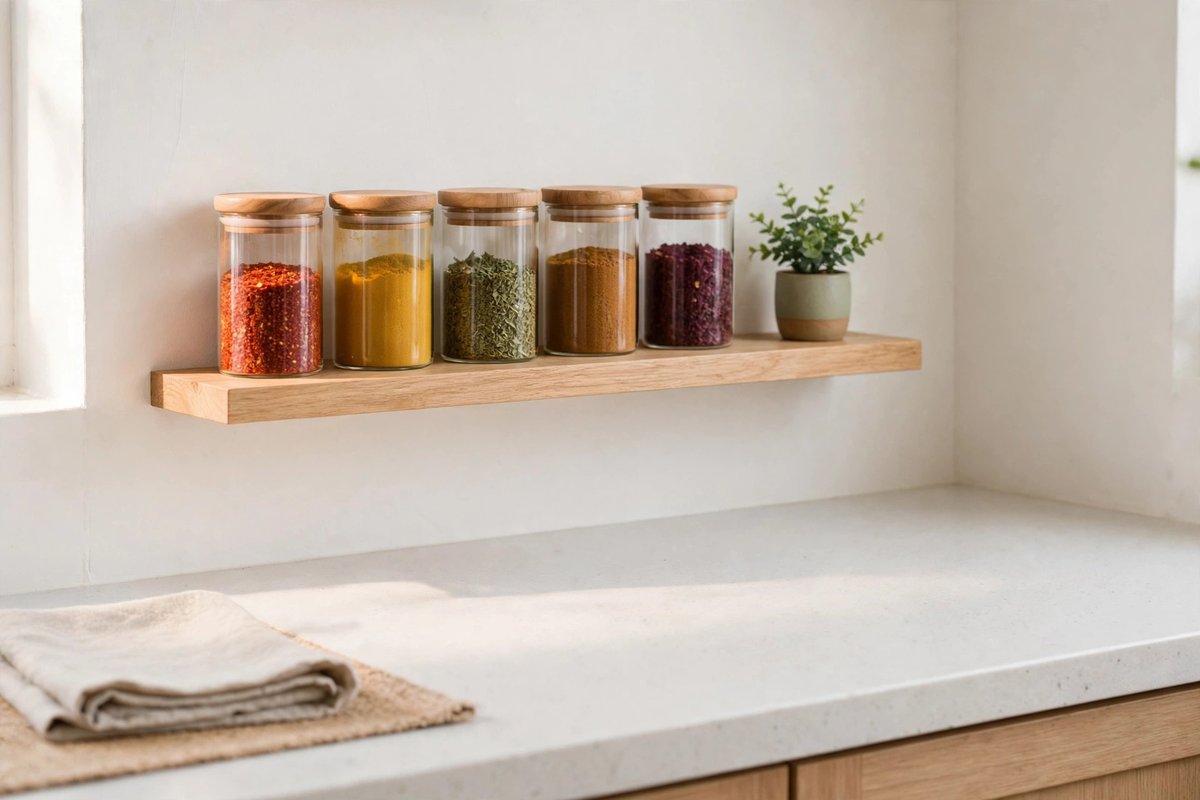
One short floating shelf above your prep counter turns dead wall space into a spice display. A 24-inch wood shelf ($15–$25) holds 10–15 matching jars in a neat row, all visible and within reach while you cook. Keep only the spices you use weekly up here — the everyday ten — and store the rest in a cabinet. A shelf above the counter also doubles as the prettiest spot in the kitchen: uniform jars, a small plant at the end, and your spice collection becomes decor instead of clutter.
8. Label the Lids, Not Just the Jars
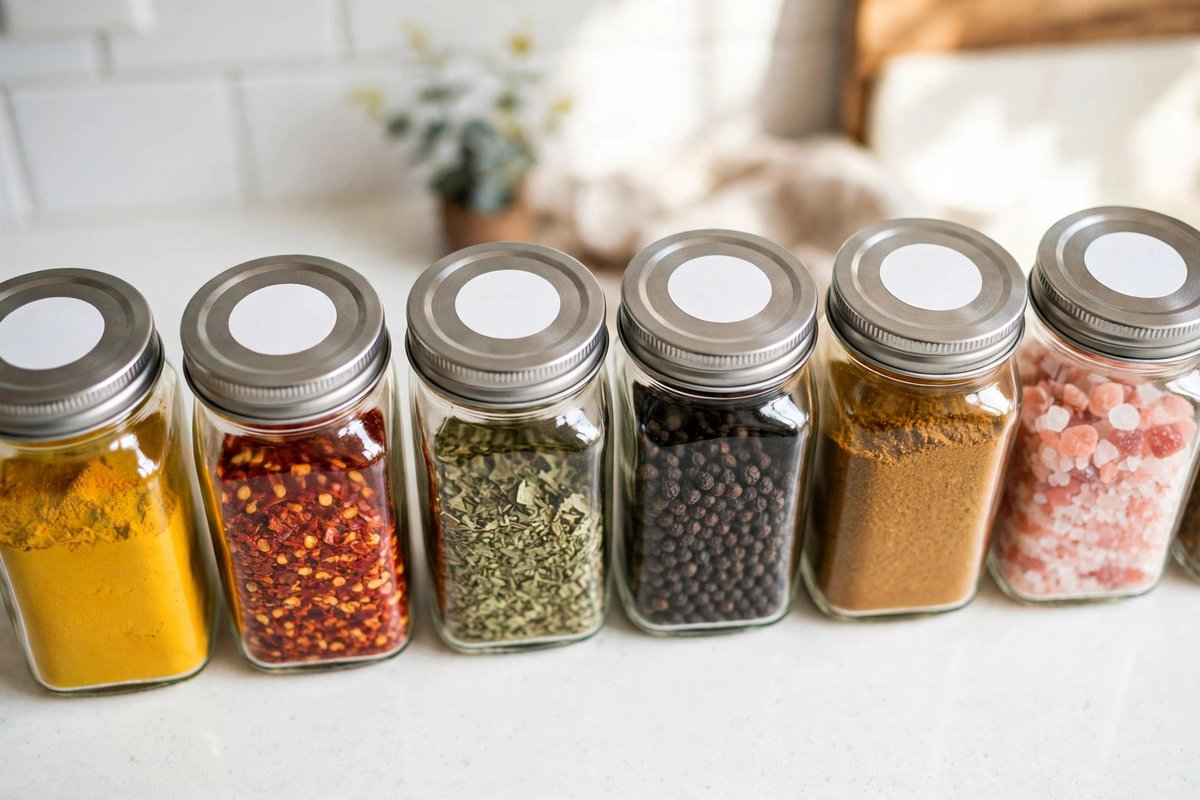
Spice storage ideas for tiny kitchens fail when you have to pick up every jar to read it. Label the lids — a label maker ($15–$25) or simple round stickers ($4–$7 for a pack) on top of every jar tells you what is inside from above, which is how you actually see spices stored on a shelf. Write the spice name and the date you filled the jar; spices lose their punch after about a year, and the date tells you when to replace them. Keep the labels short and in the same spot on every lid.
9. Use One Drawer — With a Spice Insert
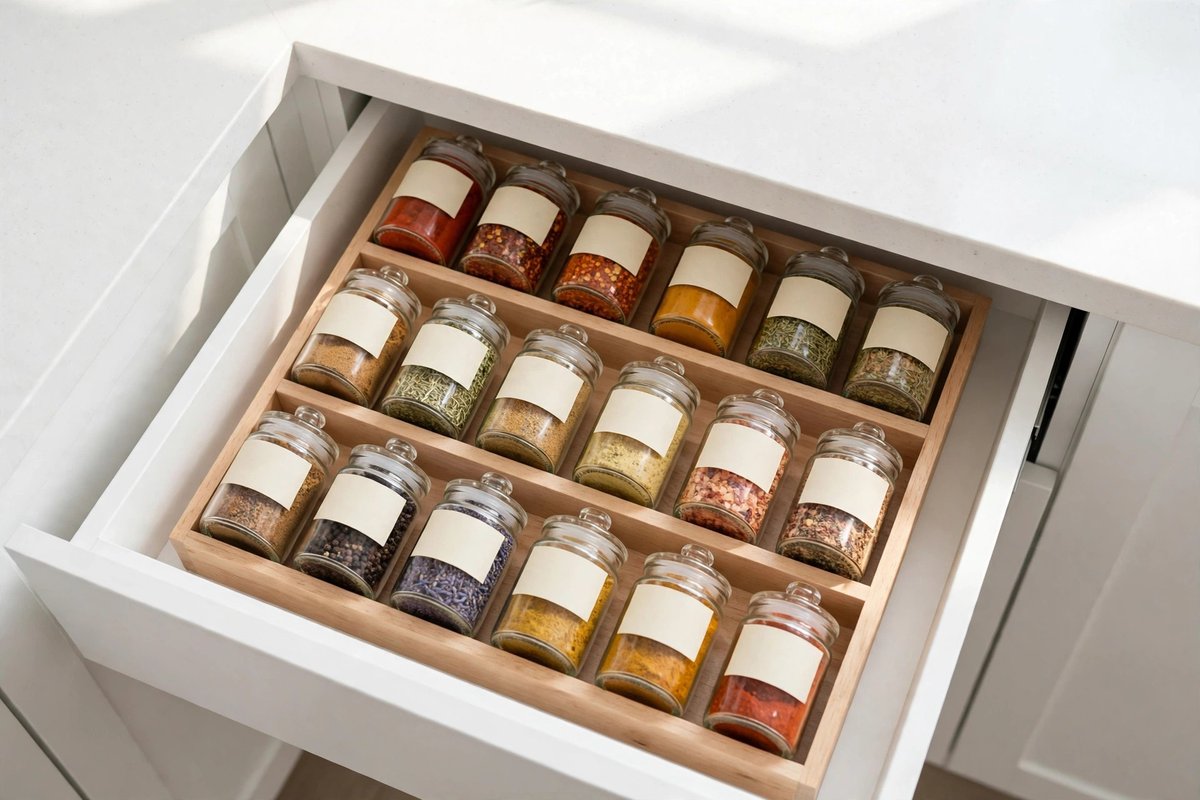
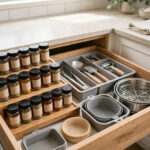
Drawers deserve exactly one idea on this list, because a drawer spice insert works so well in a tiny kitchen. A tiered drawer insert ($12–$20) holds jars lying flat, labels up, in a single shallow drawer — the whole collection visible the moment you open it. It frees a full cabinet shelf and keeps spices in the dark, which keeps them fresh. Use our kitchen drawer organization hacks to fit the insert around the rest of the drawer’s contents, and keep the drawer near the stove.
10. Hang Jars Under a Shelf With Magnetic Lids
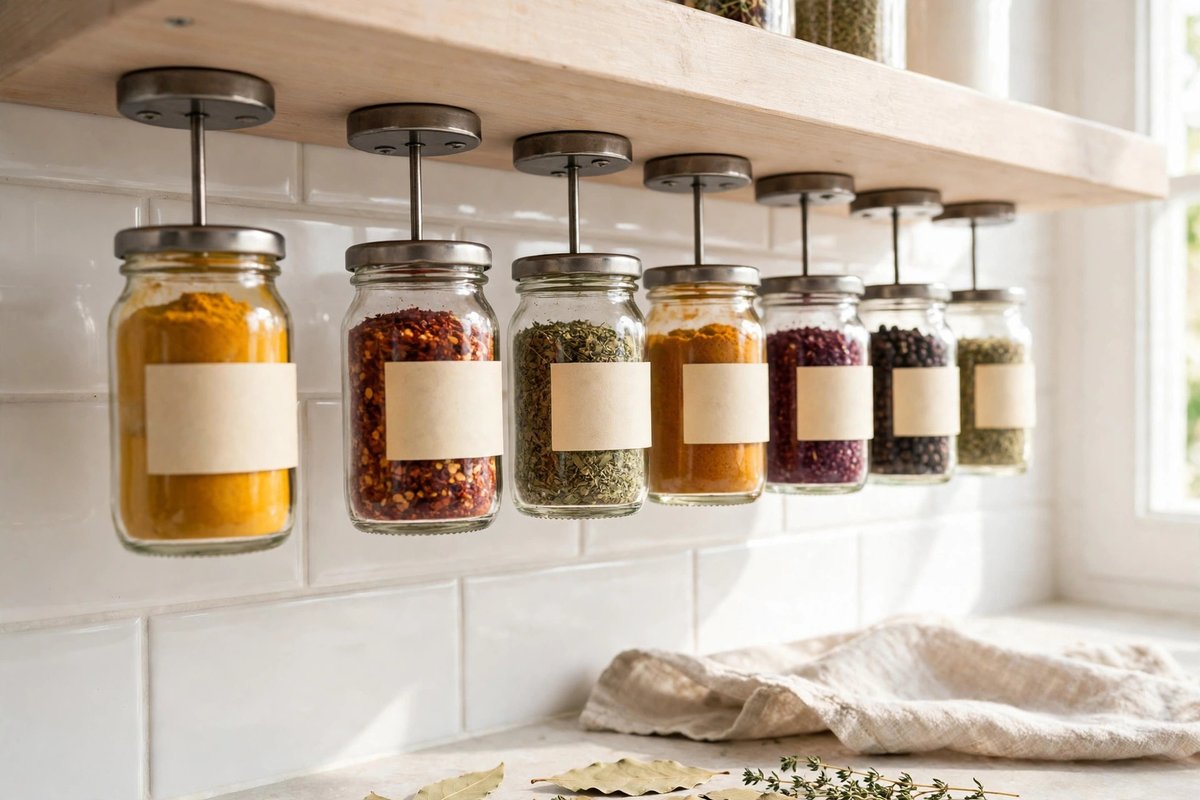
The underside of a shelf is storage most kitchens never use. Screw small metal lids to the underside of an upper shelf or cabinet ($8–$14 for a set of lids and jars), fill the jars, and twist them on — the jars hang upside down, labels facing out, using zero shelf space. It is a clever trick for a truly tiny kitchen, and it looks wonderful with matching jars. Test the hold with a full jar before you trust it, and keep the heaviest spices — the big jars of salt and sugar — on a shelf, not hanging.
11. Claim the Side of the Fridge
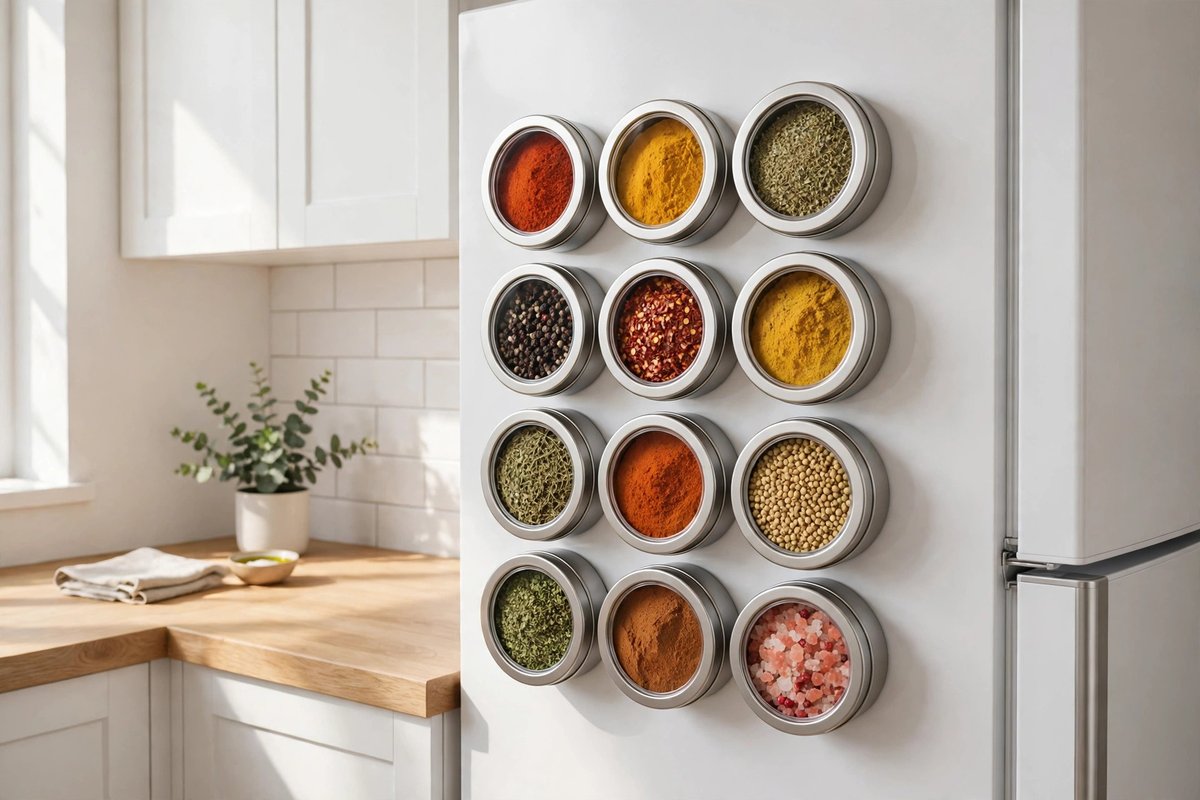
The side of the fridge is a blank magnetic wall, and it is usually the closest surface to the stove. Stick magnetic spice tins ($12–$20 for a set of 12) directly onto the fridge side in a neat grid, or mount a thin magnetic board ($10–$15) there first and clip the tins to it. The spices stay visible, reachable and out of the way of every cabinet and drawer. Keep the tins at eye level and above — the lower half of the fridge side collects splashes and knocks. If your fridge side faces the living room, a matching set of tins looks intentional, not improvised.
12. Build a Spice Caddy for the Stove
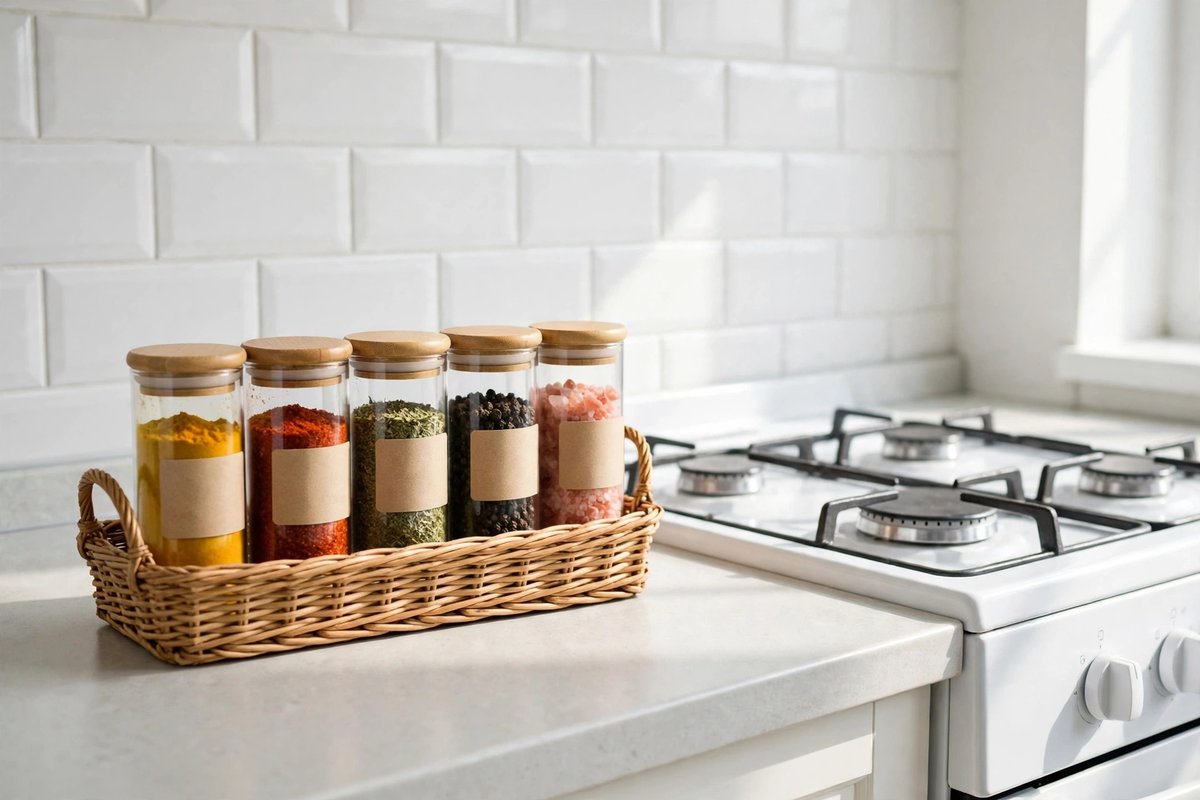
Cooking is easier when the five spices you reach for most travel together. A small caddy or basket ($8–$15) holding your daily five — salt, pepper, garlic powder, paprika and cumin, or whatever your cooking uses — sits beside the stove while you cook and slides back into a cabinet when you are done. It is the spice version of a cooking station: everything in one grab, nothing scattered across the counter. The caddy is also the fix for shared kitchens — each cook keeps their own, and nobody’s spices get mixed into anyone else’s.
13. Sort Spices Into a Pantry-Adjacent Zone
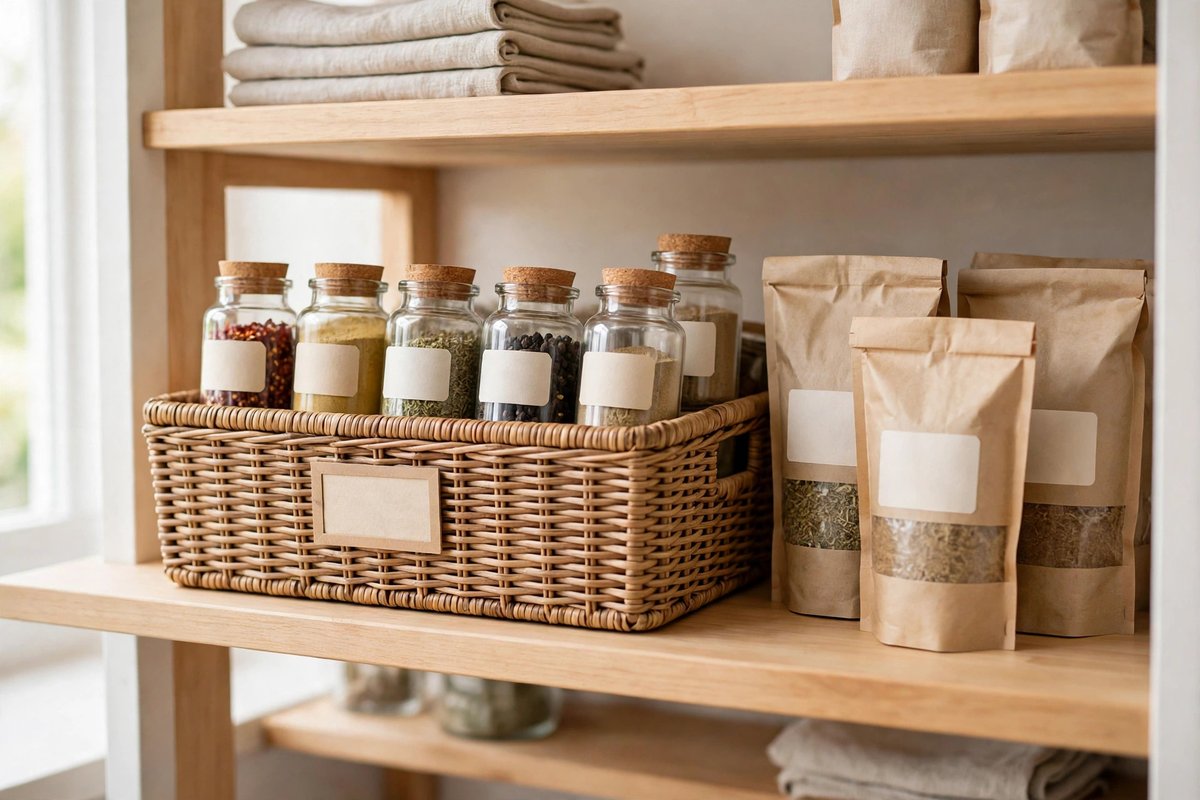
Spices do not have to live in the kitchen’s main cabinets. A small basket or bin on a pantry shelf near the kitchen — a spice zone — holds the backup jars, the bulk bags and the spices you use monthly rather than weekly. Keep the everyday ten near the stove and the rest in the zone, and restock from the zone once a week. This is the same zone thinking in our fridge organization ideas for small kitchens — daily items close, spares one step away. A labeled bin in the pantry is also where bulk spices go when you buy the big bag to save money.
14. Audit and Toss the Stale Ones First
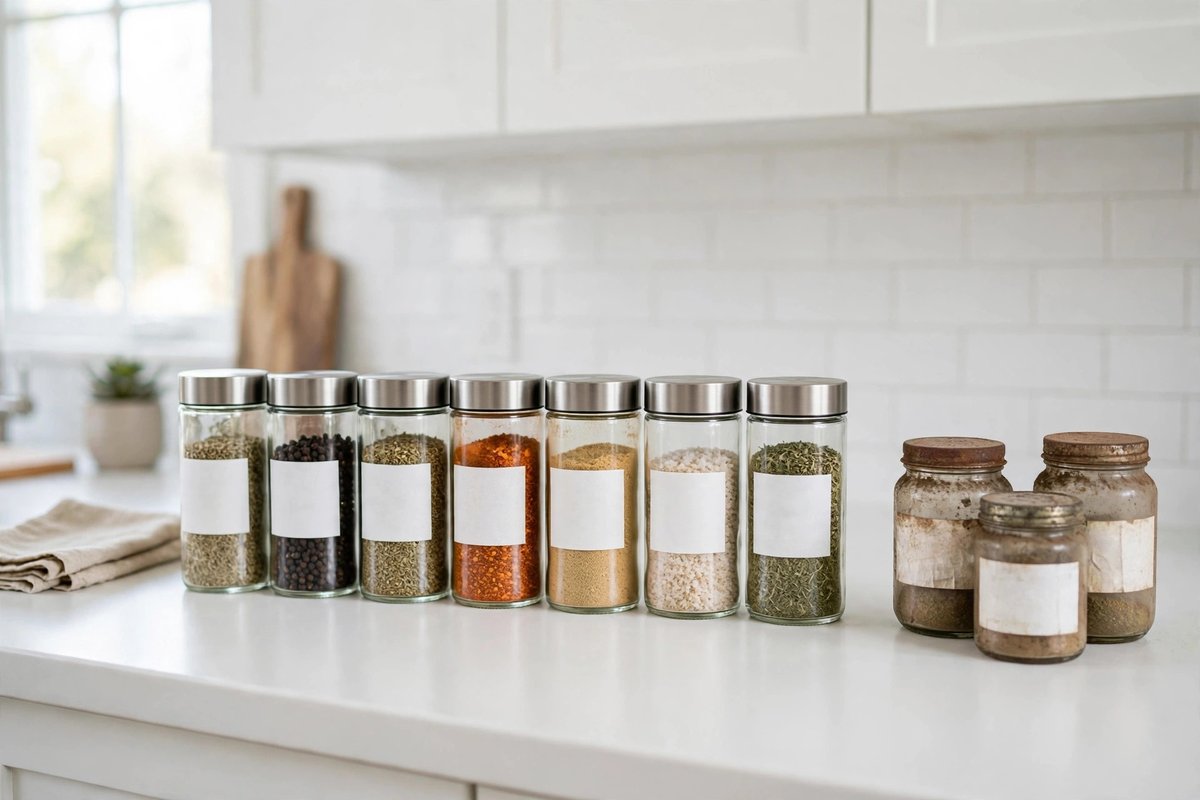
No spice storage ideas for tiny kitchens work if half the jars hold spices that died two years ago. Before you buy a single rack, pull every spice out, check the date, and smell it — if it smells like dust, it is done. Ground spices last about a year, whole spices about two; anything older goes in the bin. Most tiny kitchens lose a third of their spice collection in this one audit, and suddenly the racks and turntables fit. Write the buy date on every new jar, and repeat the audit every spring.
15. Keep a Tiny Restock List on the Spice Shelf
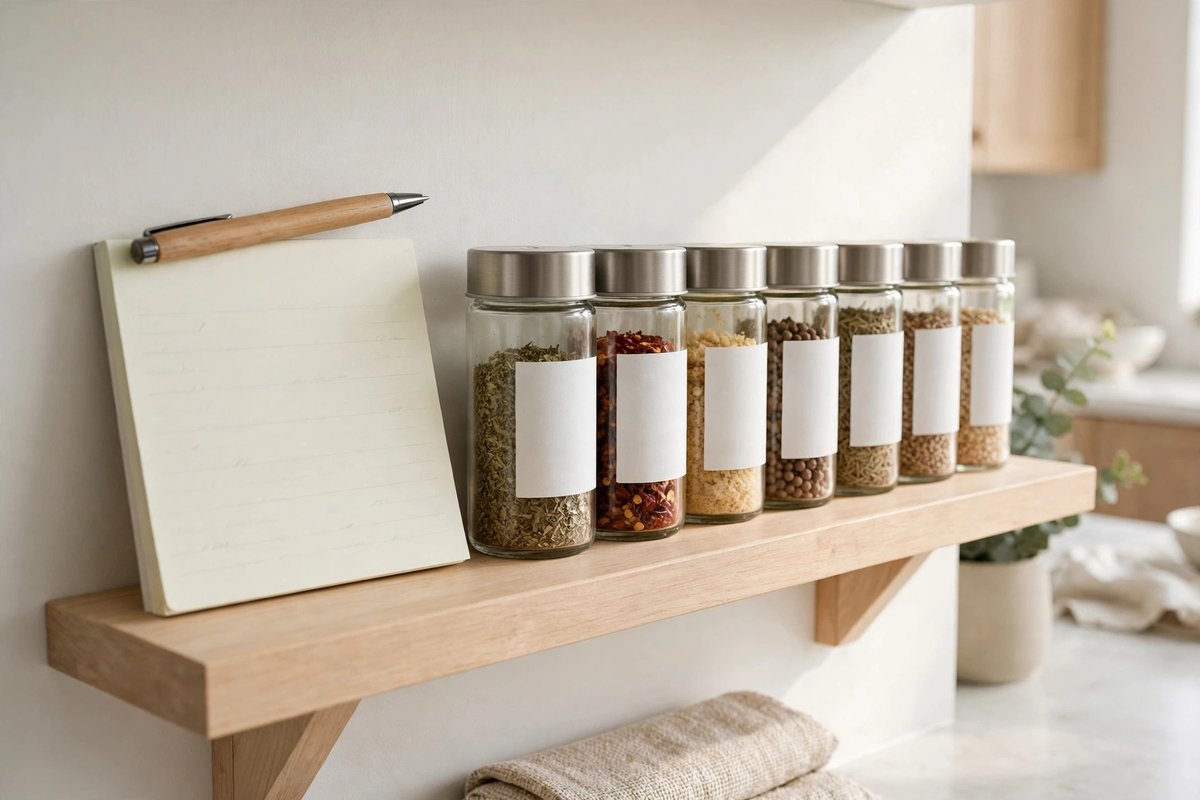
Running out of cumin mid-recipe is the fastest way to wreck a good dinner. Keep a small notepad or a chalkboard strip ($4–$7) on the spice shelf itself and write down what is running low the moment you notice it — the spice, the jar size, the brand you like. Check it before your grocery run and you will never stand in front of an empty jar again. It is a tiny habit, but it is the one that keeps the whole spice system working week after week.
What to Avoid
Even the best spice storage ideas for tiny kitchens fail when these habits creep in.
- Storing spices right above the stove. Heat and steam are the fastest way to kill a spice’s flavor. Keep jars at arm’s reach of the stove, never directly above it.
- Keeping every spice you have ever bought. A collection of forty jars in a tiny kitchen is a storage problem you created yourself. Keep the fifteen you use, bin the rest.
- Buying the rack before measuring. A turntable that does not spin in your cabinet and a pull-out that does not fit the gap are just returns waiting to happen. Measure first — every time.
- Mixing jar sizes and shapes. Mismatched jars waste space and hide labels. One jar size, one lid type, and every shelf reads cleanly.
- Storing spices in clear jars in sunlight. Light fades spices almost as fast as heat. Clear jars are fine in a dark cabinet or drawer — on an open shelf, use amber glass or keep them out of direct sun.
- Skipping the labels. An unlabeled spice shelf is a guessing game, and guessing wrong ruins dinner. Label the lids the day you decant, not someday later.
FAQ: Spice Storage Ideas for Tiny Kitchens
What is the best way to store spices in a tiny kitchen?
Decant into matching airtight jars, then use the space your kitchen wastes — a turntable inside a cabinet, a rack on a door, magnetic jars on the wall or fridge side, and a tiered riser so every label shows. Keep the everyday ten near the stove and the rest in a pantry-adjacent zone.
How do I organize spices without a spice rack?
A turntable, a tiered shelf riser, or magnetic tins on the fridge side all work without a traditional rack. Even a small basket on a shelf, with jars lined up labels-out, beats a loose pile in a cabinet — the system matters more than the product.
Where should spices be stored in a small kitchen?
Cool, dark and dry, close to the stove but not above it: inside a cabinet, in a drawer with an insert, or on a wall and fridge side that stays out of steam and sunlight. Never store spices above the stove or next to the dishwasher — heat and damp fade them fast.
How many spices should a tiny kitchen keep?
About fifteen everyday spices cover most home cooking — salt, pepper, garlic powder, onion powder, paprika, cumin, chili powder, oregano, basil, thyme, cinnamon, turmeric, curry powder, red pepper flakes and bay leaves. Keep those near the stove and store the rest as backups in the pantry.
How long do spices last once opened?
Ground spices stay strong for about a year, whole spices for about two. Write the fill date on every jar lid and smell-test anything you are unsure about — if it smells like dust, replace it. Store them away from heat and light and they will last the full year.
The Bottom Line
Spice storage is not about buying the fanciest rack — it is about giving every jar one visible home near the stove. Decant into matching jars, spin a turntable in the cabinet, claim a door or a wall, label the lids, and toss the stale ones first. Start with these spice storage ideas for tiny kitchens — the uniform jars and the turntable — this week, and your next dinner will start with the spice already in your hand.
Save this list before your next kitchen tidy-up, and share it with someone whose spice cabinet is a jumble of packets and mystery jars. For more small-kitchen wins, try our declutter your home in 7 days plan — the same clear-first, organize-second system, for the whole house.
Enjoying these ideas?
Get our free 7-Day Small Home Reset Checklist and one practical small-home idea every week.