Fridge Organization Ideas for Small Kitchens: 15 Genius Ways to Fit More In
These fridge organization ideas for small kitchens will change how your fridge works — a small fridge does not have to mean lost leftovers, mystery containers and a weekly food-waste guilt trip. The average household throws away hundreds of dollars of food a year, and most of it is not bad cooking — it is food that got buried behind something else and forgotten. In a small kitchen, where the fridge is often apartment-sized, organization is not a luxury. It is the difference between a fridge that works and a fridge that eats your groceries.
The good news: you do not need a bigger fridge. You need zones, bins and a system you can keep up in ten minutes a week. Here are 15 fridge organization ideas for small kitchens — most cost under $25, and all of them work in rentals.
1. Empty It, Clean It, Measure It Before You Buy Anything
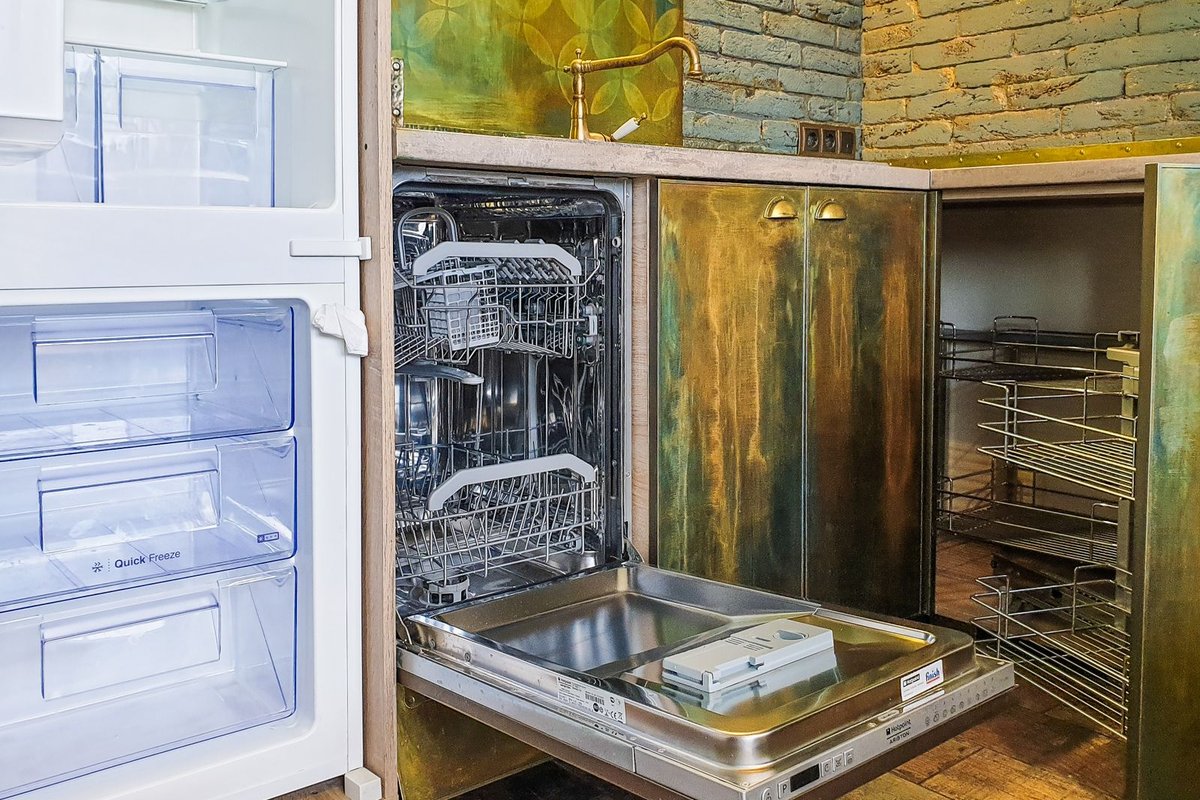
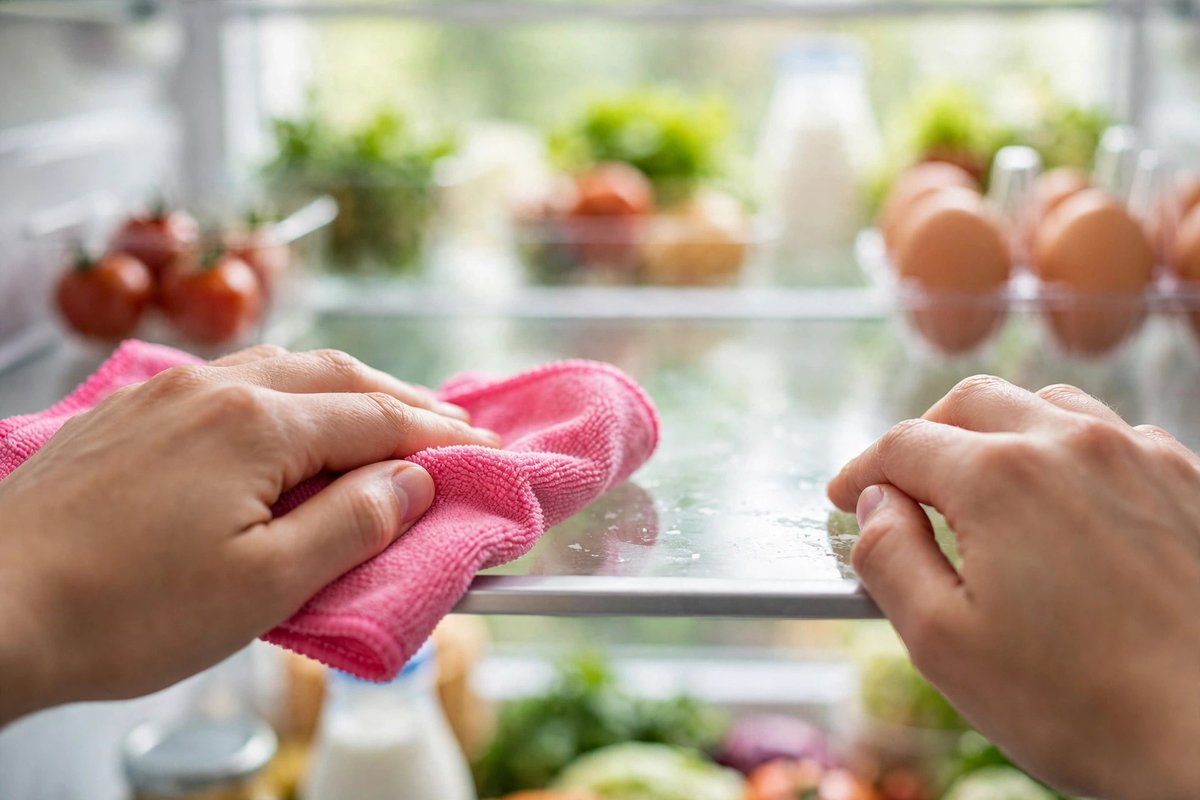
Every fridge project starts the same way: take everything out, wipe the shelves, and measure the inside. A tape measure costs nothing and saves you from the classic mistake — buying bins that are an inch too wide for your shelves. Note the width, depth and height of each shelf, and check the shelf spacing before ordering anything. While it is empty, toss anything expired and anything you cannot identify. This is the same “clear first, organize second” rule we use in our declutter your home in 7 days plan — and it works because you are organizing what you actually keep.
2. Zone the Fridge by Temperature, Not by Habit
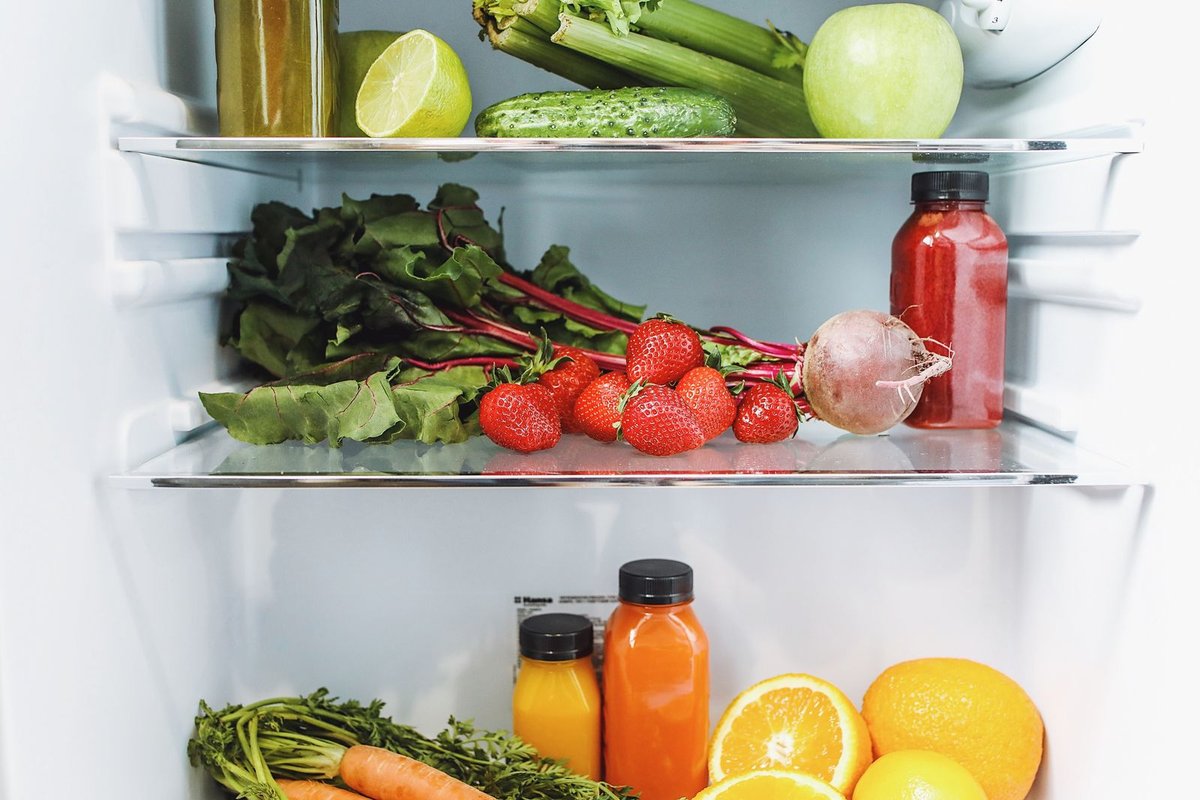
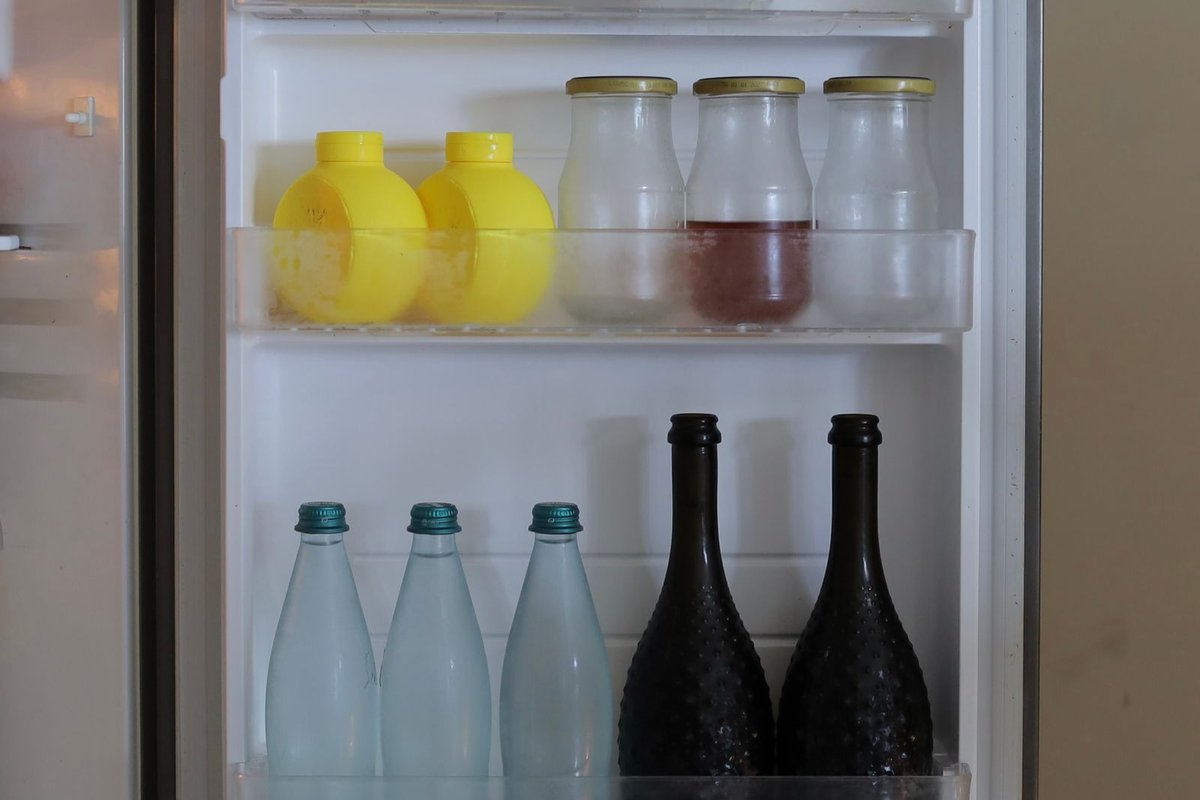
Fridges are not evenly cold. The top shelf is the warmest spot, the bottom shelf is the coldest, the door is the warmest of all, and the crisper drawers hold humidity. So stop putting milk in the door and start putting food where it lasts longest: ready-to-eat foods and leftovers up top, dairy and eggs in the middle, raw meat on the bottom shelf (so drips never land on anything else), and condiments in the door. This one change alone cuts food waste, because food stored at the right temperature simply lasts longer.
3. Give Every Zone a Clear Bin
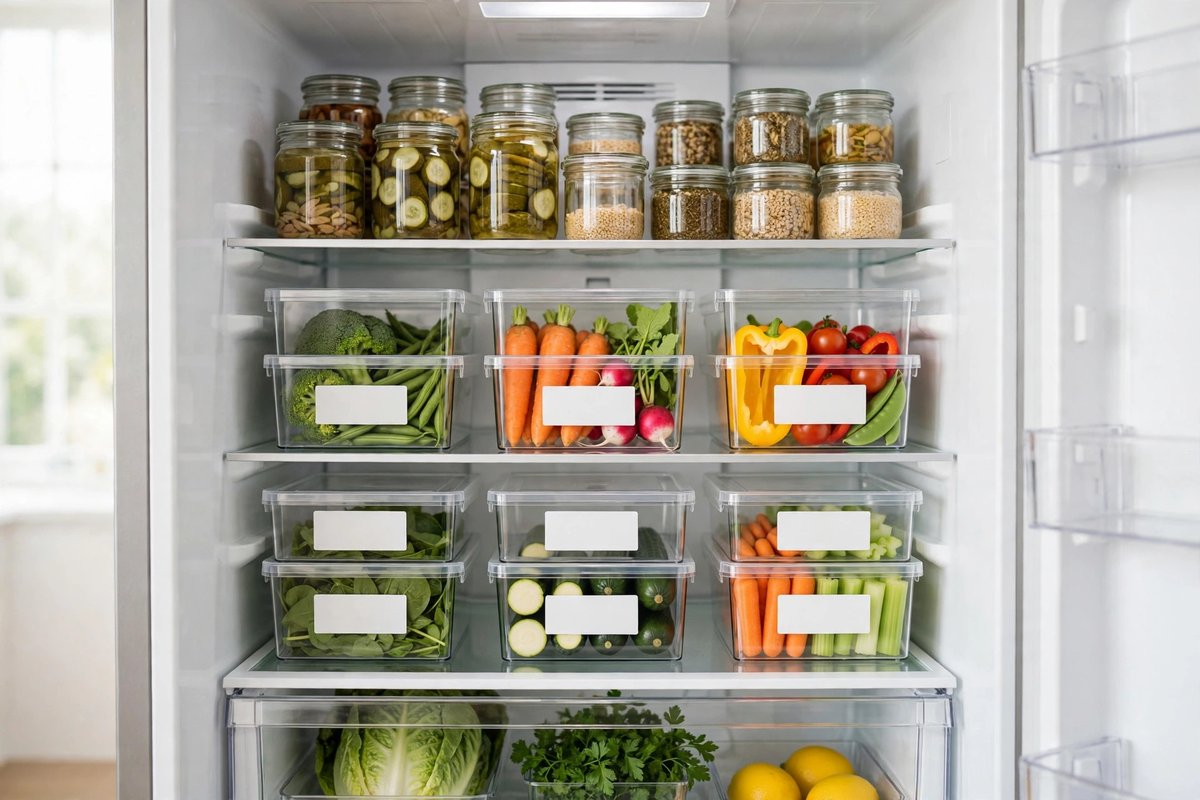
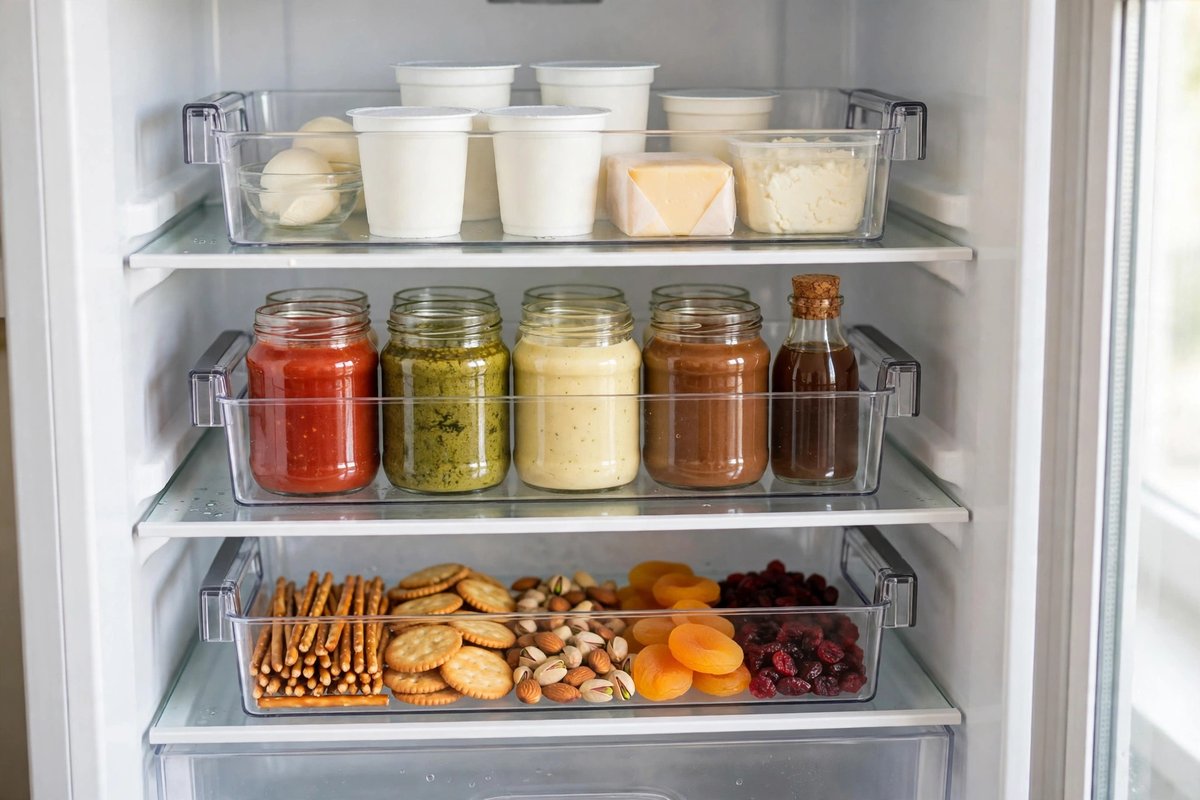
Clear bins are the single best fridge organizer for a small kitchen, because you can see what is inside without pulling the bin out. A set of 4–6 clear stackable bins ($12–$20) turns each shelf into a drawer: one bin for dairy, one for sauces, one for snacks, one for leftovers. When you need something from the back, you pull out one bin instead of moving six jars. Buy bins with handles if your shelves are deep — your wrists will thank you every single day.
4. Add a Lazy Susan Turntable for Condiments
Condiments are the worst fridge clutter: a dozen small bottles that fall over every time you reach past them. A 10-inch lazy Susan turntable ($10–$15) on a middle shelf corrals them all into one spinning circle. One spin and the hot sauce is in your hand — no more knocking over the soy sauce to reach the mustard. A two-tier turntable ($15–$20) works even better if your shelf height allows it, and it doubles the condiment space on the same footprint.
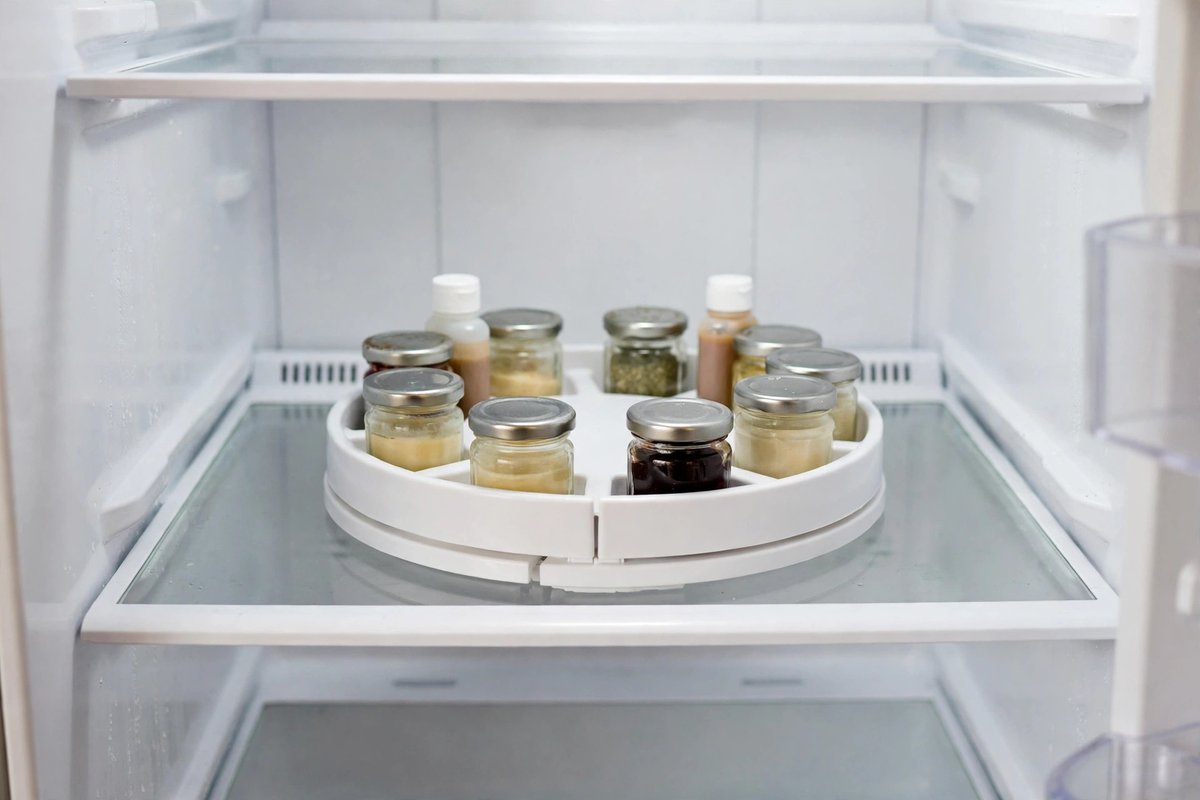
5. Stack Bins and Add a Shelf Riser to Double Vertical Space
Small fridges waste most of their height. Tall bottles leave six inches of dead air above the milk, and short jars leave a gap you cannot use. A small shelf riser ($12–$18) creates a second level inside the fridge for short items, and stackable bins use the height above them instead of wasting it. Measure first — you need at least an inch of clearance above the riser for easy access — but this one trick can genuinely double the usable space on a shelf.
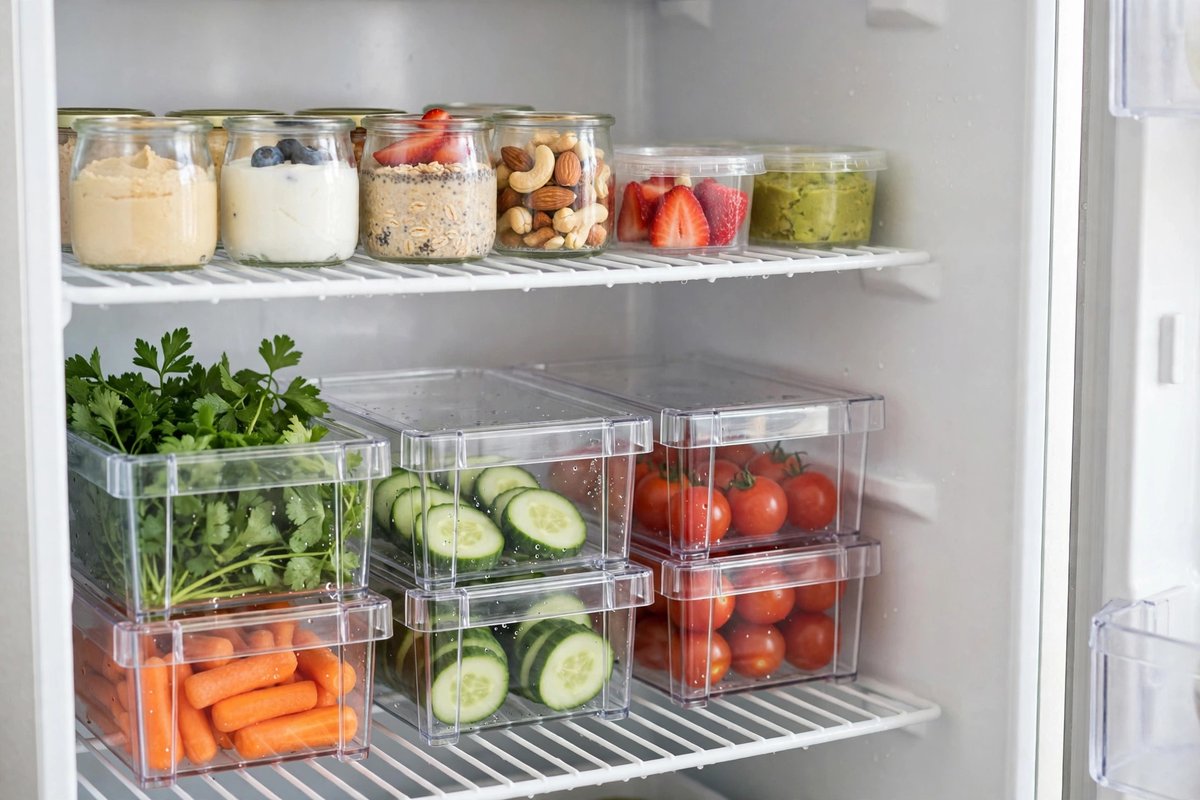
6. Label Everything With Erasable Labels
A bin without a label becomes a junk drawer within a week. Erasable food labels ($6–$9 for a roll) or a chalk marker on the bin itself tell everyone in the house where things live — and, just as important, where they go back. Label the bin, not the food: “SNACKS,” “LEFTOVERS,” “LUNCH STUFF.” It takes five minutes and it is the difference between a system that survives a month and one that survives a weekend.
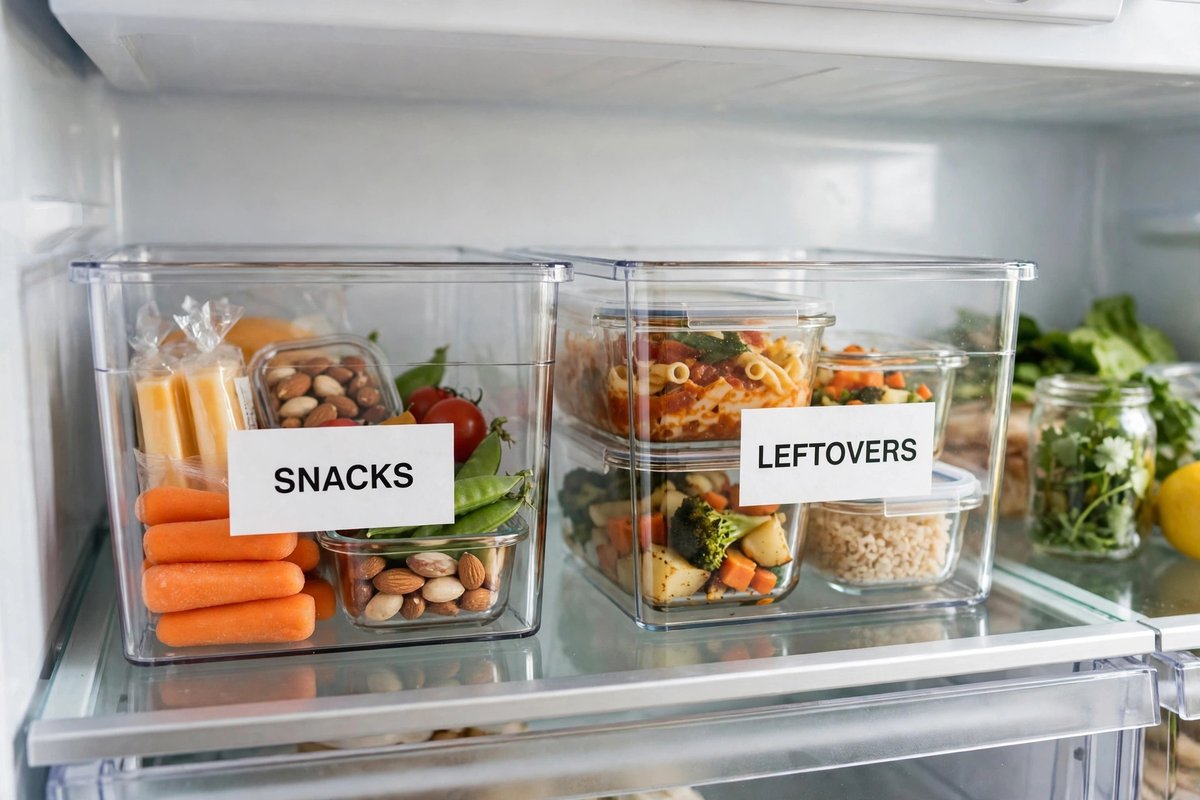
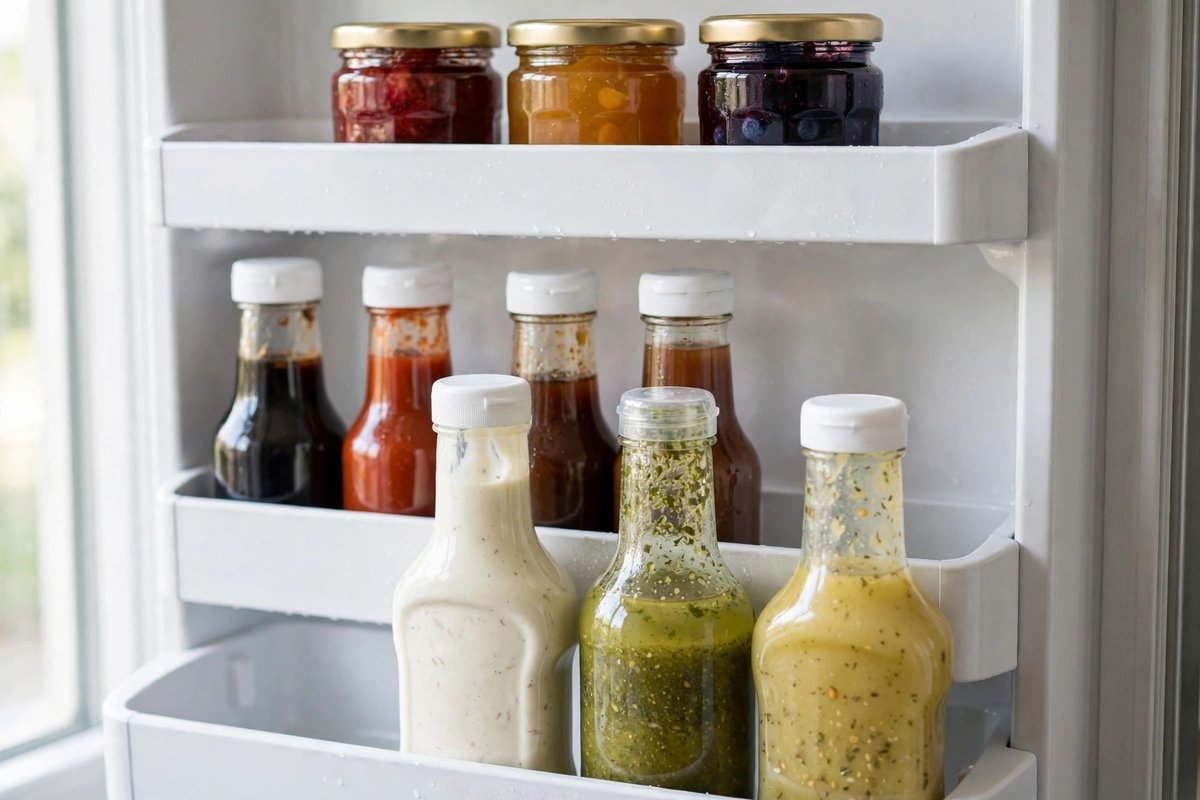
7. Keep the Door for Condiments Only
The door is the warmest part of the fridge, so it is the wrong home for milk, eggs or anything that spoils fast. Reserve the door for the things that tolerate temperature swings: condiments, sauces, jams, salad dressings and butter. If your door has a dairy compartment, use it for butter only. Moving the milk to a middle shelf frees the door for the dozen small bottles that otherwise eat a whole shelf — and your milk will stay fresh a few days longer.
8. Ditch the Carton for a Dedicated Egg Holder
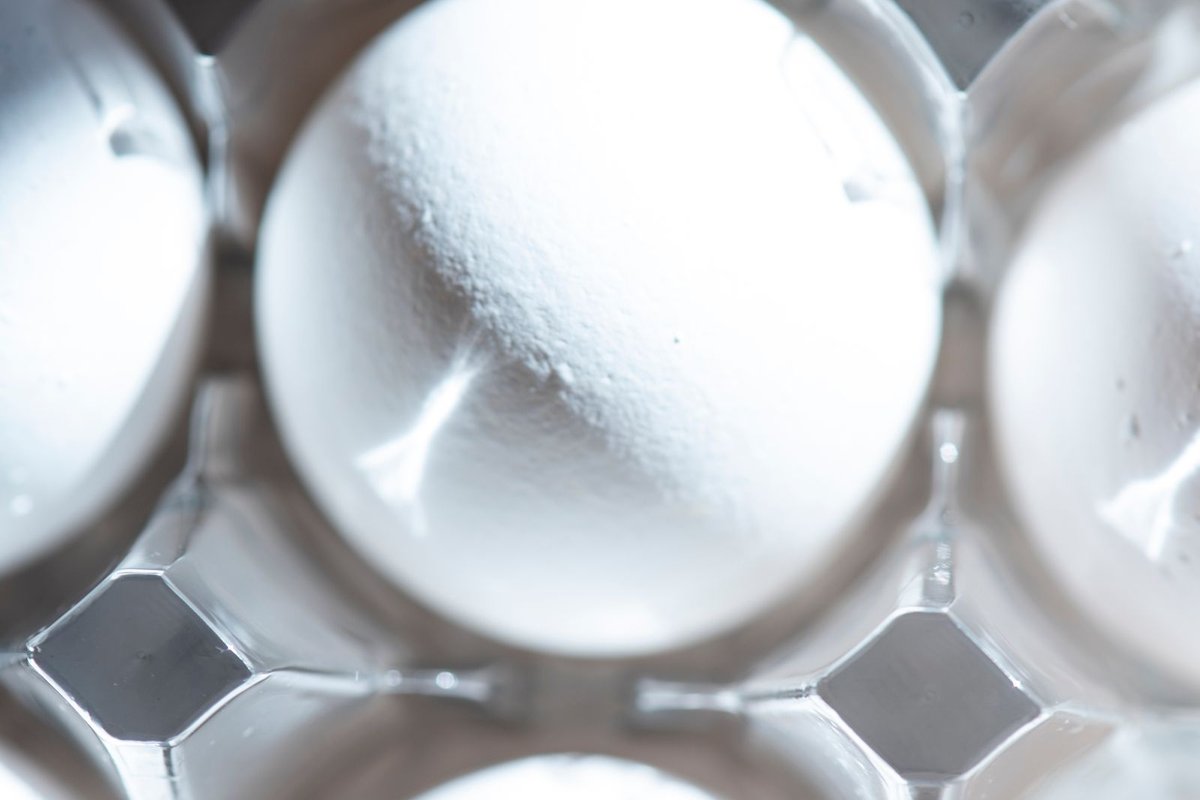
An egg carton takes up a whole shelf section and hides the eggs inside it. A clear egg holder ($8–$12) stacks neatly, shows at a glance how many eggs are left, and frees the carton’s awkward footprint for something else. Stack two holders if your household goes through eggs fast — they take up less room than two cartons and you will never again buy eggs you already have.
9. Use a Can Dispenser for Drinks
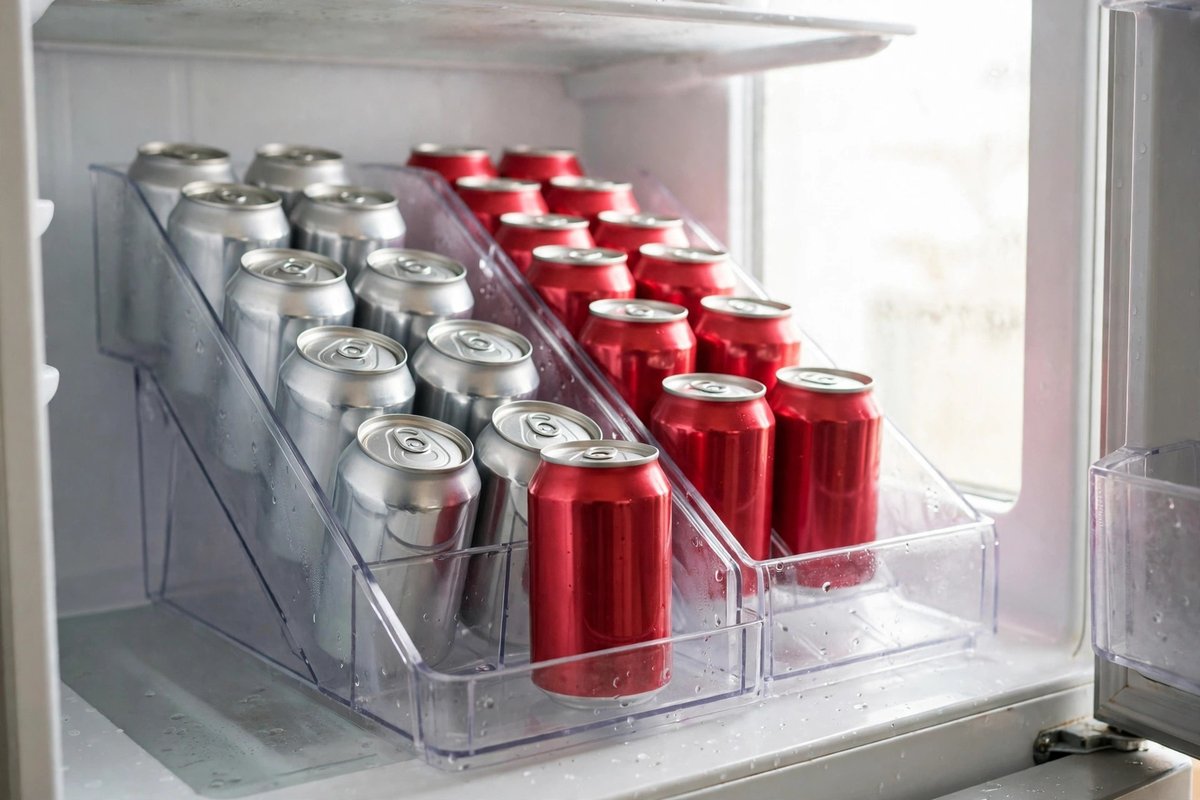
Cans rolling around a shelf are a small-kitchen cliché, and they waste the space between them. A can dispenser ($10–$16) holds 8–10 cans in a gravity-fed row — take one from the front and the next rolls down. It fits on a bottom shelf or in the door’s tall section, and it turns a loose pile of cans into a tidy, countable row. If you rarely drink canned drinks, skip this one; if you do, it pays for itself in saved shelf space within a week.
10. Line the Shelves With Washable Fridge Mats
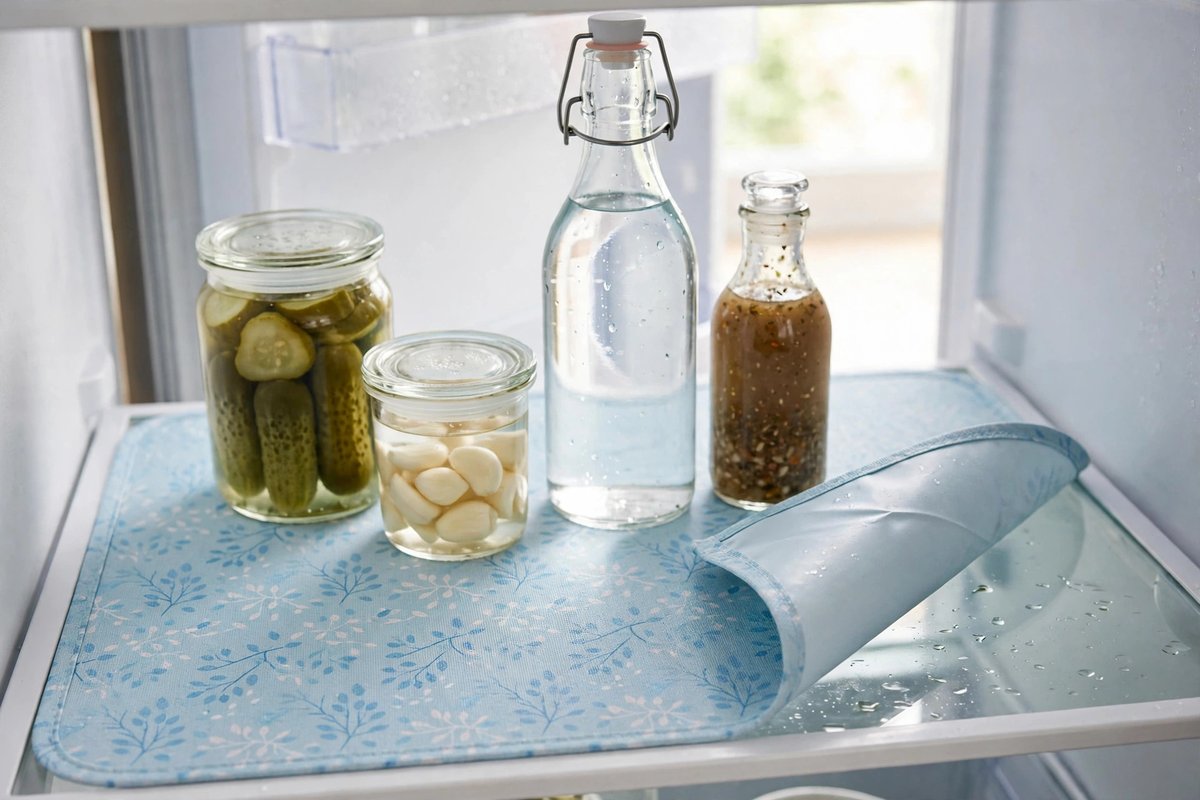
Spills are inevitable, and in a small fridge one sticky jam leak can glue a whole shelf. Washable fridge liners ($8–$12 for a roll you cut to size) catch drips and wipe clean in seconds, so you are cleaning a mat instead of scrubbing a shelf. They also stop bottles from sliding when the door closes and give glass shelves a little grip. Replace or wash them monthly — it is a two-minute job that keeps the whole fridge looking new.
11. Create an “Eat First” Bin for Food Near Its Expiry
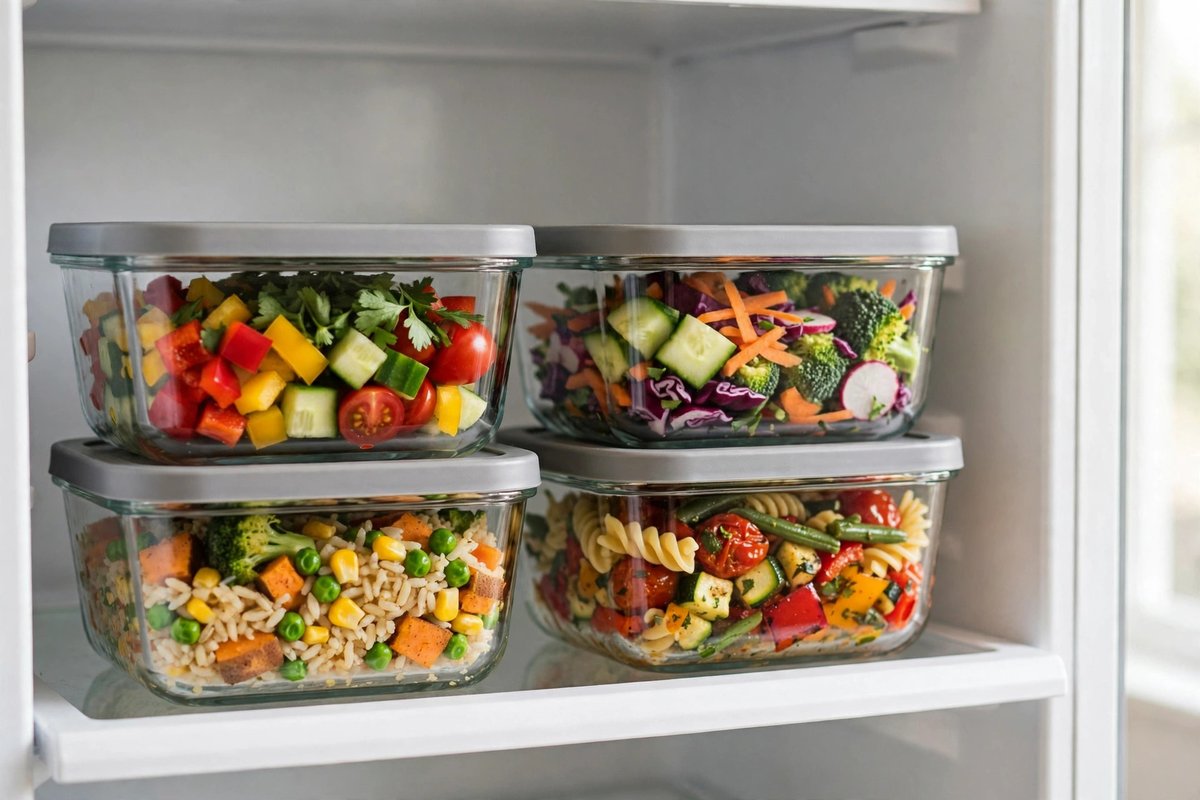
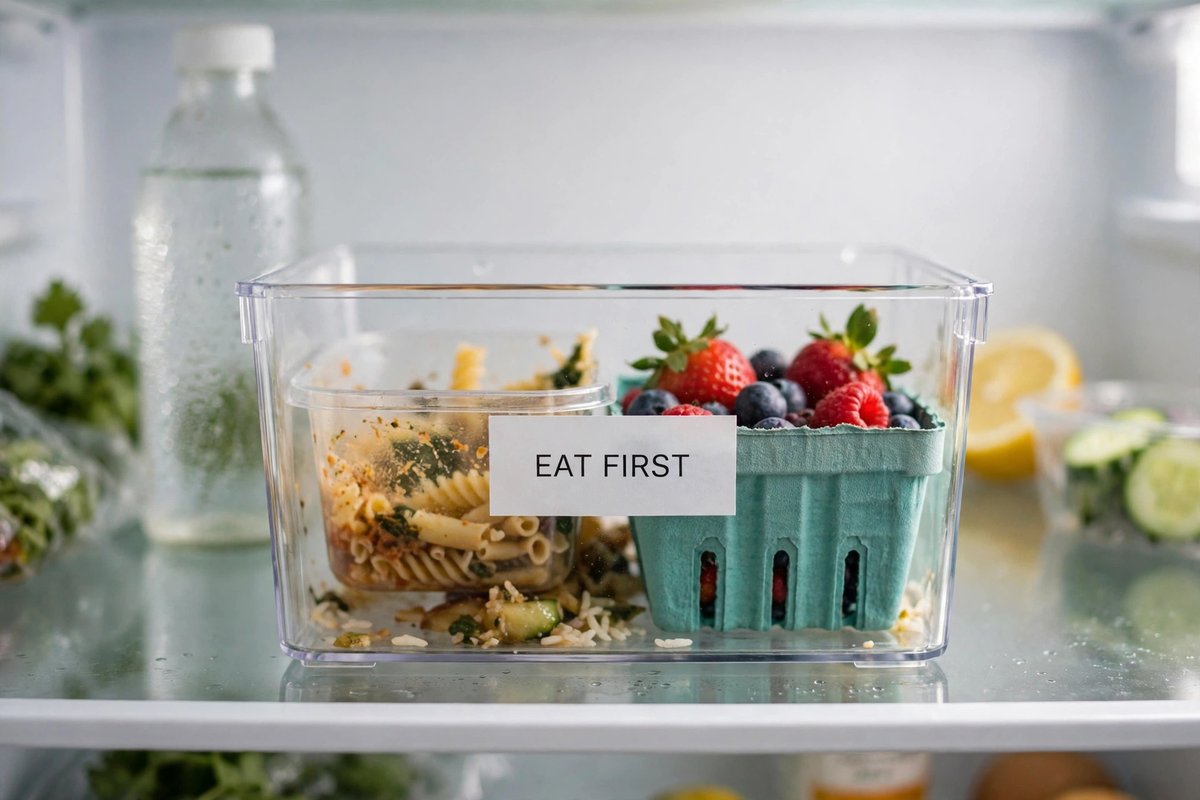
Most food waste is not food that went bad — it is food nobody saw in time. Keep one small clear bin, front and center on the top shelf, labeled “EAT FIRST.” Anything that expires within three days goes in: the half-used sour cream, yesterday’s leftovers, the berries that need eating today. When anyone opens the fridge looking for a snack, the eat-first bin is the first thing they see — and food gets eaten instead of thrown away.
12. Store Produce the Way It Actually Lasts
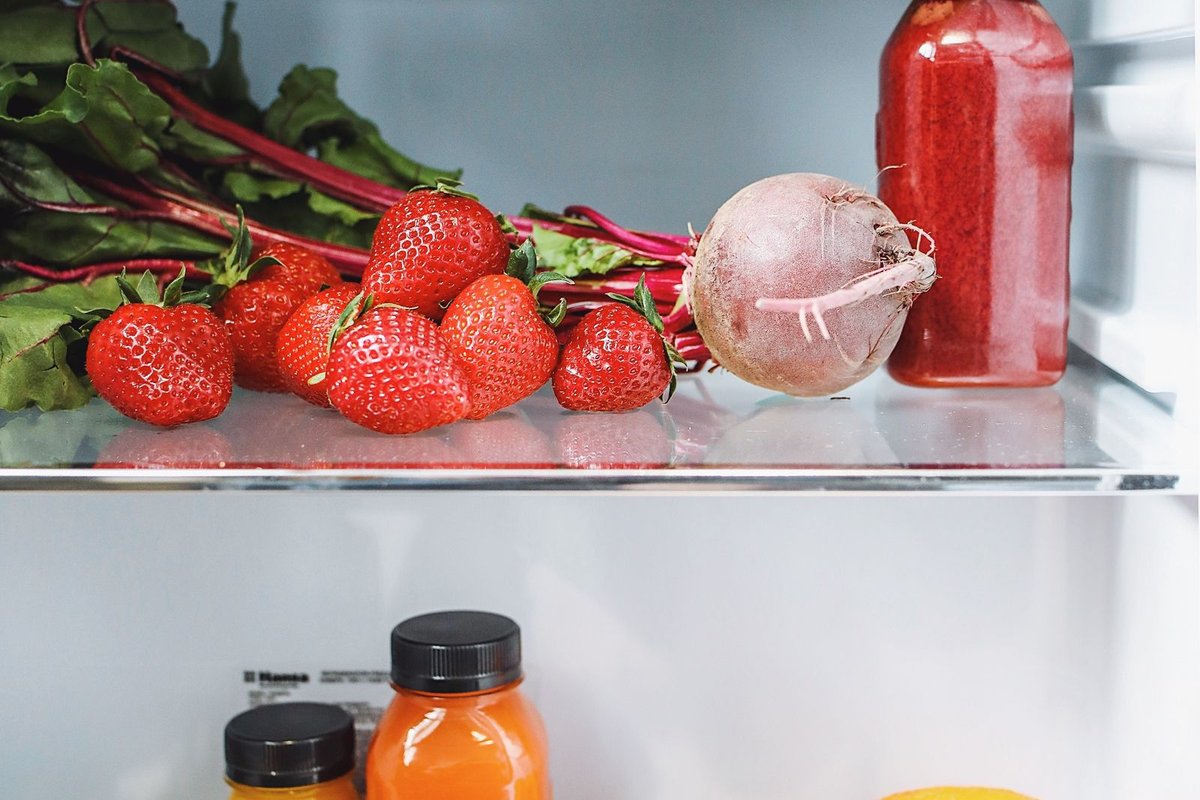
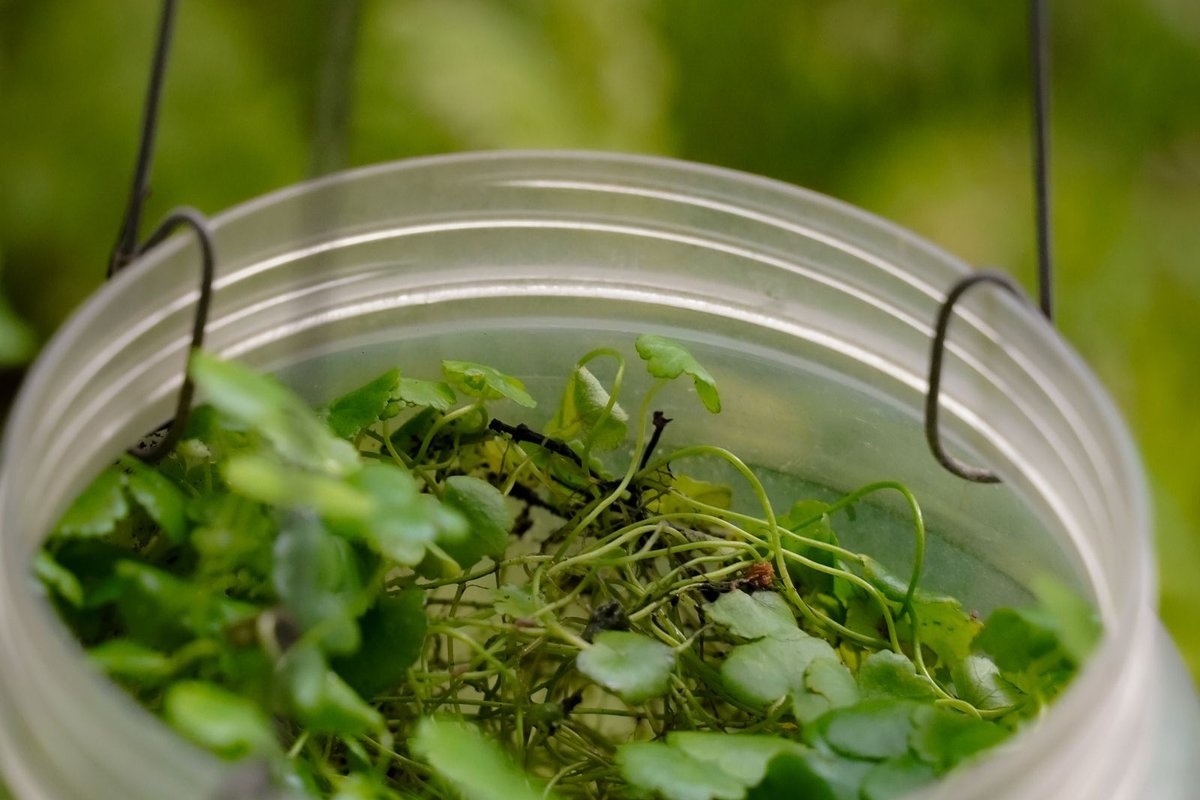
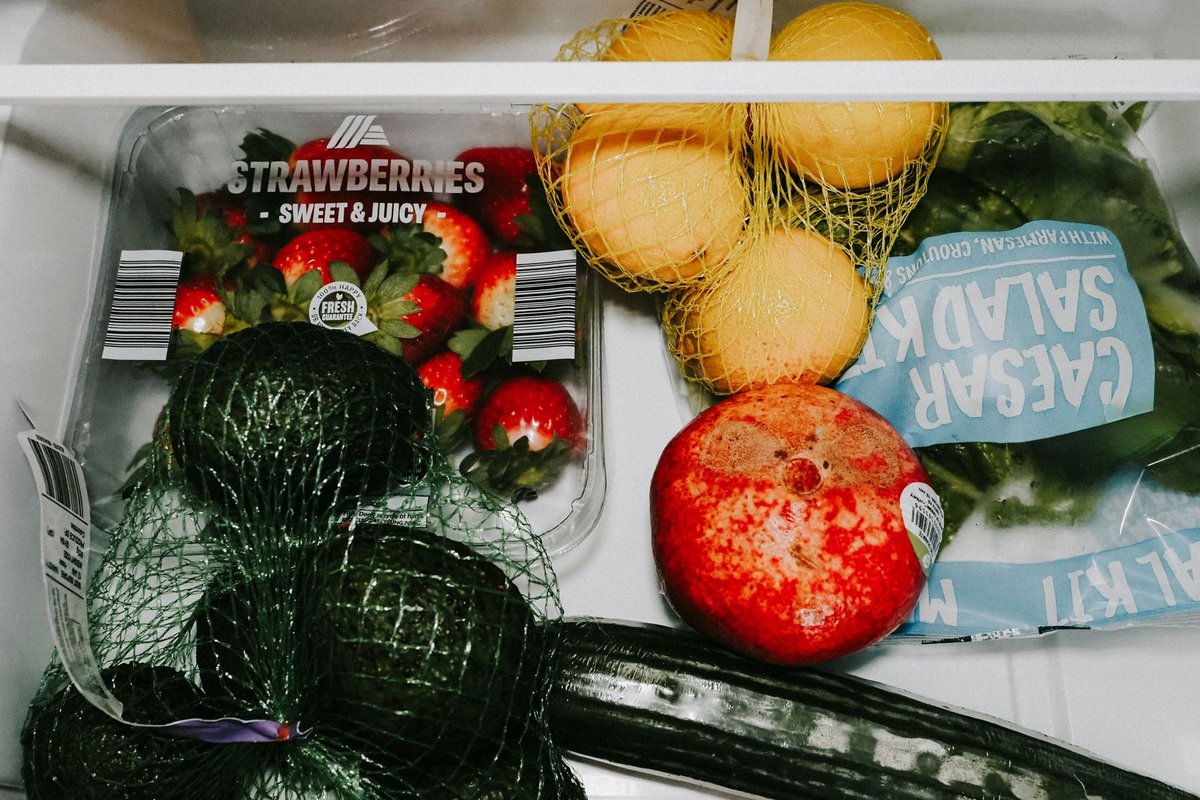
Produce dies in a small fridge because it is stored wrong. Keep herbs upright in a jar of water like flowers (they last two weeks instead of three days), store berries dry in a lined container with a paper towel, and keep onions and potatoes out of the fridge entirely — they belong in a dark cupboard. Use the crisper drawers for what they are made for: high humidity for leafy greens, low humidity for fruit. A little produce know-how stretches a small fridge further than any bin.
13. Flat-Freeze in Bags to Reclaim the Freezer
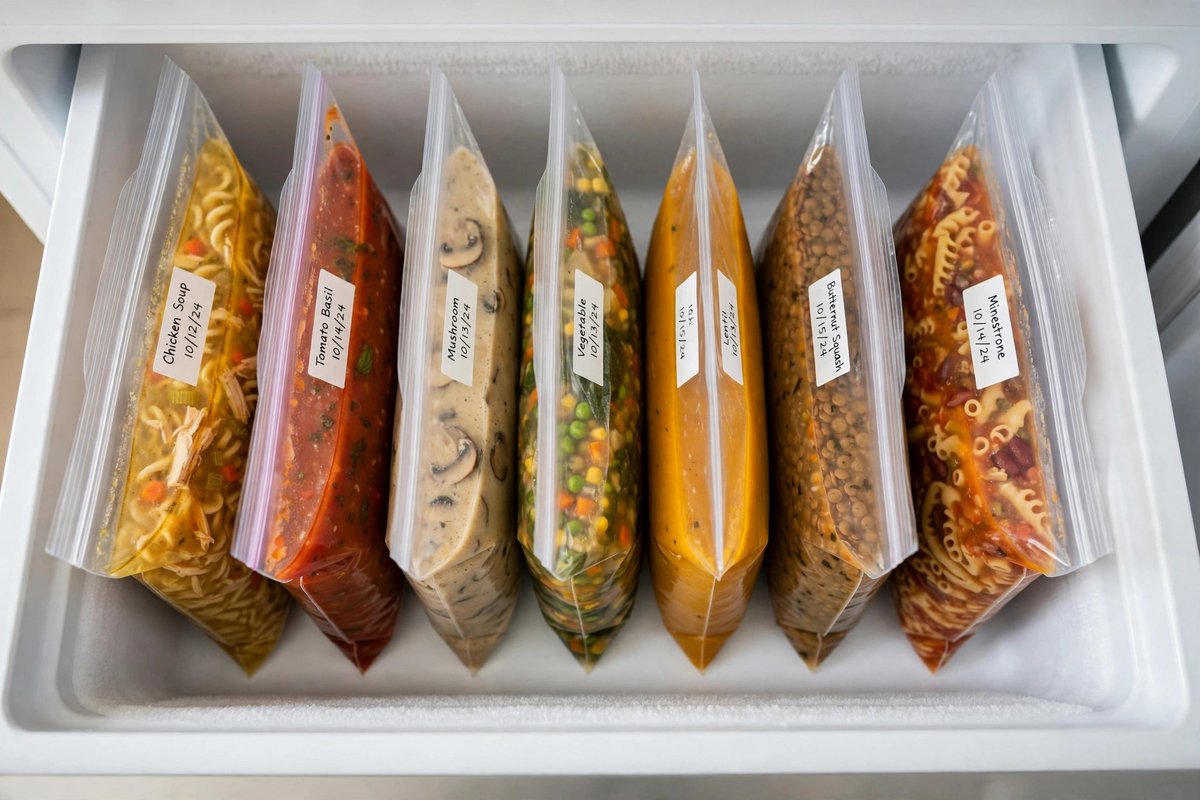
A small freezer fills up fast when everything is in rigid boxes. Flat-freezing is the fix: pour soups, sauces and leftovers into freezer bags, squeeze out the air, and lay them flat to freeze ($0 — you already own the bags). Once frozen, they stack like files on a shelf instead of a pile of boxes. Label each bag with the contents and date before it goes in — a frozen mystery bag is just food waste with extra steps.
14. Use the Fridge’s Outside Walls for Extra Storage
In a small kitchen, the fridge itself is storage real estate. Magnetic hooks and magnetic bins ($10–$18) stick to the fridge’s side walls and hold cling wrap, foil, scissors, shopping lists and the measuring cups you reach for daily. A magnetic spice rack on the side keeps spices off the counter and out of the fridge entirely. Keep the front clear — that is where the magnets and photos live — and use the sides for the working stuff.
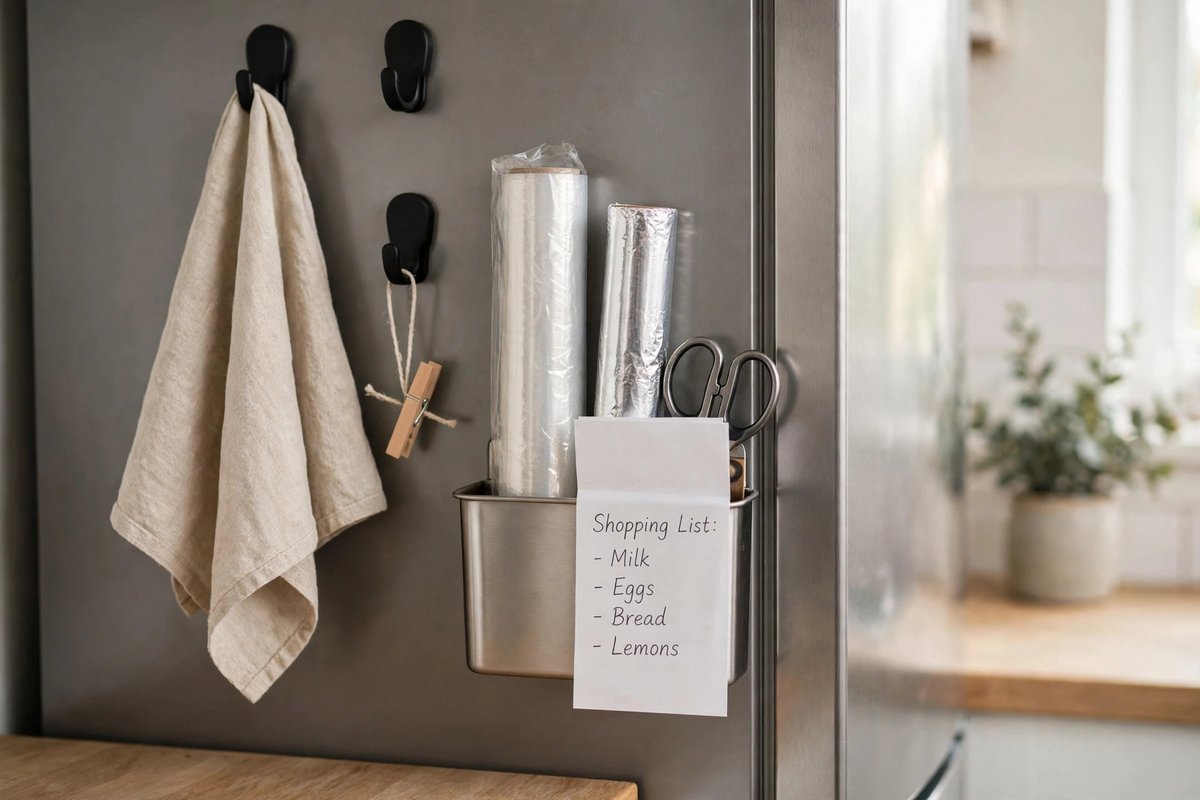

15. Finish With a 10-Minute Weekly Fridge Reset
No organization system survives without a reset habit. Pick one day a week — Sunday works for most households — and spend ten minutes: toss anything expired, move near-expiry food into the eat-first bin, wipe one shelf, and check what you are out of before the grocery run. It is the fridge version of the nightly reset we recommend in our kitchen cleaning routine — and it means the system you built this week still works next month, without another full clean-out.
What to Avoid
Even the best fridge organization ideas for small kitchens fail when these habits creep in.
- Putting milk and eggs in the door. The door is the warmest spot in the fridge. Milk spoils faster there, and eggs lose freshness. Door space is for condiments.
- Storing raw meat above ready-to-eat food. One drip of raw chicken juice onto your leftovers is a food-safety problem. Raw meat always goes on the bottom shelf.
- Buying bins before measuring. A bin that does not fit the shelf is just clutter you paid for. Measure width, depth and shelf height first — every time.
- Overfilling the fridge. Cold air needs to circulate. A fridge packed wall to wall runs warmer, not colder, and food spoils faster. Aim for about 80% full.
- Forgetting the freezer. A disorganized freezer wastes just as much food as a messy fridge. Flat-freeze, label and date everything — no mystery bags.
- Using the fridge as a pantry. Bread, onions, potatoes, tomatoes and most sauces do better outside the fridge. Every pantry item in the fridge is space a perishable item cannot use.
FAQ: Fridge Organization Ideas for Small Kitchens
How do I organize a very small fridge?
Zone by temperature, use clear bins with handles, add a turntable for condiments and a shelf riser for vertical space. The biggest wins are the zones and the eat-first bin — both cost nothing.
What is the best way to organize a fridge?
By temperature zone: ready-to-eat food on top, dairy and eggs in the middle, raw meat on the bottom, condiments in the door. Bins keep each zone tidy, and labels keep the system working after week one.
How much does fridge organization cost?
A solid setup — 4–6 clear bins, one turntable and a shelf riser — runs about $35–$55 total. You can start with just the bins ($12–$20) and add pieces later; the free habits (zones, eat-first bin, weekly reset) matter more than the products.
How often should I clean out the fridge?
A 10-minute weekly reset plus a full empty-and-wipe every month. That rhythm keeps a small fridge clean without the dreaded three-hour clean-out.
Do fridge bins actually save space?
They save usable space, not raw volume: bins stop things from toppling, make deep shelves reachable, and let you stack. The space saved comes from using the height and the back of the shelf instead of losing both to clutter.
The Bottom Line
A small fridge is not a small problem — it is a system problem, and systems are fixable. Zone by temperature, bin what you keep, label what you store, and give near-expiry food a front-row seat. Start with these fridge organization ideas for small kitchens — the bins and the eat-first bin — this week, and your fridge will hold more, waste less, and stop hiding food from you.
Save this list before your next grocery run, and share it with someone whose fridge needs the same rescue. For more small-kitchen wins, try our vertical storage ideas — the same go-up-not-out trick, for the rest of the kitchen.
Enjoying these ideas?
Get our free 7-Day Small Home Reset Checklist and one practical small-home idea every week.