
The entryway is the first thing you see when you come home and the first thing guests see when they visit — and in most small apartments, it has no closet at all. Coats, shoes, bags, keys, and mail pile up by the door because there is nowhere else for them to go. These 11 small entryway ideas with no closet give everything a home, using only the wall, the floor, and a few inches of space by the door.
1. Start by Defining the Entryway, Even Without Walls
Many apartments open straight into the living room, so the entryway is a feeling, not a room. Define it with a small rug, a slim console table, or a bookshelf turned sideways. Once the zone has a boundary, everyone in the house knows where shoes and bags belong — and where they do not. A rug that is just big enough for two people to stand on is enough to mark the space.
2. Use Wall Hooks Instead of a Coat Rack
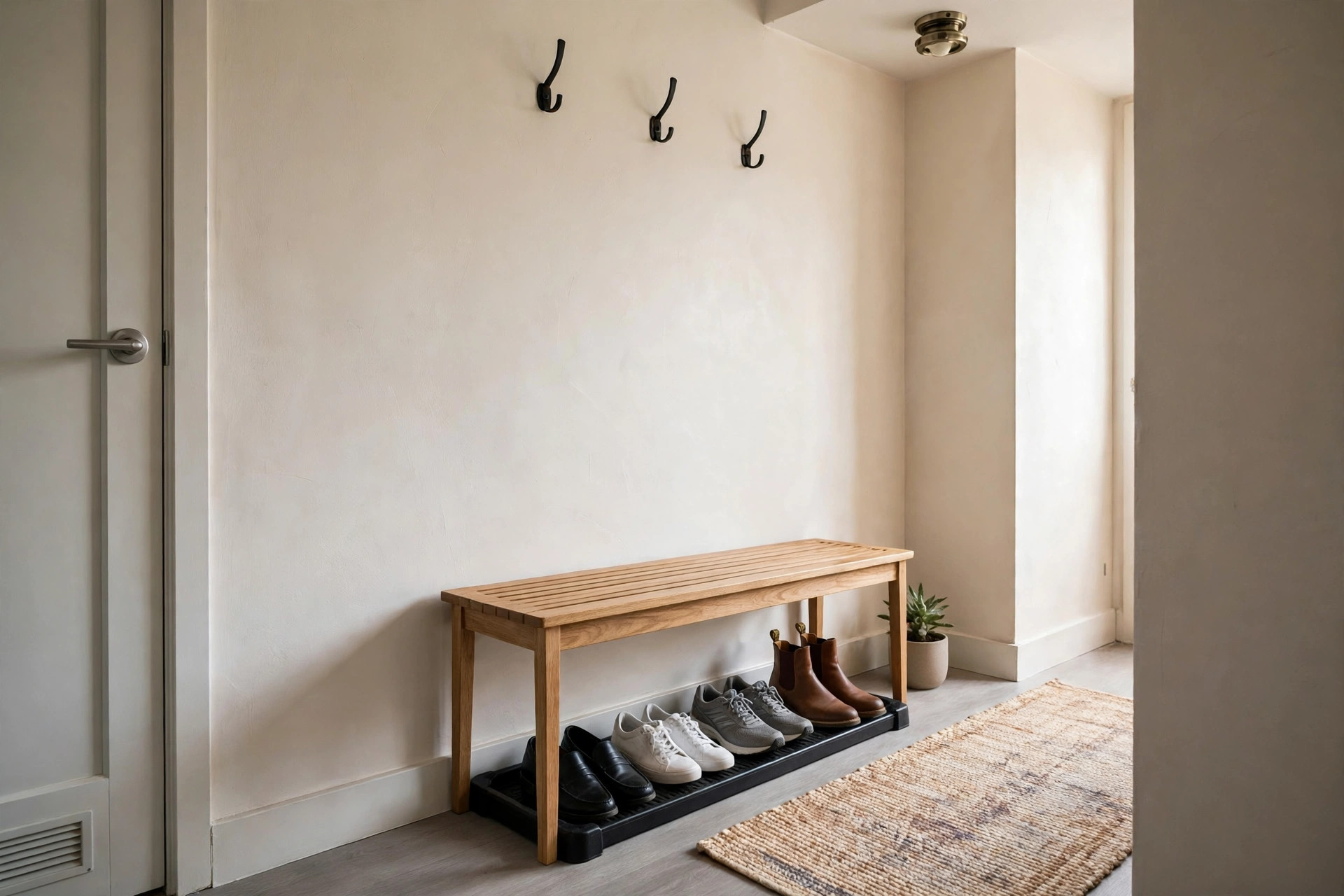
A freestanding coat rack takes up floor space and tips over. Wall hooks do the same job on a surface you were not using. Install a row of sturdy hooks at adult height and a lower row for kids’ coats and bags. Choose hooks rated for heavy coats, and leave one hook empty on purpose — a full row of hooks looks cluttered, while a row with breathing room looks tidy. Renters can use heavy-duty adhesive hooks that remove cleanly.

3. Add a Slim Bench With Storage Underneath
A bench gives you a place to sit while putting on shoes, and the space underneath is perfect for shoe storage. Choose a slim bench, no more than 12 to 14 inches deep, so it does not block the walkway. Store shoes in pairs underneath, one pair per person for everyday use, and keep the rest elsewhere. A bench with a lift-up lid adds hidden storage for gloves, scarves, and dog supplies.
4. Give Shoes One Home — and a Limit
Shoes multiply by the door because there is no rule about how many belong there. Set the rule: one pair per person by the door, everything else in the bedroom or a closet. Use a slim shoe rack, a tray that catches dirt, or a low shelf under the bench. A boot tray also protects the floor in rainy weather. For more shoe ideas for every room, see our shoe storage ideas for entryways, closets, and small homes.
5. Hang a Small Shelf for Keys, Mail, and Sunglasses
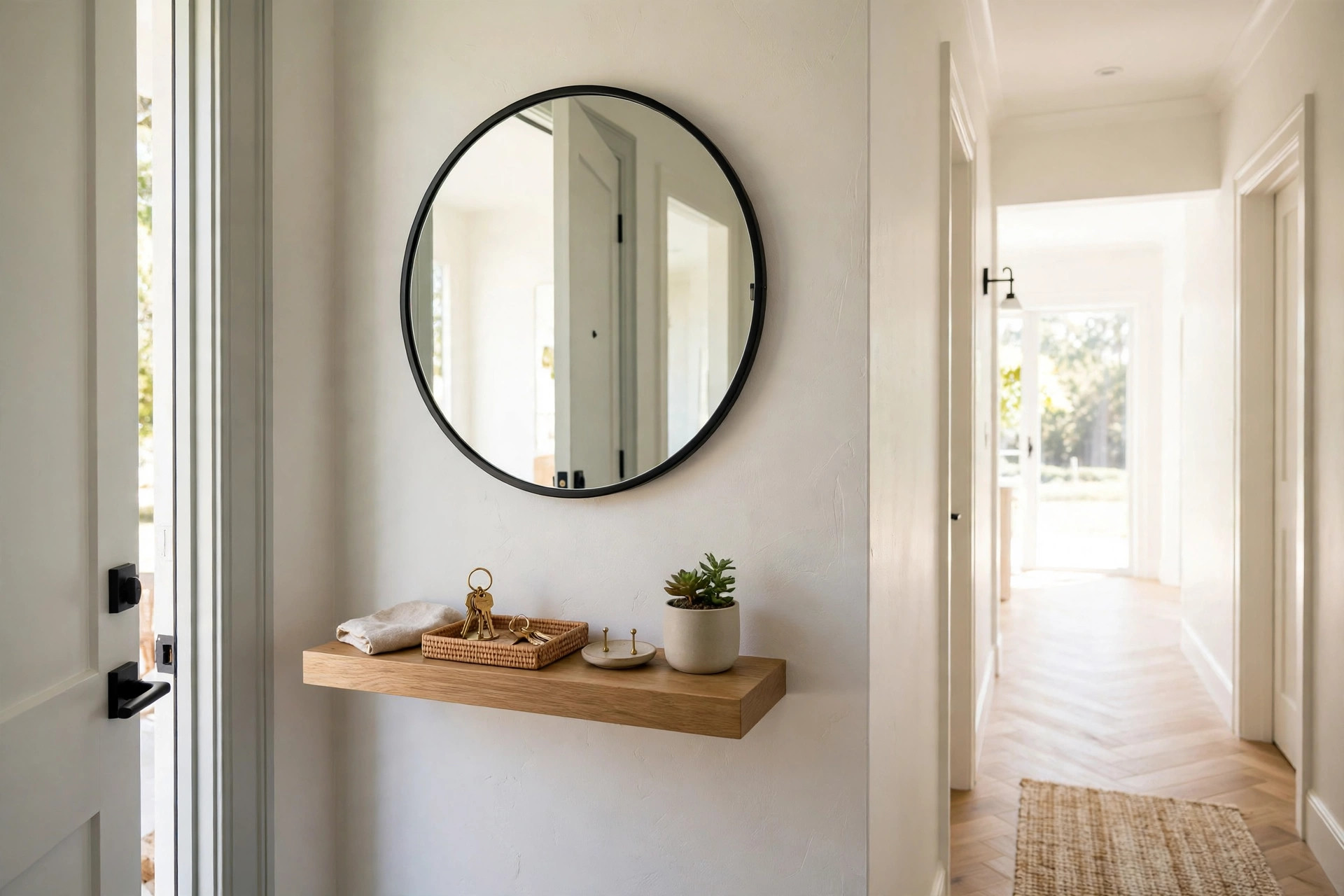
The things you grab on the way out — keys, sunglasses, wallet, mail — need one landing spot, or they end up on every surface in the house. A small floating shelf with a tiny tray or bowl beside the door solves it. Add a key hook underneath the shelf so keys never get lost. Keep the shelf small: if it is big enough to hold clutter, it will.
6. Use the Back of the Door
The back of the front door, or the nearest interior door, is free storage. An over-the-door rack holds coats, bags, or cleaning supplies without a single screw. A slim over-door organiser with pockets holds gloves, hats, dog leads, and umbrellas. Check that the rack is shallow enough for the door to close fully, and keep the load light so the door still swings easily.
7. Add a Mirror to Make a Tiny Entryway Feel Bigger
A mirror by the door is practical — one last check before you leave — and it makes a narrow entryway feel twice as wide. Hang it at eye level above the bench or shelf, and keep it to one mirror, not a gallery wall. A mirror that reflects a window or a light-coloured wall brightens a dark hallway far better than a small lamp.
8. Use Baskets for the Things That Have No Category
Every entryway has odd items: reusable shopping bags, umbrellas, pet supplies, sports gear. Give each category one basket, labelled if it helps, and stack them on a shelf or under the bench. One basket per category is the rule — a mixed basket becomes a junk basket within a week. The same basket system keeps a bedroom calm too, as in our small bedroom storage ideas for a calm, clutter-free room.
9. Keep a Small Cleaning Station by the Door
Mud, dust, and wet shoes come in through the door, so cleaning supplies should live near it. A small basket with a hand broom, a dustpan, and a cloth, tucked under the bench or on a shelf, means you can sweep the entryway in thirty seconds. A doormat outside and a washable rug inside catch most of the dirt before it reaches the rest of the apartment.
10. Use Vertical Space Above the Door
The wall above the door frame is almost always empty. A high shelf there holds out-of-season items — winter hats in summer, beach bags in winter — in a labelled box. Keep it to one box, and only for things you need a few times a year. Anything you reach for weekly belongs lower, where you can actually grab it without a step stool.
11. Make It Look Like a Room, Not a Storage Corner
An entryway that only stores things feels like a hallway closet. Add one thing that is purely for looks: a small plant, a framed print, or a pretty tray on the shelf. Keep it to one decorative item, so the space still feels calm. When the entryway looks cared for, the whole apartment feels more welcoming — and you will actually want to keep it tidy. The living room just beyond it benefits from the same thinking, as in our small apartment living room ideas that make it look bigger.
Frequently Asked Questions
How do I organise an entryway with no closet and no space? Use the wall, not the floor. A row of hooks, a small floating shelf, and a slim shoe tray use almost no floor space. Define the zone with a small rug, and set a one-pair-per-person shoe rule so the space never overflows.
What is the best shoe storage for a tiny entryway? A slim shoe rack or a boot tray under a bench works best. Keep only everyday shoes there — one pair per person — and store the rest in the bedroom. A tray also catches dirt and water, which protects the floor.
Can renters add entryway storage without drilling? Yes. Heavy-duty adhesive hooks, over-the-door racks, freestanding slim benches, and leaning shelves all work without holes. Test adhesive hooks on a hidden spot first, and check the weight rating before hanging heavy coats.
How do I keep a small entryway from looking cluttered? Give everything a home, keep surfaces mostly clear, and leave one hook and one shelf space empty on purpose. A mirror, a small rug, and one decorative item make the space feel finished instead of crowded.
Conclusion
A small entryway with no closet works when every item has one home and the space has a clear boundary. Start with hooks, a shoe rule, and a small shelf for keys — those three changes fix most of the mess. Add a bench and a mirror when you are ready, and keep one decorative touch so the first thing you see when you come home feels calm, not chaotic. Save this guide and try one idea this weekend.