
A small living room does not have to feel cramped. With the right layout, light colours, and furniture that does more than one job, even a tiny apartment living room can feel open, calm, and comfortable. These 18 small apartment living room ideas work in rentals, cost very little to try, and make the room look bigger from the first day.
1. Float the Sofa Instead of Pushing It Against the Wall
Pushing every piece of furniture against the wall feels like it saves space, but it often makes a room look smaller and harder to use. Pull the sofa a few inches away from the wall, or float it to face the television or a window. The small gap behind it creates breathing room, lets light move around the furniture, and makes the layout feel intentional instead of squeezed in. Even six inches makes a visible difference.
2. Choose One Focal Point and Arrange Around It
A small room needs one clear focal point — a window, a television, a fireplace, or a large piece of art. Arrange the sofa and chairs to face it, and keep everything else simple. When the eye has one place to land, the room feels organised instead of busy. If everything competes for attention, the room feels cluttered no matter how tidy it is.
3. Use Light Colours on Walls and Large Furniture
Light walls reflect light and make the boundaries of a room feel further away. You do not need to paint everything white — pale sage, warm cream, light grey, and soft beige all work. Keep the largest pieces, like the sofa and rug, in light or mid-tone colours too. Add colour through cushions, throws, and art, which are easy to change and do not shrink the room visually.
4. Pick a Sofa That Fits the Room, Not the Showroom
A sofa that is too big swallows a small living room. Measure the wall it will sit against, leave at least 30 inches of walking space in front of it, and choose a compact two-seater or a loveseat with slim arms and visible legs. Furniture on legs shows more floor underneath, which tricks the eye into seeing a larger room. A low back also keeps sightlines open across the room.
5. Let in as Much Natural Light as Possible
Heavy curtains and dark blinds make a small room feel like a box. Use sheer curtains, light linen panels hung high and wide, or simple roller blinds that disappear during the day. Keep windowsills clear and avoid tall furniture that blocks the window. Natural light is the cheapest way to make a small living room feel bigger, and it costs nothing.
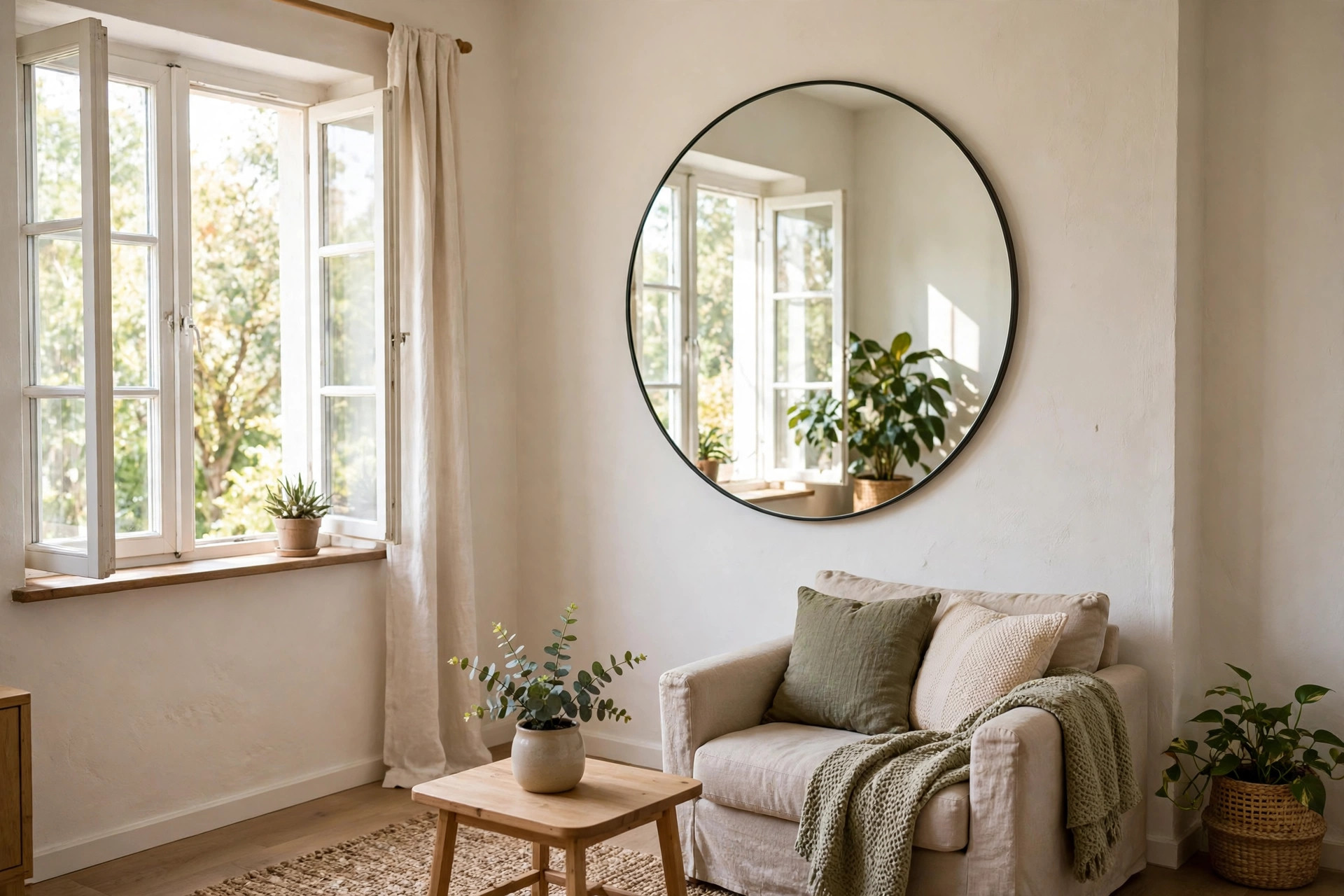
6. Hang One Large Mirror Opposite a Window
A mirror opposite a window doubles the light and the view, and it is the oldest designer trick for small rooms. Choose one large mirror instead of several small ones — one big reflection looks calm, while many small mirrors look busy. Keep the mirror at eye level, and make sure it reflects something pleasant, like a window or a plant, not a cluttered corner.
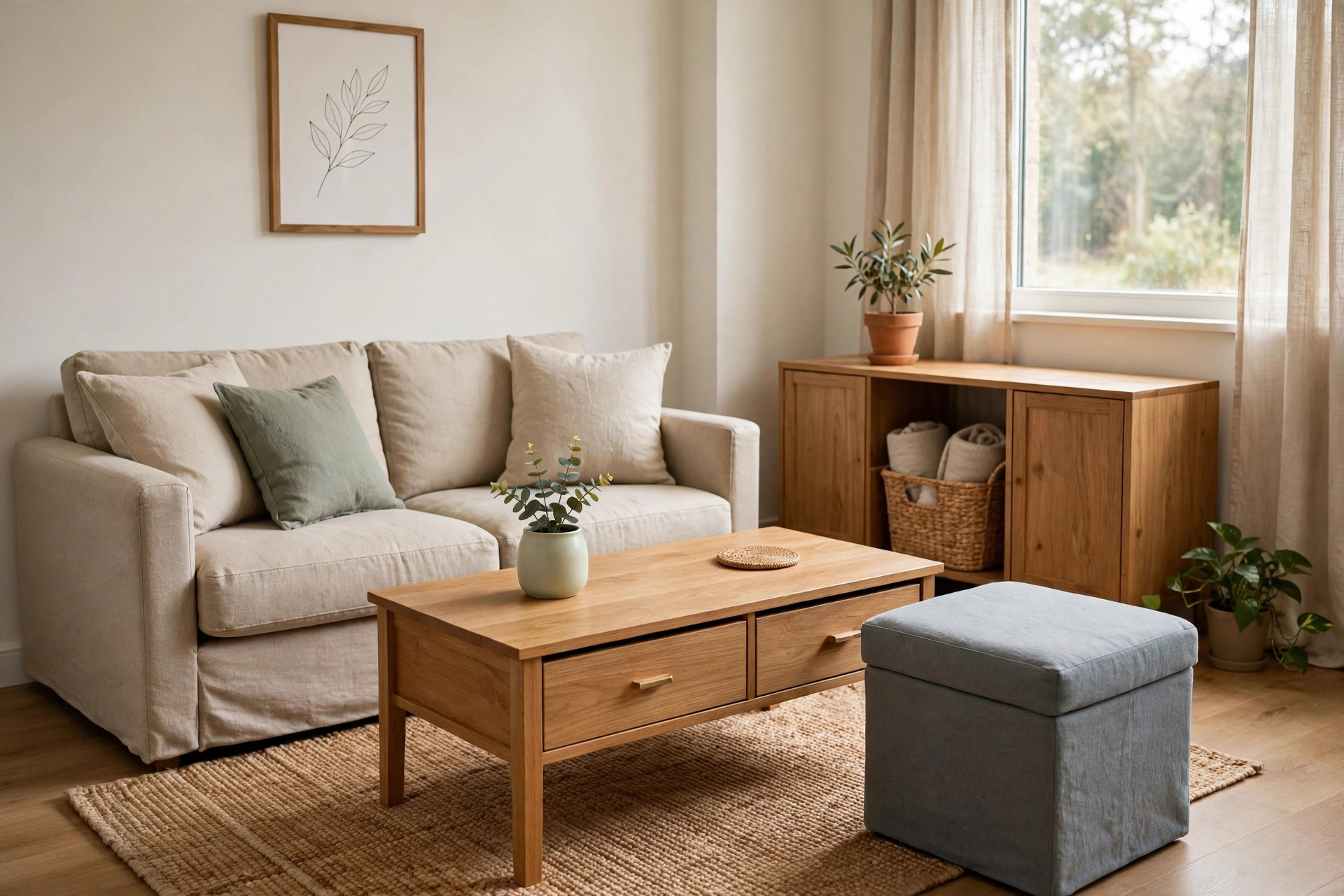
7. Use Furniture With Hidden Storage
In a small apartment, every piece of furniture should earn its floor space. An ottoman with storage inside holds blankets and board games. A coffee table with a shelf or drawers hides remotes and chargers. A storage bench by the window holds shoes and bags. Hidden storage keeps the surfaces clear, and clear surfaces are what make a room look bigger. The same hidden-space thinking works in the bedroom too — see our guide to under-bed storage ideas for 14 ways to use the space under your bed.
8. Keep the Coffee Table Small and Round
A large rectangular coffee table eats up walking space and creates sharp corners in a small room. A small round table, or two small nesting tables, leaves room to move and softens the layout. Nesting tables are especially useful: pull one out when guests come, tuck it away when they leave. If you need a surface for drinks, a slim C-shaped side table that slides over the sofa arm works even better.
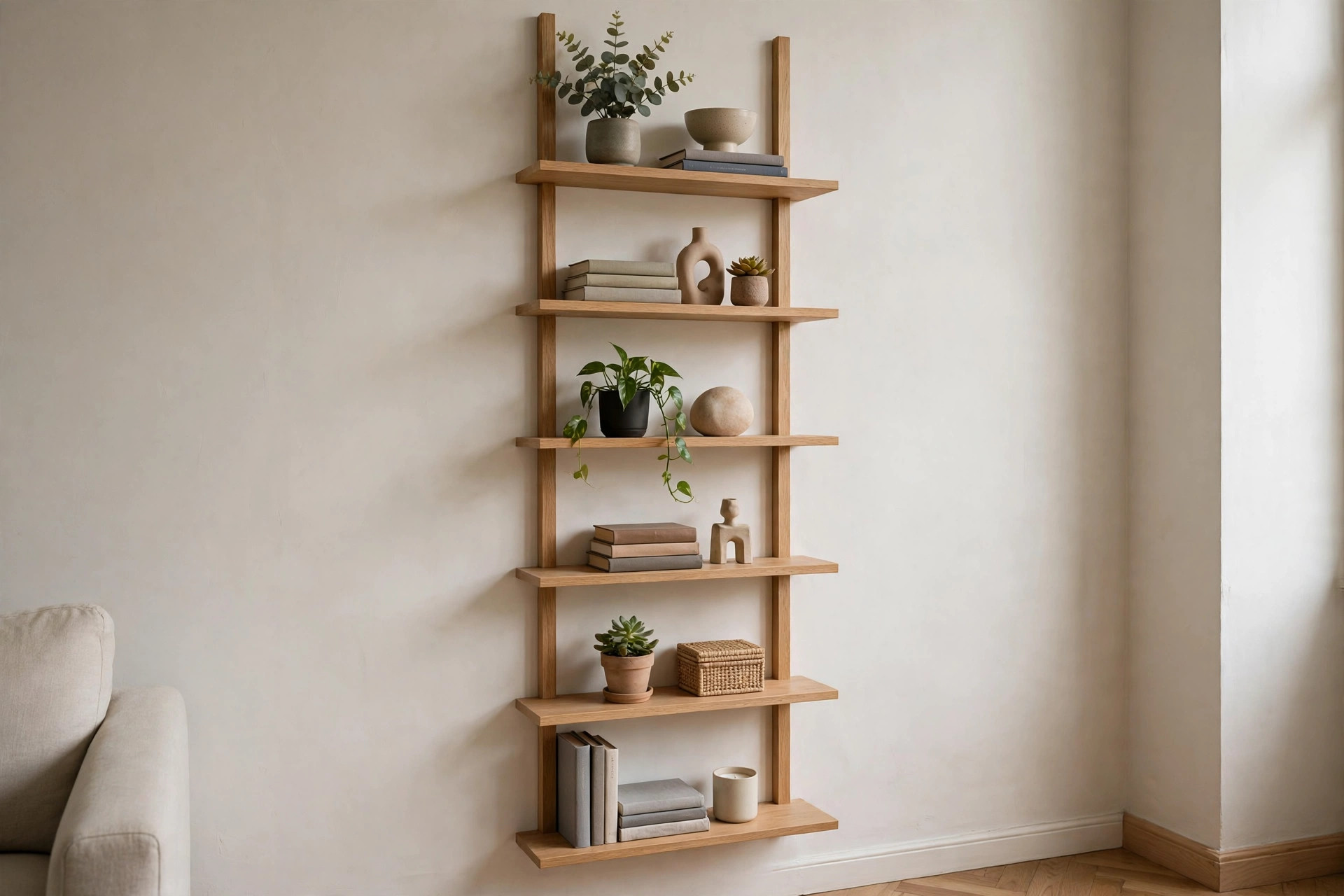
9. Go Vertical With Shelves and Wall Storage
Floor space is limited, but wall space is free. Tall, narrow shelves, floating shelves above the sofa, and a picture ledge for books and plants draw the eye upward and free the floor. Keep shelves tidy — a few books, one plant, and one decorative object per shelf looks calm, while a shelf packed edge to edge looks like clutter. For more ideas, see our vertical storage ideas for walls you are not using.
10. Use a Rug to Define the Seating Zone
A rug that is too small makes the seating area look scattered. Choose a rug large enough for the front legs of the sofa and chairs to sit on it — usually at least 5 by 7 feet for a small living room. One large rug unifies the furniture into a single zone and makes the floor look bigger than several small rugs would. A light, low-pile rug is easiest to clean and does not add visual weight.
11. Choose Multi-Purpose Furniture
A small living room cannot afford single-purpose furniture. A daybed works as a sofa by day and a guest bed at night. A console table behind the sofa doubles as a desk. A pouffe is extra seating, a footrest, and a side table. Before buying anything new, ask what else it can do. If the answer is nothing, it probably does not belong in a small room.
12. Keep Clutter Off Every Flat Surface
Clutter is what makes a small room feel tiny. Give every object a home — a basket for throws, a tray for remotes, a small box for chargers — and do a five-minute reset every evening. The goal is not a perfect room, it is clear surfaces. A room with clear tables and an empty floor looks twice as big as the same room with things piled on every surface.
13. Use Matching Baskets and Boxes for the Mess You Keep
Not everything can be hidden in furniture. Matching baskets in one colour, stacked neatly on a shelf or beside the sofa, make everyday items look intentional. Use them for kids’ toys, pet supplies, magazines, and craft supplies. One style, one colour, everywhere — that consistency is what makes cheap storage look like a design choice.
14. Hang Curtains High and Wide
Hang curtain rods close to the ceiling and wider than the window frame, so the curtains cover the wall beside the window, not the glass itself. This makes the window look larger and the ceiling look higher. Floor-length curtains in a light fabric add height, while short curtains that stop at the windowsill chop the wall in half. It is a ten-minute change with a big visual payoff.
15. Add Plants, But Keep Them Off the Floor
Plants make a small living room feel alive, but large floor plants take up precious space. Use hanging planters, a plant on a floating shelf, or a small plant on a side table instead. One or two healthy plants are enough — a jungle of pots on the floor makes the room feel crowded. Choose low-maintenance plants like pothos, snake plants, or ZZ plants if you are new to plant care.
16. Use Lighting in Layers, Not One Bright Ceiling Light
One harsh ceiling light flattens a small room. Use layers instead: a floor lamp in a corner, a small table lamp on a side table, and a warm bulb in the ceiling fixture. Warm light (2700K) feels cosy, and lamps at different heights make the room feel deeper. A lamp in a dark corner also makes that corner feel like part of the room instead of a dead space.
17. Leave Some Empty Space on Purpose
A small room does not need to be filled. Leave one wall mostly empty, keep one shelf half empty, and resist the urge to add another chair or table. Empty space is what lets the eye rest, and it is what makes a room feel calm and spacious. If a corner is empty, it is not wasted — it is breathing room.
18. Create Zones, Even in One Open Room
Many apartments combine the living room and kitchen in one open space. Use a rug, a bookshelf turned sideways, or the back of the sofa to mark where the living room ends and the kitchen begins. Clear zones make both areas feel larger and more organised, because each one has a job. The same zoning idea works in the kitchen — see our small kitchen storage ideas for tiny kitchens for storage that keeps a small cooking space calm.
Frequently Asked Questions
What is the best sofa size for a small apartment living room? Measure first, then buy. A compact two-seater, usually 60 to 72 inches wide, fits most small living rooms. Leave at least 30 inches of walking space in front of it and choose slim arms and visible legs so the room still feels open.
How can I make a small living room look bigger without painting? Use a large mirror opposite a window, light-coloured cushions and throws, a large rug, and clear surfaces. Hang curtains high and wide, and move tall furniture away from windows so natural light reaches the whole room.
Is a sectional sofa a bad idea for a small living room? Usually, yes. A sectional takes up two walls and blocks walking paths. A compact sofa plus one lightweight chair is more flexible — you can move the chair when guests come and tuck it away when you need floor space.
What colours make a small living room feel larger? Pale, warm neutrals work best: warm white, light sage, soft beige, and pale grey. Keep large furniture in those tones and add deeper colour through small items like cushions, art, and throws, which are easy to change.
Conclusion
A small apartment living room feels bigger when it has light, clear surfaces, furniture that fits, and one clear focal point. Start with the easiest changes — pull the sofa off the wall, hang a mirror, clear the surfaces — and add storage and zoning as you go. Save this guide for your next small-space refresh, and try one idea this weekend. The room will feel different by Sunday evening.
1 thought on “18 Small Apartment Living Room Ideas That Make It Look Bigger”