
Look around any small home and you will see the same pattern: the floors and counters are full, but the walls are almost empty. Vertical storage ideas fix that imbalance. Every wall, from floor to ceiling, is storage space you are already paying for — you just have to claim it in the right order. These 16 ideas work in kitchens, bedrooms, bathrooms, and entryways. Most cost under $30, many need no drilling at all, and every one gives you back floor space you can actually walk on.
1. Start With Floating Shelves Where You Already Reach
Put two or three floating shelves where your hands already go: above the bathroom sink, beside the bed, over the desk. Shelves earn their keep when they hold daily items, not decor that gathers dust. A pair of 24-inch shelves costs $15 to $30 and installs in about 20 minutes. Keep the lowest shelf at shoulder height for everyday things, and save the highest one for lighter items you rarely touch.
2. Hang a Rail System in the Kitchen
A wall rail with S-hooks turns a blank kitchen wall into storage for utensils, pans, and mugs. Mount a 24- to 36-inch rail above the counter, hang what you cook with daily, and free an entire drawer. Rails cost $12 to $20, and hooks run about $5 a pack. This is one of the vertical tricks inside our small kitchen storage ideas for tiny kitchens, and it works because your most-used tools stop competing for counter space.

3. Put Up a Pegboard You Can Rearrange
Pegboards are the most flexible vertical storage there is: hooks, baskets, and small shelves move in seconds as your needs change. A 2-by-4-foot pegboard costs $20 to $35 with hooks. Use one in the kitchen for measuring cups, in the entryway for keys and leashes, or above a desk for supplies. Paint it the wall color for a calm look, or a contrasting shade if you want it to read as decor instead of hardware.
4. Use the Back of Every Door
The inside of a door is a full vertical panel most homes ignore. Clear over-door racks hold pantry packets in the kitchen, toiletries in the bathroom, and cleaning supplies in a closet. Most cost $15 to $25 and hang without a single screw. In a bedroom, an over-door organizer with clear pockets works for scarves, chargers, and gloves. Add felt pads where the hooks touch, so the door closes quietly and the paint stays intact.
5. Choose Tall, Narrow Furniture Over Wide
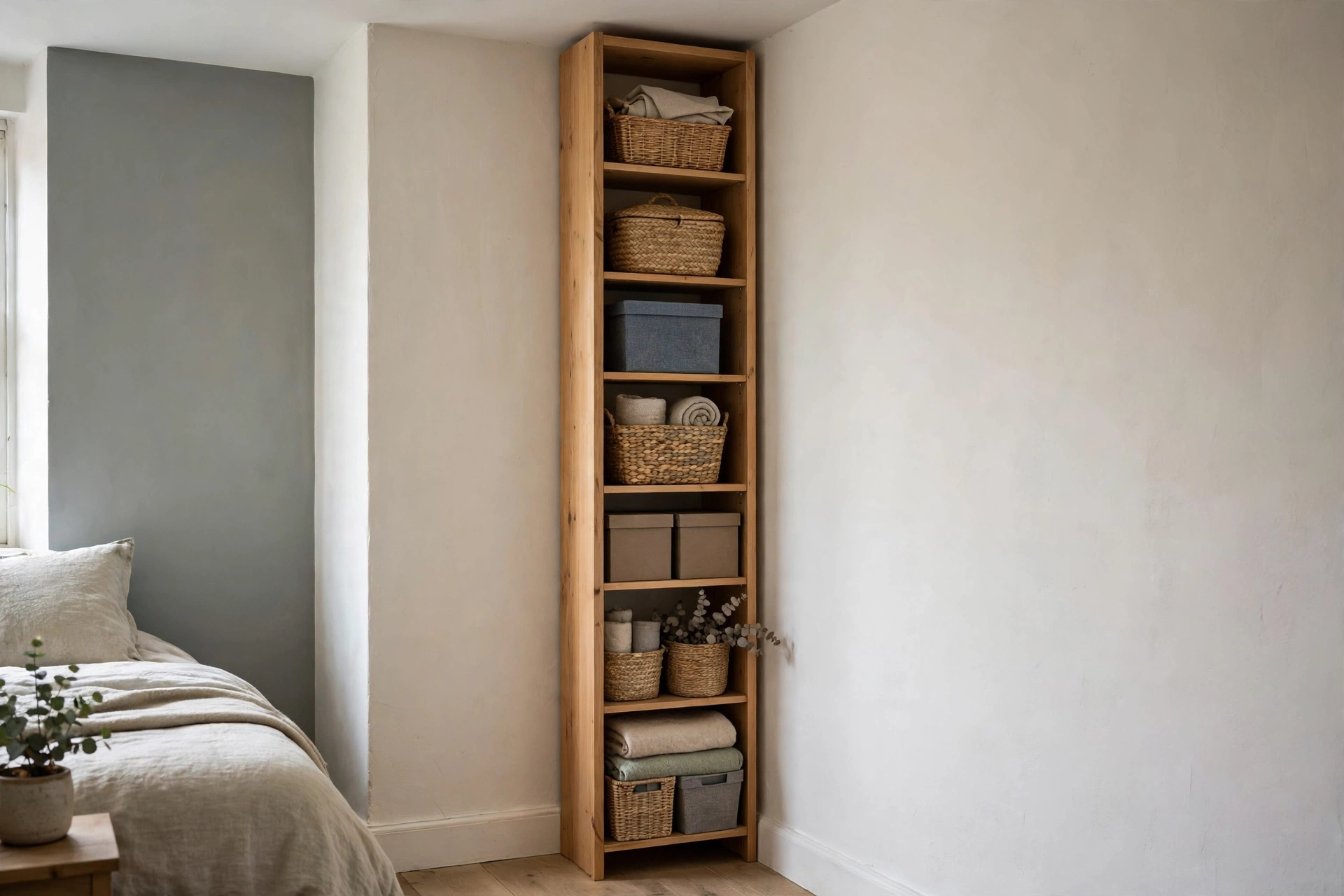
When floor space is tight, buy height, not width. A 12-inch-wide, 6-foot-tall bookcase holds as much as a wide one that eats three times the floor. Tall, narrow units work beside a sofa, in a bathroom corner, or as a pantry in a kitchen short on cabinets. Expect to pay $40 to $80. Anchor tall pieces to the wall with the included strap — it takes five minutes and prevents a dangerous tip-over.
6. Add a Fold-Down Table or Desk
A wall-mounted drop-leaf table gives you a desk or dining spot that disappears when you are done. Fold it down for laptop work or breakfast for two, then fold it flat and the room opens up again. Most models cost $50 to $90 and mount into two studs. In a studio or tiny dining corner, this one piece replaces a table that would block the walkway all day, every day.
7. Claim the Corners With Corner Shelves
Corners are dead space in most rooms, but a set of corner shelves turns them into real storage. Use them in a bathroom for rolled towels, in a living room for plants and books, or in a kitchen for a small herb garden. Corner shelf sets run $15 to $25. Because corners sit outside your daily reach path, store weekly items there rather than daily ones, and keep the styling light so the corner feels open.
8. Run Picture Ledges Above the Sofa
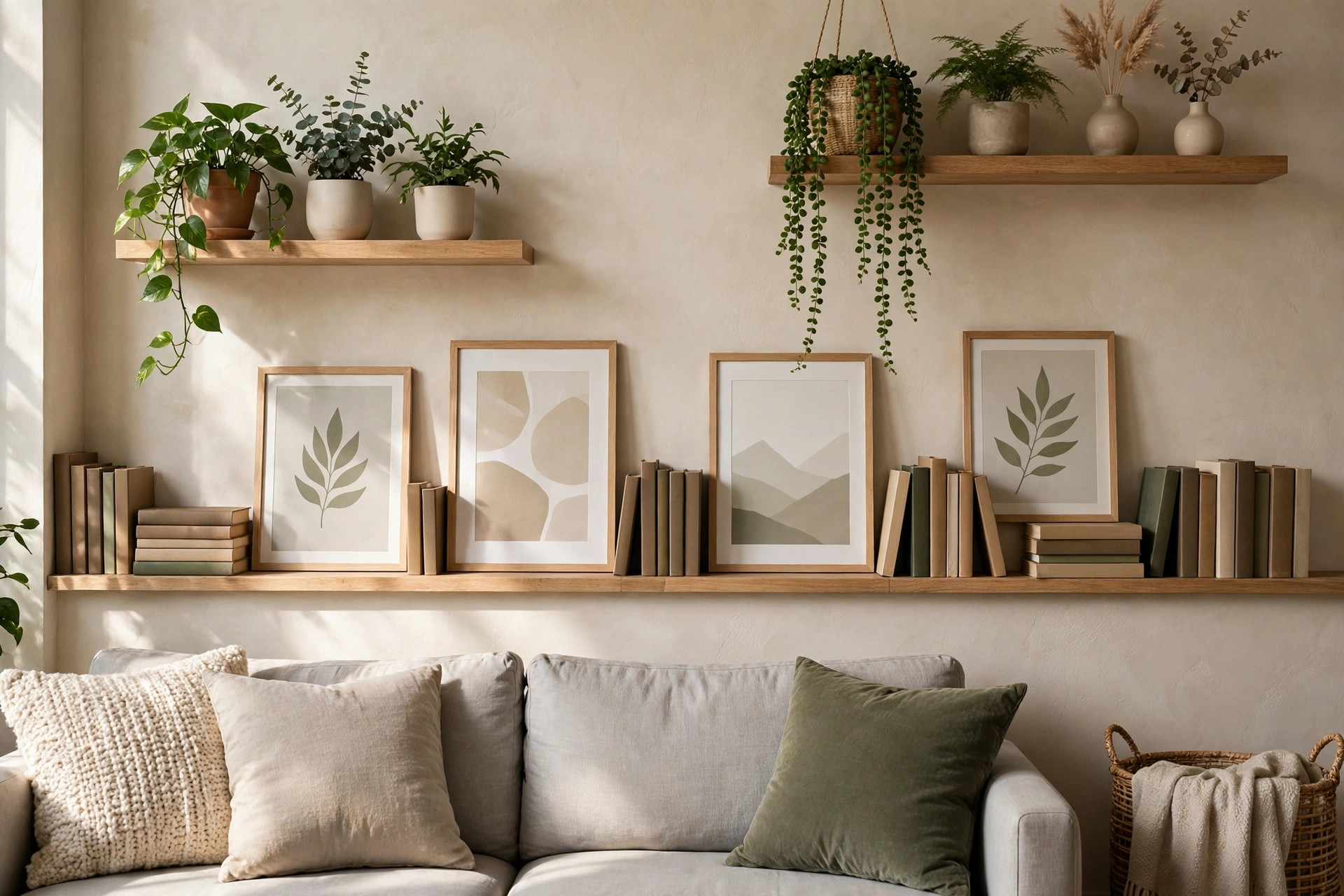
In the living room, shallow picture ledges hold far more than pictures. They display books face-out, hold remotes and coasters, and keep the coffee table clear. Ledges cost $10 to $20 each and are forgiving to install because they are light. This is the same go-up thinking behind our small apartment living room ideas that make it look bigger: storage on the wall makes the whole floor plan feel wider and calmer.
9. Build Storage Over the Toilet
The wall above the toilet fits a two- or three-shelf unit made exactly for that gap, and in a small bathroom it can double your storage. Keep rolled towels, spare toilet paper, and a basket of toiletries there. Freestanding over-toilet units cost $30 to $50 and need no drilling; simple wall shelves cost less. Use baskets to corral small bottles, and keep heavy glass jars off the top shelf.
10. Turn the Entryway Wall Into a Landing Strip
A row of sturdy hooks plus one slim shelf gives keys, bags, hats, and mail a home the second you walk in. A rail of four hooks costs about $10, and a narrow floating shelf above it holds sunglasses and a mail tray. Add a slim shoe rack below and the entryway floor stays clear. When everything has a hook, nothing migrates to the kitchen counter or the bedroom chair.
11. Mount Nightstands and Headboard Shelves
Bulky nightstands shrink a small bedroom. A wall-mounted nightstand or a simple headboard shelf holds a phone, a book, and a glass of water — and leaves the floor visible, which makes the room feel bigger. Wall nightstands cost $25 to $40. A long shelf behind the pillows works as a shared nightstand for couples. Keep a small basket on it for chargers and lip balm so the surface stays clear.
12. Add Magnetic Strips in Surprising Places
A magnetic strip is storage that is half an inch deep. In the kitchen it holds knives safely off the counter; in the bathroom it corrals bobby pins, tweezers, and nail clippers; inside a cabinet door it holds small metal tools. Strips cost $10 to $15, and many mount with renter-friendly adhesive. Anything small, metal, and easy to lose is a candidate — the strip turns a junk-drawer hunt into a one-second grab.
13. Hang Plants Instead of Flooring Them
Plants make a small home feel alive, but floor pots steal walking space and crowd corners. Move them up instead: hanging planters from ceiling hooks, wall-mounted planters, or a high shelf with trailing plants. Hanging planters cost $8 to $15 each. Group three at different heights near a window for a layered, decorator look. You get the calm, green feeling with zero floor footprint — and the freed corner can hold a chair or a basket.
14. Stack Modular Cubes Where You Need Them
Modular wall cubes and stackable boxes build storage in the exact shape of your leftover wall. Stack three beside a desk for office supplies, run four along a hallway for linens, or hang two in the bathroom for towels. Sets cost $25 to $45. Because the system is modular, it moves with you to the next apartment. Choose one finish and stick to it — matching cubes look built-in, mixed ones look like clutter.
15. Use the Strip Above Doors and Windows
The 12 inches above a door frame or window is a forgotten shelf line that runs around the whole room. One long shelf there holds books, baskets of off-season items, or a row of plants. It suits things you need a few times a year, since you will need a step stool. A basic 6-foot shelf with brackets costs about $20. Painted the wall color, it almost disappears — visitors see a calm room, not a storage system.
16. Pair Walls With the Space Under Furniture
Vertical storage works best as half of a system: daily things go up on walls where you can see them, and bulky, rarely used things go low and hidden. Off-season clothes, spare bedding, and luggage belong under the bed, as shown in our under-bed storage ideas for hidden space, while the wall above the dresser holds the books and baskets you touch weekly. Give every item a height — daily at arm level, rare up high or down low — and a small home stays organized almost by itself.
What to Avoid
Avoid hanging heavy shelves on drywall anchors alone — find studs or use rated toggle anchors, and never put heavy items on a shelf above a bed. Avoid overloading: most floating shelves are rated for 15 to 25 pounds, and a sagging shelf is worse than none. Avoid drilling into rental walls before checking your lease; adhesive and over-door options cover most needs. And avoid filling every wall — leave one wall mostly empty per room, or the space feels like a warehouse.
Frequently Asked Questions
What are the best vertical storage ideas for renters? Over-door racks, adhesive hooks, magnetic strips, and tall freestanding bookcases give you vertical storage with no drilling at all. If you do drill, small picture-hook holes are usually acceptable — check your lease first, and keep filler on hand for move-out day.
How much weight can a floating shelf hold? It depends on the shelf and the anchors. Mounted into studs, a typical floating shelf holds 25 to 50 pounds; on drywall anchors alone, keep it under 15 pounds and store light items only. When in doubt, put heavy books on the lowest shelf or in a bookcase.
Where should I start with vertical storage? Start where clutter annoys you most — usually the entryway or the kitchen counter. One rail or one row of hooks gives an instant win, teaches you what you actually reach for, and shows you which wall should be next.
Does vertical storage make a room look smaller? No — done well, it does the opposite. Clearing floors and counters makes a room feel larger, and shelves painted the wall color blend right in. The trick is leaving breathing room: group items, use baskets, and stop one shelf earlier than you think you need to.
Conclusion
Your walls are the biggest storage upgrade hiding in plain sight. Start with one wall — a kitchen rail, an entryway hook rail, or two floating shelves — and notice how much calmer the floor feels. Then work upward, one room at a time, keeping daily items at arm height and rare items high or hidden. Save this list, pick your first wall, and share it with a friend whose counters have disappeared under clutter.