If you work full time, the classic advice — “just clean a little every day and deep clean on Saturday” — falls apart by Wednesday. You are tired, the week is loud, and Saturday deserves better than a mop. This weekly cleaning schedule is built for real working lives: one focus per day, twenty minutes or less, matched to the energy you actually have on that day. It sits on top of a tiny daily baseline — the 10-minute daily cleaning routine that actually works handles dishes, counters and clutter — and together they keep a home clean with no weekend marathon at all. Here is the plan, day by day.
How This Schedule Works
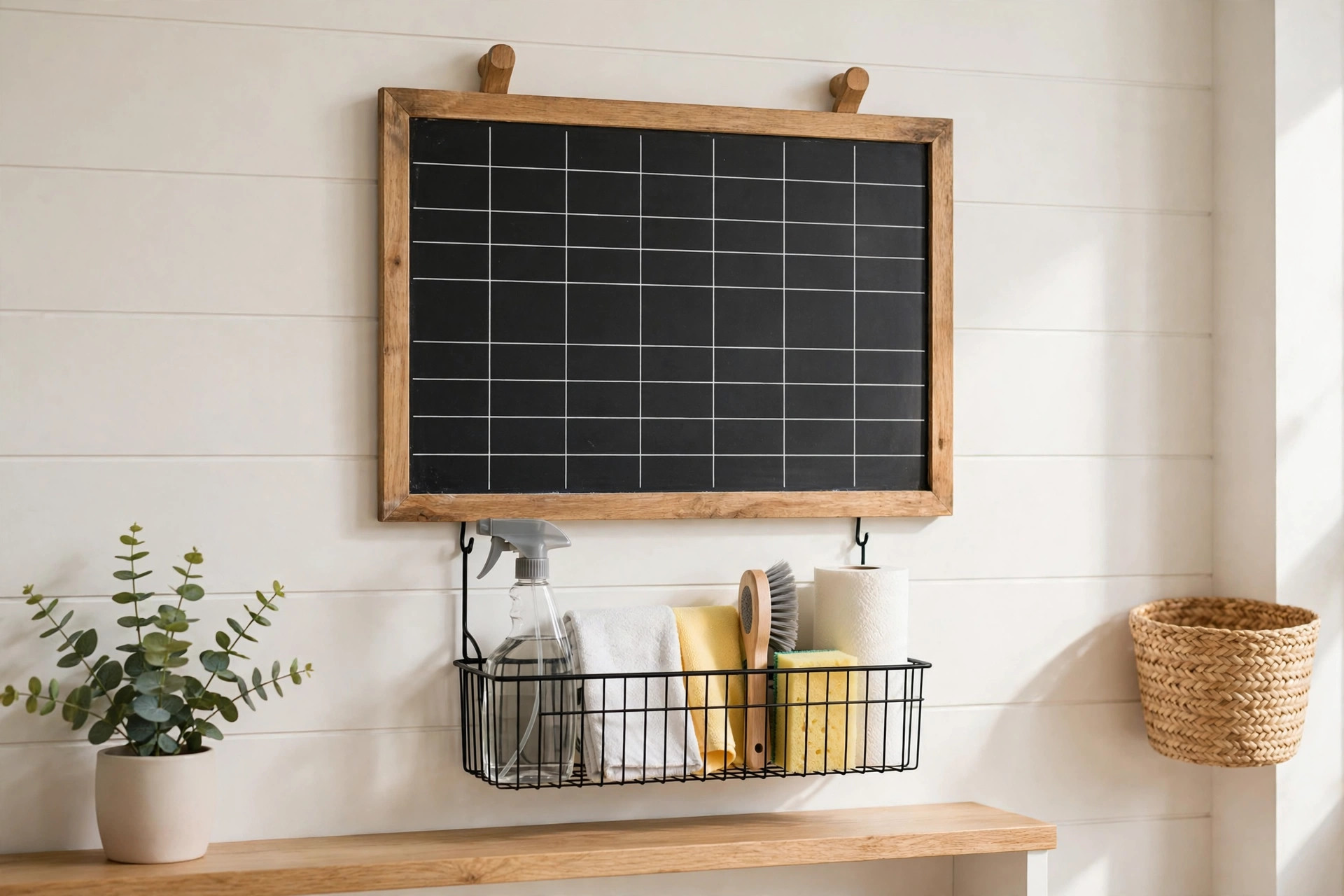
Three rules make it stick. First, each day has ONE focus area, so you never face the whole house at once. Second, every session is capped: set a timer for 15 to 20 minutes, and when it rings, you stop — done beats perfect. Third, tasks are matched to the day: the quickest jobs land on your longest workdays, and the one slightly bigger job lands on whichever weekend day you choose. Total time across the week is about two hours, spread so thin you barely feel it. Keep one supplies caddy (about $10 to $15 to put together) that travels with you room to room, so no session starts with hunting for the spray bottle.
Monday: Bathrooms (15 Minutes)
Start the week with the smallest, highest-impact room. Spray the shower or tub and let the cleaner sit while you work. Wipe the mirror, sink and faucet, then clean the toilet — bowl, seat, handle and base. Shake out or swap the bath mat, empty the trash, and finish by wiping the shower down. Monday bathrooms work because the room is small, the results are obvious, and walking into a clean bathroom on Tuesday morning quietly makes the whole house feel under control. If you have two bathrooms, do the main one properly and give the second a five-minute mirror-sink-toilet pass.

Tuesday: Kitchen Surfaces and Appliances (20 Minutes)
Tuesday is kitchen day, but not the daily wipe-down — the next layer. Clean the stovetop properly, wipe the microwave inside (a bowl of water microwaved for two minutes loosens everything first), and wipe down appliance fronts and cabinet handles, where grease actually lives. Empty one shelf of the fridge, toss anything expired, and wipe the shelf before food goes back; rotating one shelf a week means the whole fridge gets cleaned monthly without a big empty-out. Finish by wiping the trash can lid and the area around it. Twenty minutes, timer on, and the kitchen looks — and smells — reset.

Wednesday: Counters, Clutter and Paper (15 Minutes)
Midweek is for surfaces and the paper that colonizes them. Clear every counter and table in the main rooms, putting each item in its home or in a small “decide” basket. Kitchen counters especially — if yours never stay clear, our countertop declutter ideas for a clean-looking kitchen will fix the system, not just the surface. Then process the paper pile: mail opened, bills into one folder, recycling out. Dust the cleared surfaces with a microfiber cloth while they are empty — dusting a clear surface takes two minutes; dusting around clutter takes ten and never looks finished. Wednesday is deliberately light: it is the day most working weeks peak, so the plan asks the least of you.
Thursday: Floors (20 Minutes)
Floors in one focused pass feel easier than floors sprinkled across the week. Vacuum the main living areas and bedrooms, paying attention to edges, under the dining table, and the entryway grit zone. Then mop the hard floors — kitchen and bathroom at minimum. A spray mop ($20 to $30) removes the bucket-and-wring step that makes mopping feel like a project. Shake out or vacuum the doormats, inside and out. If you have pets or kids and floors get dirty faster, Thursday becomes vacuum-only and Sunday’s session adds the mop. Either way, clean floors change how the entire home feels underfoot and to the eye.

Friday: Bedrooms and Laundry (15 Minutes)
Friday’s job is making the weekend start in a calm room. Change the bed sheets — weekly sheet changes are the single nicest upgrade in this whole schedule, and they take four minutes once you practice. Start one load of laundry (or sort and stage it for Saturday), dust the nightstands and dresser tops, and empty the bedroom trash. Wipe the mirror if you have one. Keep it gentle: Friday evening should end with clean sheets, a tidy nightstand, and the feeling that the house is already weekend-ready.
Saturday or Sunday: Your Choice — The Rotating Task (30 Minutes)
Pick one weekend day as your slightly bigger session, and let the other day be completely cleaning-free. The rotating task changes each week of the month: Week 1, windows and mirrors throughout the house. Week 2, one deep task from the kitchen or bathroom — oven, grout, or inside the fridge properly. Week 3, baseboards, doors and light switches, the grime you only see when you look for it. Week 4, a zone declutter — one closet, one drawer bank, one storage corner. Thirty minutes, music on, timer set. Because it rotates, nothing in the house goes more than a month without attention, and no single weekend gets swallowed.
The Weekend Catch-Up Option
Some weeks, weekday sessions simply do not happen — travel, deadlines, illness, life. The catch-up version compresses the whole schedule into one 90-minute Saturday block: bathrooms (15), kitchen layer (15), floors throughout (25), surfaces and dusting (15), sheets and laundry (20). Work in that order, top to bottom, with the timer running and no phone. It is not the preferred version — the whole point of the weekly plan is avoiding exactly this — but having a defined catch-up keeps one bad week from becoming a dirty-house spiral. After a catch-up weekend, restart the normal daily rotation on Monday without guilt or doubling up.
Where Deep Cleaning Fits
This schedule maintains; it does not deep clean, and that is by design. Deep cleaning — inside appliances, behind furniture, vents, walls — happens room by room a few times a year, and our room-by-room deep cleaning checklist for beginners breaks it into beginner-friendly steps when you are ready for a seasonal reset. Many people pair the two: this weekly schedule for the other 48 weeks, one deep-clean room per month. Maintenance makes deep cleaning dramatically faster, because you are never starting from chaos.
What to Avoid
Avoid scheduling your hardest day for your longest workday — if Thursdays wreck you, move floors to a lighter day; the days are suggestions, the one-focus rule is not. Avoid buying a planner, app or printable before you have run the schedule for two plain weeks; paper systems collapse when the habit is not there yet. Avoid all-or-nothing thinking: a week where you only hit bathrooms and floors is still a successful week. And avoid cleaning anyone else’s mess in resentful silence — if other adults live in the house, the schedule gets split, not carried. One focus a day is small enough to share fairly.
Frequently Asked Questions
How long does this weekly cleaning schedule take in total? About two hours spread across the week: five weekday sessions of 15 to 20 minutes, plus one 30-minute weekend rotation. Daily basics like dishes and counters are separate — a ten-minute daily routine covers those — so the house stays at baseline between sessions.
What if I work weekends or shifts? The days are labels, not rules. Keep the sequence — bathrooms, kitchen, surfaces, floors, bedrooms, rotation — and slide it across whatever your actual week looks like. Night-shift workers often run the plan on their “morning,” whenever that is. The structure matters; the calendar does not.
Can I do the whole schedule in one day instead? Yes — that is the catch-up option, about 90 minutes in one block. It works fine occasionally. But if every week becomes one big block, most people start dreading it and skipping it, which is exactly the cycle this schedule was designed to break.
What should I do on the days between sessions when things get messy? Nothing extra. Normal life mess — dishes, spills, daily clutter — belongs to your daily routine, not this schedule. If a room gets genuinely bad midweek (a cooking disaster, a sick kid), handle just that, briefly, and let the schedule continue. One rescue clean does not mean the plan failed.
Conclusion
A clean home on a working schedule is not about finding more time — it is about giving the time you have a shape. One focus a day, twenty minutes or less, a small rotation on the weekend, and permission to stop when the timer rings. Print the day list, stick it inside a cabinet door, and run it for two weeks before you judge it. Save this schedule to your cleaning board, share it with a friend who spends her Saturdays scrubbing, and enjoy the first weekend that is actually yours.