Most apartments do not have a dining room — they have a corner, a stretch of wall, or a hopeful patch of floor between the kitchen and the couch. That is enough. A real dining area is not about square footage; it is about a defined zone, the right-sized furniture and seating that does not eat the room. These small dining area ideas turn two to four feet of apartment into a spot where you will actually eat, host and linger — most for under $100 a piece, and all of them reversible when you move.
1. Define the Zone With a Rug and a Light

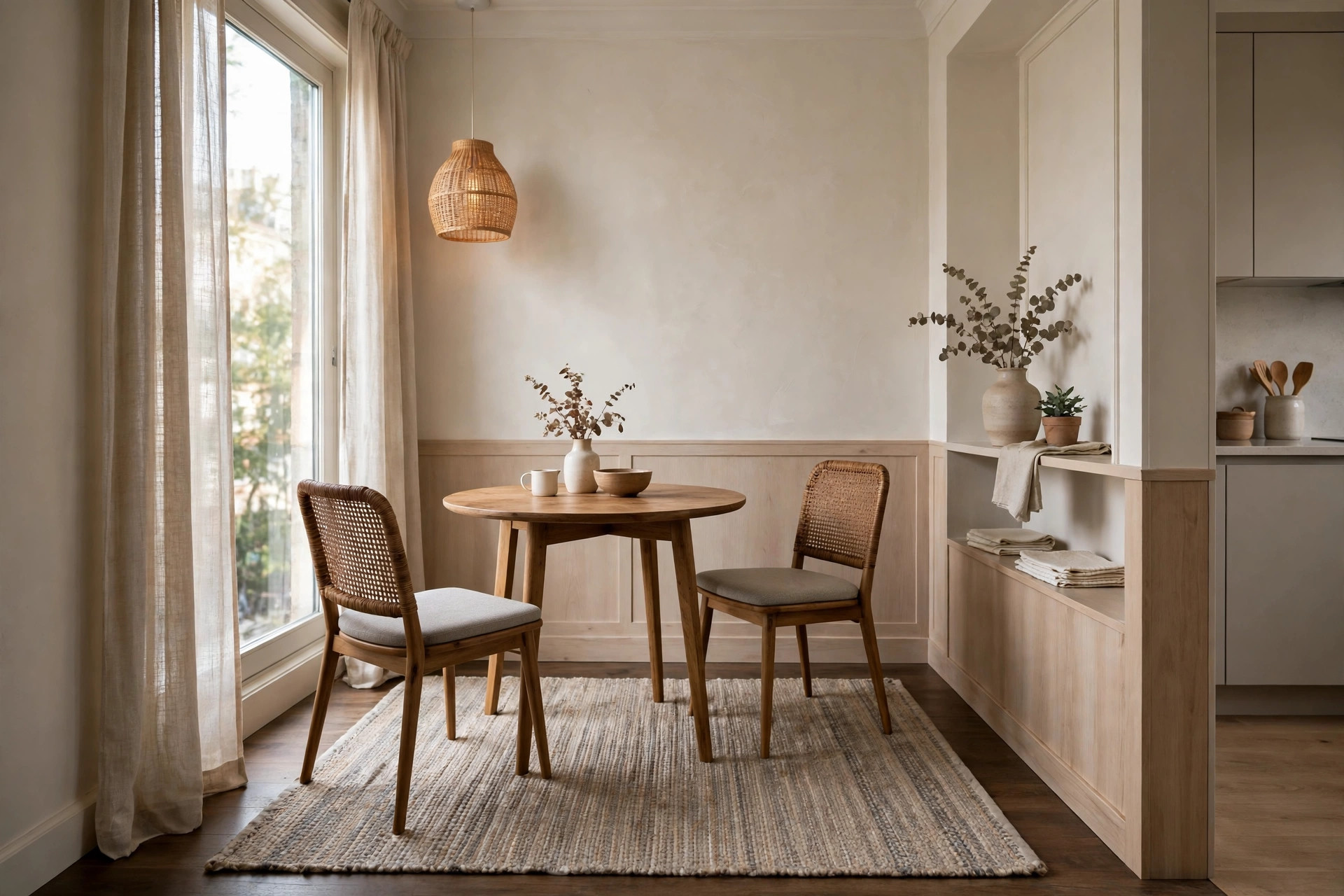
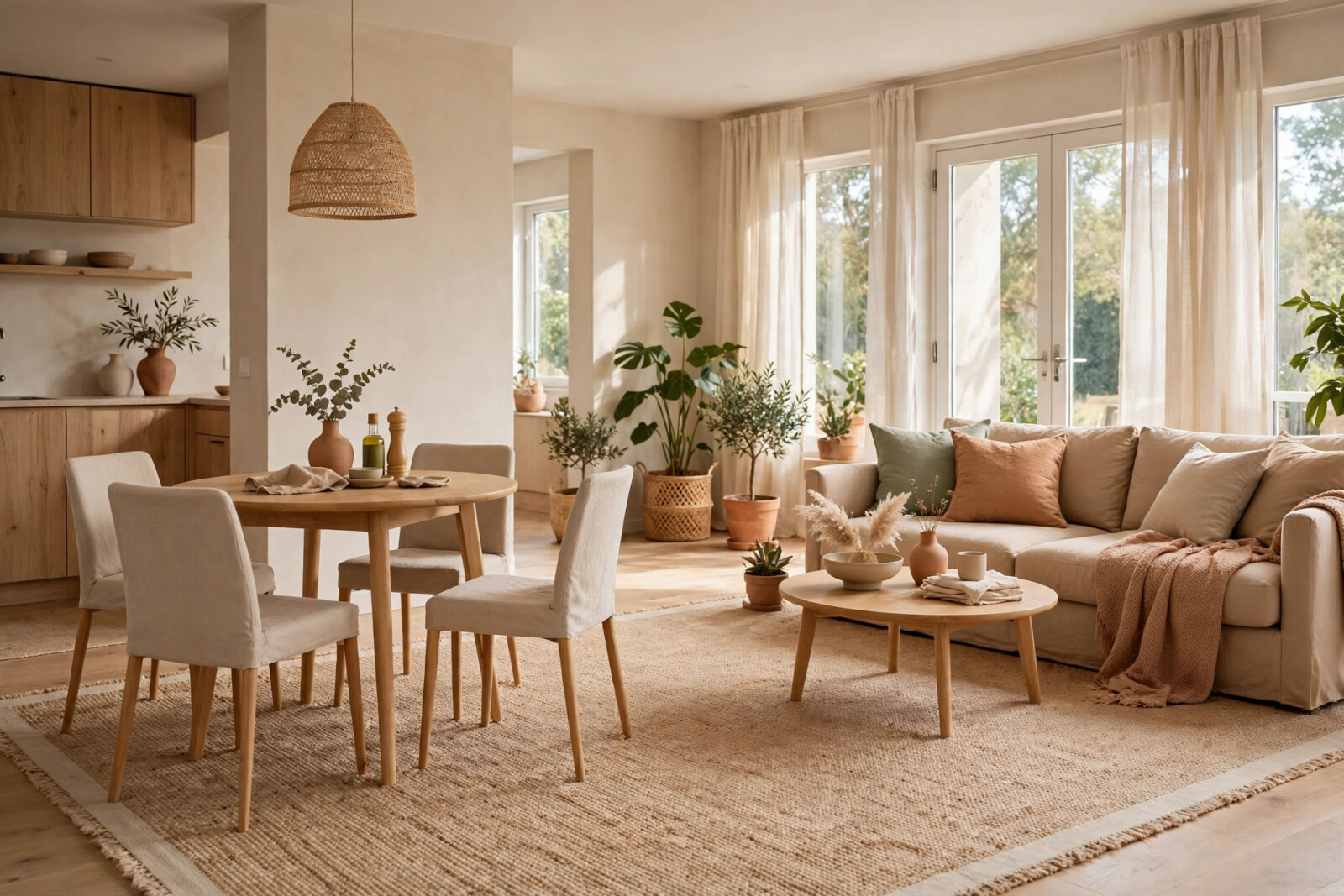
A dining area exists the moment the eye can see its borders. Lay a flat-weave rug ($30 to $60) under the table spot and hang or place a light above it, and a random corner becomes a destination. This is exactly the zoning trick from our studio apartment organization guide: one room, clearly divided zones. Keep the rug big enough that front chair legs stay on it when chairs pull out — roughly 24 inches beyond the table on every side — or skip the rug and let the light fixture alone draw the boundary.
2. Choose a Round Table to Save the Corners

Round tables are the small-space cheat code. A 36- to 42-inch round table ($80 to $150) seats four comfortably, has no corners to bruise hips on in a walkway, and lets you squeeze in a fifth chair without anyone straddling a table leg. Pedestal bases beat four-leg styles because knees and extra chairs fit anywhere around the rim. Glass or light-wood tops keep the footprint feeling small even when the table is not.
3. Use a Drop-Leaf or Folding Table for Daily Flexibility
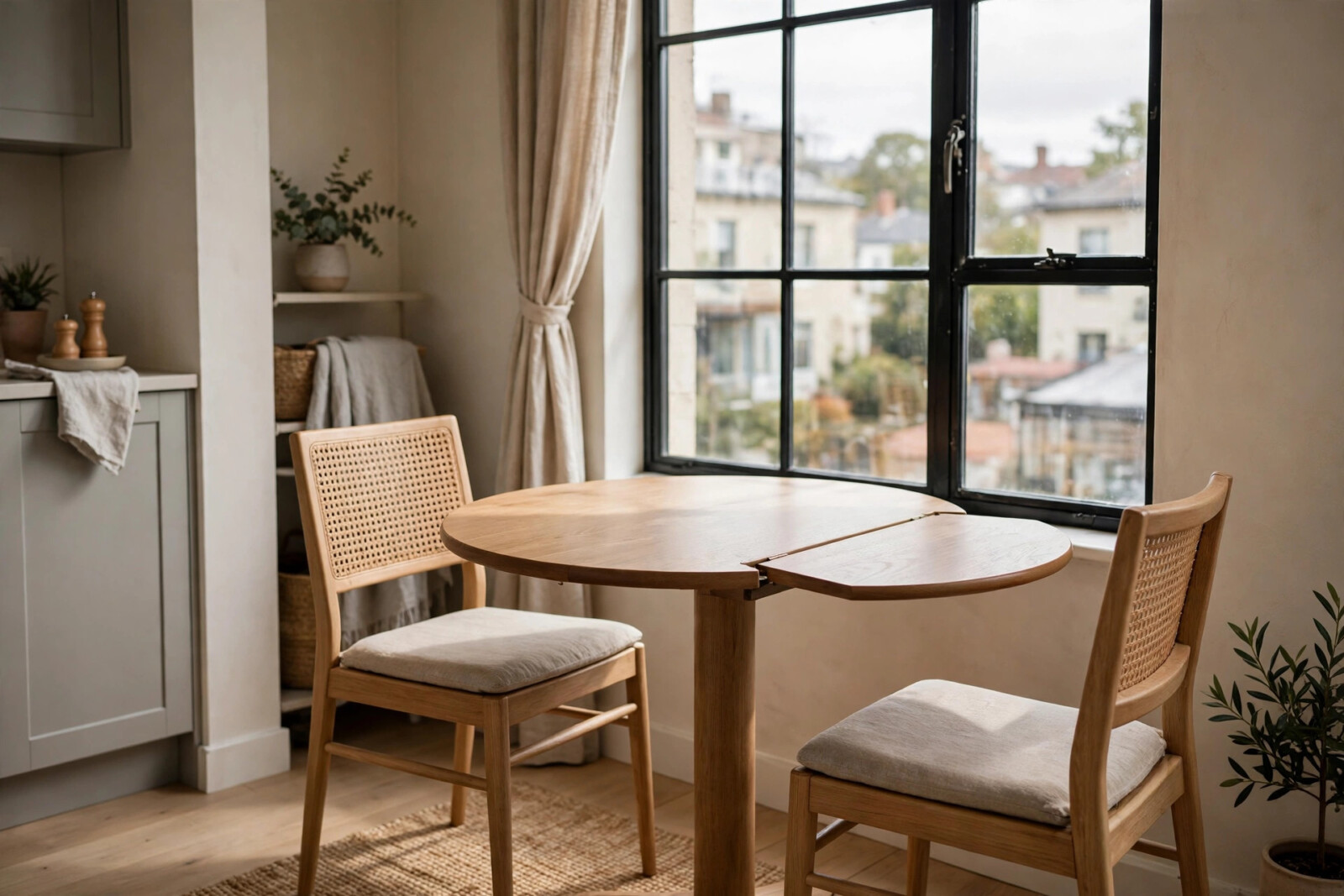
If your dining spot doubles as a hallway, workspace or guest room, a drop-leaf table ($60 to $120) is the honest answer. Leaves down, it is a slim console against the wall; one leaf up seats two for weeknight dinners; both up hosts six on holidays. Gateleg and butterfly-leaf styles store the extra surface inside the table itself. This is the table for anyone whose dining area has a second job — which, in an apartment, is nearly everyone.
4. Put a Bench on the Wall Side
Benches take up less visual and physical space than chairs, and they slide completely under the table when not in use. A simple wood bench ($50 to $90) along the wall seats two or three — more than two chairs in the same run — and kids treat it like an upgrade, not a compromise. Add two chairs on the open side and one at the end, and a 48-inch table seats five or six. Cushions ($10 to $15 each) make it comfortable enough for long dinners.
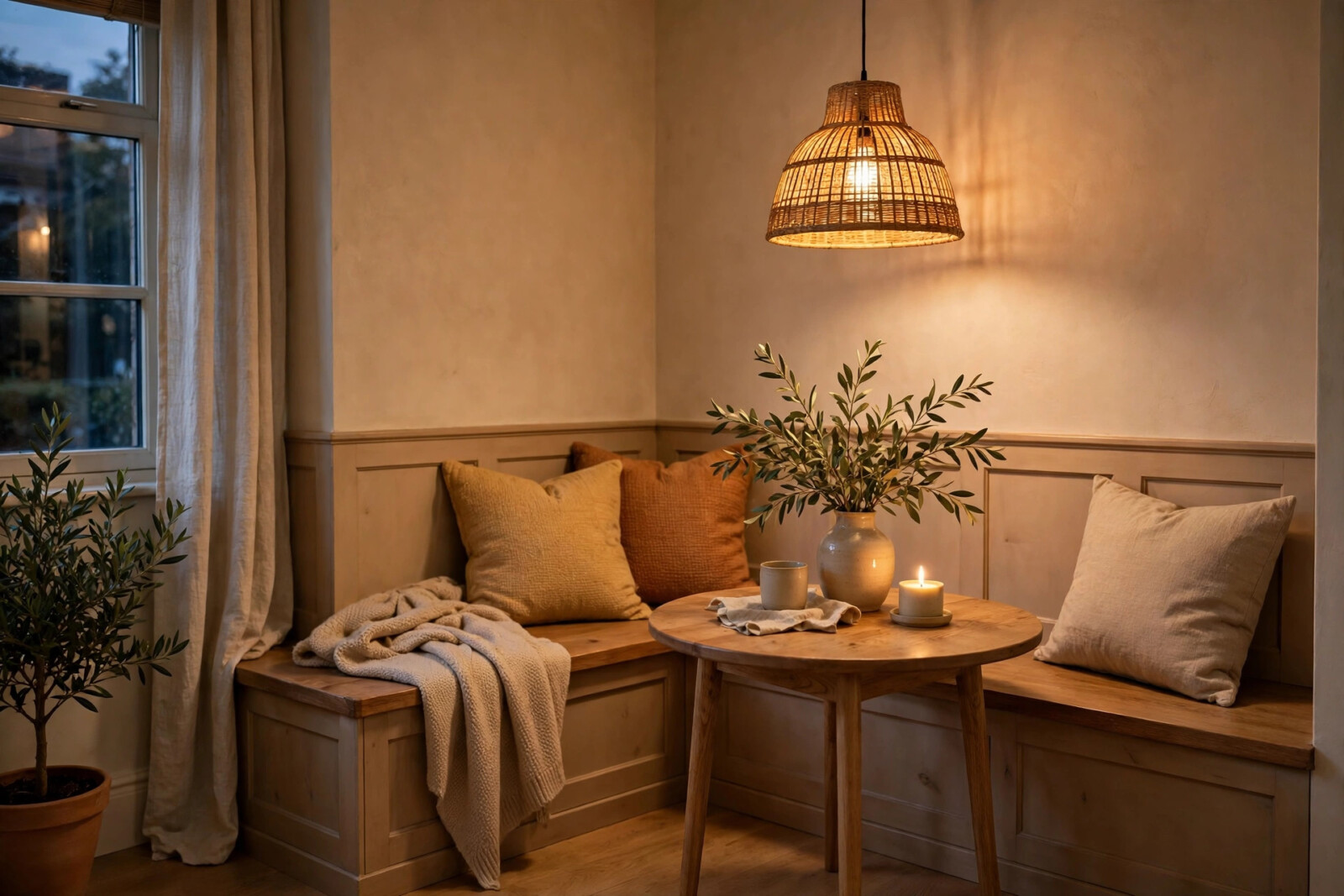
5. Pick Armless, Low-Back Chairs That Tuck Fully In
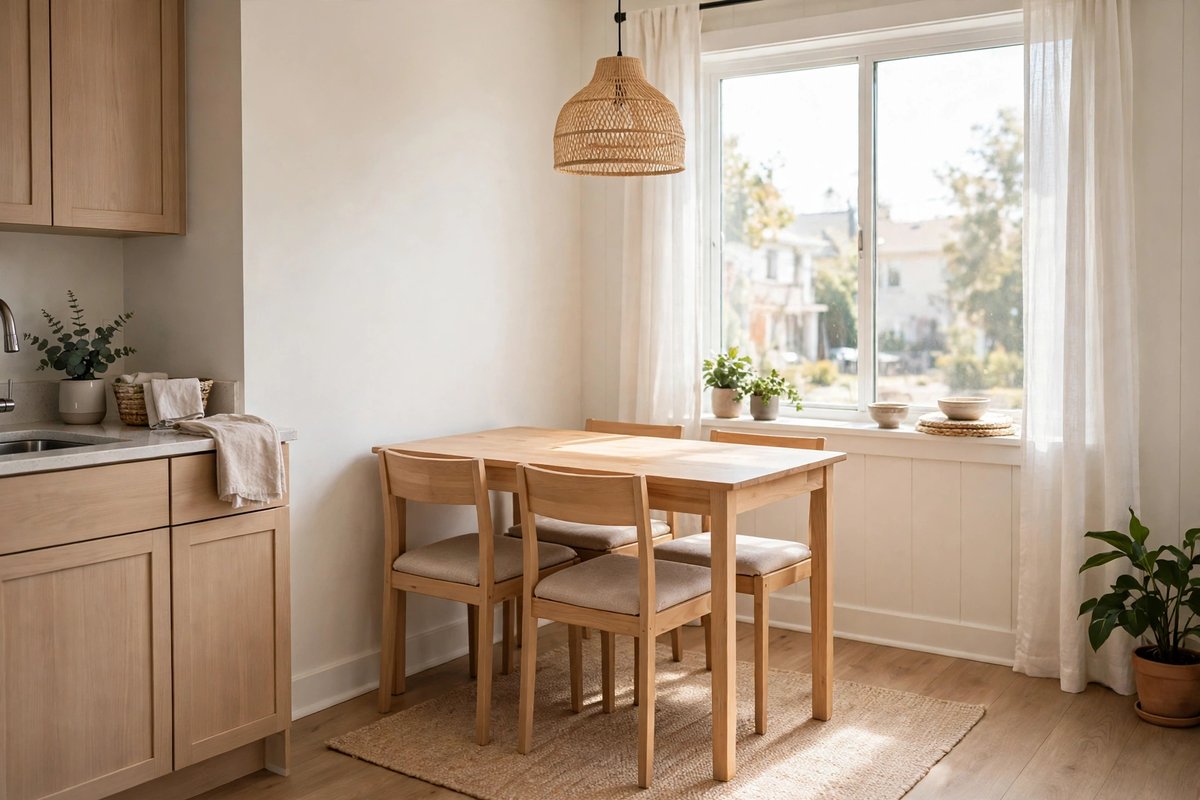
Chairs decide whether a small dining area feels calm or crowded. Armless chairs ($25 to $45 each) slide all the way under the table, clearing the floor and the sightline; low or open backs keep the zone feeling airy instead of walled-in. Stackable or folding spare chairs handle guests, then disappear into a closet. If you only buy two good chairs and borrow the rest of the seating from the living room on big nights, that is not a failure — that is the system working.
6. Hang One Statement Light Above the Table
A pendant or flush-mount fixture centered over the table ($25 to $60, or a plug-in swag pendant for renters) does more zoning work than any furniture piece. It tells everyone — including you, on a Tuesday — that this spot is for sitting down and eating. Hang it 30 to 36 inches above the tabletop so it pools light on the food without blocking faces. A warm bulb makes even takeout feel like an occasion, and the glow pulls the whole corner together after dark.

7. Add a Slim Bar Cart or Narrow Buffet for Storage
Dining zones fail when tableware has nowhere to live. A bar cart ($40 to $80) or a narrow console under 12 inches deep holds glasses, napkins, serving pieces and the candle stash, and rolls out of the way when the floor space is needed. Style the top with one plant or a small lamp so it reads as furniture, not overflow. Closed storage beats open shelves here — dining clutter is small, mismatched and visual, so doors and baskets earn their keep.
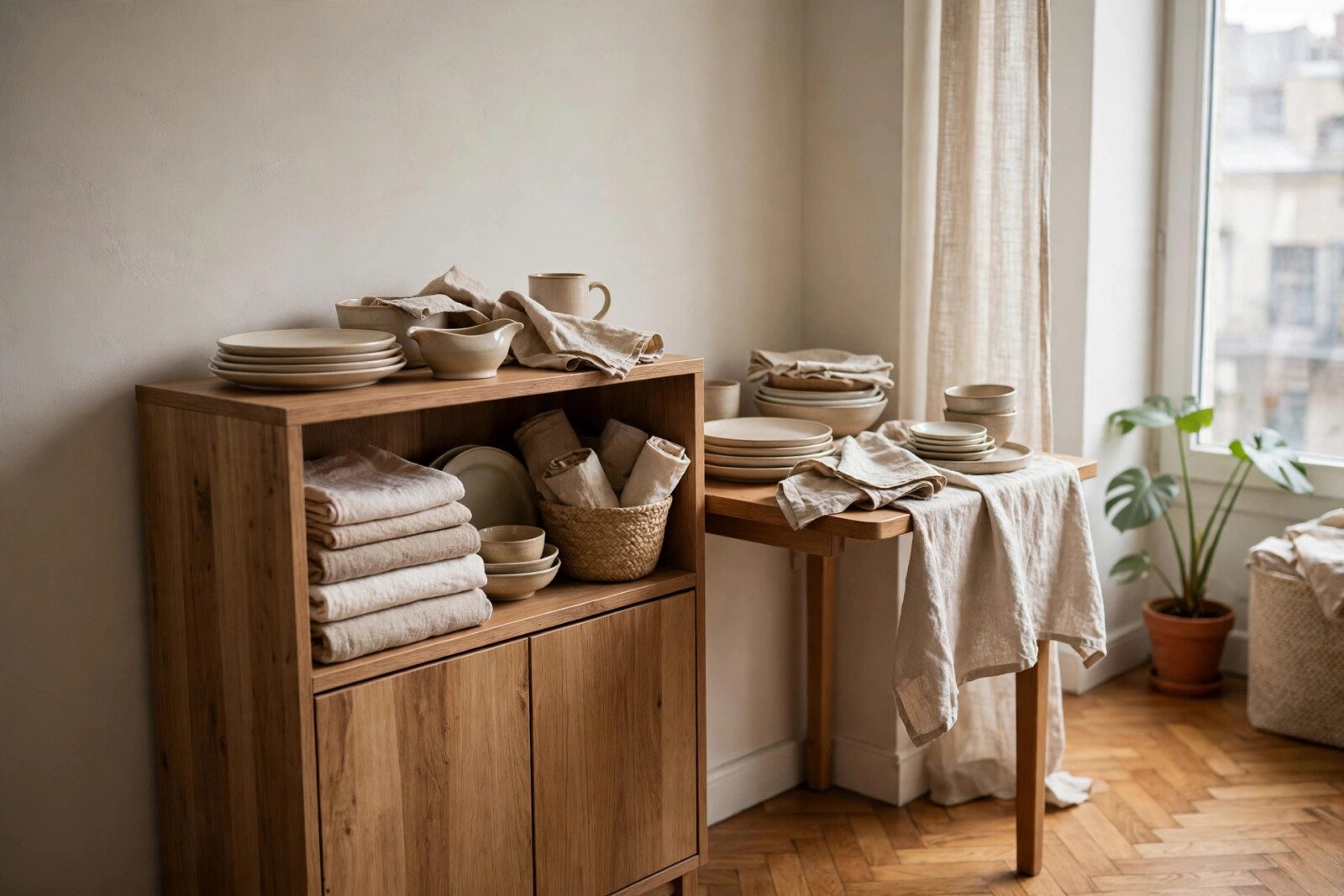
8. Use the Wall Above and Beside the Table
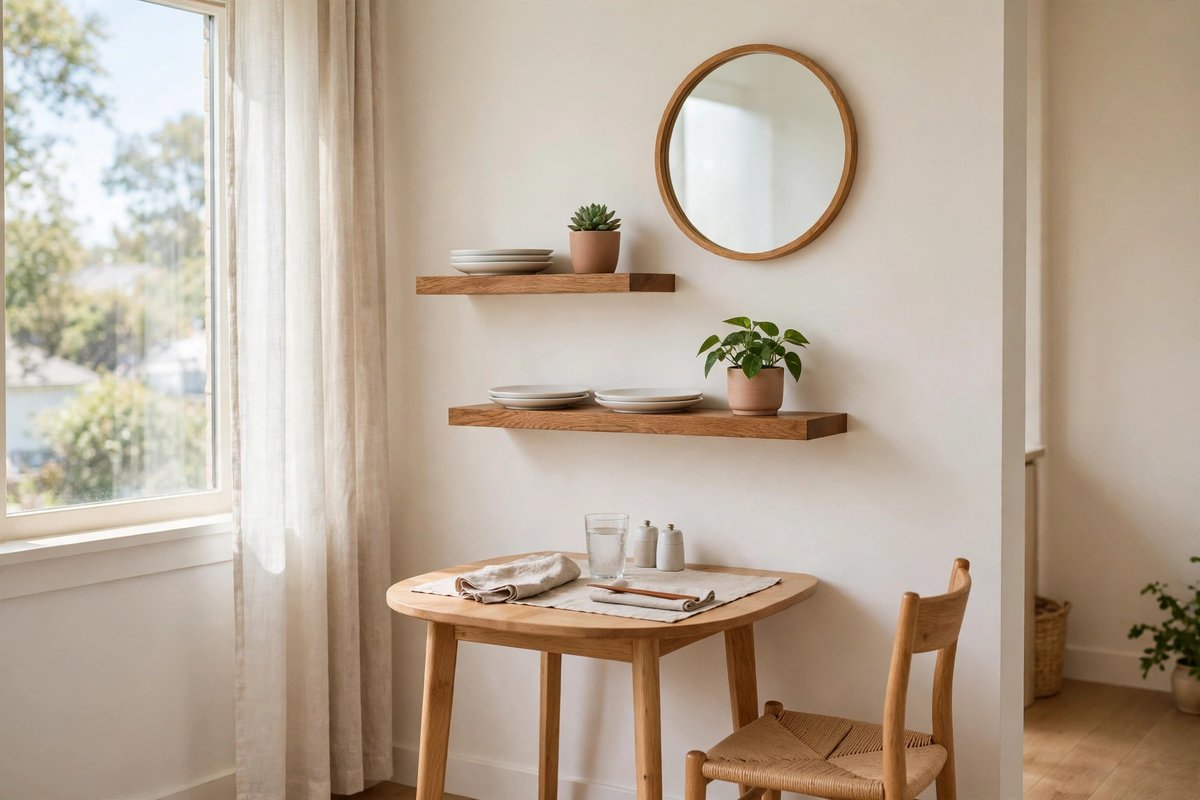
The wall over a dining table is prime, wasted real estate. Two floating shelves ($15 to $25 a pair) hold everyday dishes and glassware within arm’s reach of the table — restaurant-style, and it frees a whole kitchen cabinet. A plate rail or a shallow picture ledge displays pretty serving pieces you actually use. Keep the lowest shelf at least 20 inches above the tabletop so nobody clocks a head standing up, and store daily items here, not the good china you touch twice a year.
9. Let the Dining Zone Flow With the Living Room
In an open-plan apartment, the dining area and living room are one room wearing two hats — design them that way. Echo one color or wood tone from the couch side at the table, keep chair backs lower than the sofa’s sightline, and leave a clear 30- to 36-inch walkway between the zones. The layout principles in our small apartment living room ideas apply directly: furniture pulled slightly off the walls, one rug per zone, and nothing tall blocking the light. When the two zones share a palette, the whole space reads bigger than either half.

10. Keep the Table Clear With a Tray Rule
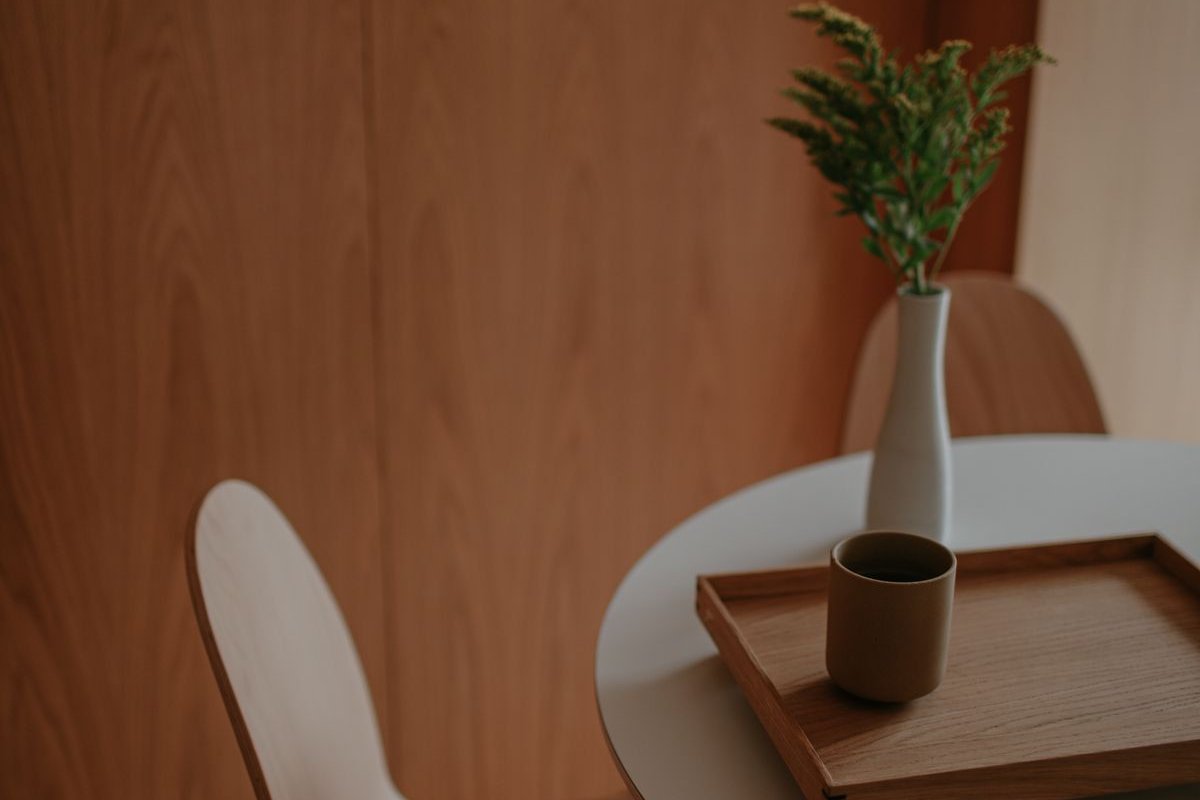
A small dining table becomes a drop zone for mail, keys and laptops within a week unless it has a rule. Ours: everything on the table lives on one tray or in one centerpiece bowl ($8 to $15). At dinner time, the tray lifts off in one motion and the table is set. A simple centerpiece — a small plant, a candle, a low bowl — signals “this is a dining table” to your own brain, which is half the battle in a multi-use room.
11. Store Extra Seating Where You Cannot See It

Hosting six in an apartment is easy; storing six chairs is the problem. Folding chairs ($20 to $35 each) hang on hooks inside a closet or behind a door, stackable stools nest in a corner, and a storage ottoman ($35 to $60) hides two folding seats while working as living room furniture the other 360 days a year. Plan guest seating as a storage problem first and a shopping problem second, and you will never trip over a spare chair again.
12. Borrow Storage From the Kitchen Side

The dining area’s best overflow storage is usually the kitchen next door. If platters, linens and the big serving bowls live in one organized kitchen cabinet, the dining zone itself needs almost nothing. That is the whole point of the systems in our small kitchen storage ideas: group entertaining gear together, keep it in the least-used cabinet, and the tiny dining corner stays clear for actual dining. Walk the path from kitchen to table once with your arms full — whatever you set down mid-route is telling you where storage is missing.
What to Avoid
Avoid a big rectangular six-seat table in a small apartment; it will spend its life half-buried in laundry and paperwork, and it eats the walkway every single day. Avoid tall, heavy chairs with arms that cannot tuck in — they turn a small zone into an obstacle course. Avoid placing the table where it blocks a door swing, a heating vent or the natural path from kitchen to couch. Avoid dark, bulky buffets that store little but weigh the corner down visually. And avoid letting the dining table become your permanent desk and mail center: a dining area you have to excavate before dinner is a dining area you will stop using.
Frequently Asked Questions
What size table is best for a small apartment dining area? For two to four people, a 36- to 42-inch round table or a 48 x 30-inch rectangle is the sweet spot. Allow about 24 inches of table edge per person and 36 inches of clearance behind chairs so people can get in and out. If you host often but live small, a drop-leaf or extending table beats a permanently big one every time.
How do I create a dining area in a studio apartment? Claim one corner near the kitchen and mark it with a rug and a light — those two signals separate “dining” from “living” even in a single room. Choose a small round or drop-leaf table, keep seating to a bench plus two chairs, and store the entertaining extras in the kitchen. The zone works because it is defined, not because it is big.
Round or rectangular table — which saves more space? Round tables win in tight corners and walkways: no sharp corners, flexible seating, and everyone can squeeze in. Rectangular tables win pushed flat against a wall, especially with a bench, where they can seat more people in a narrow strip. Measure your zone first; the shape that leaves a clear walking path is the right one.
Where do I store extra chairs in a small apartment? Folding chairs hang flat inside a closet, behind a door or under a bed. Stackable chairs nest in a corner of the bedroom. If you are buying new, a storage bench or ottoman that hides seating inside earns its floor space twice. The goal is seating that exists only when guests do.
How can I make a tiny dining nook feel cozy, not cramped? Warm light at face height, one soft element (cushions, a runner, upholstered seats), and something living — a plant or fresh stems — on the table. Keep the palette to two or three colors shared with the rest of the room, and clear the table daily so the nook always looks ready. Cozy comes from intention, not from adding more things.
Conclusion
A small apartment does not need a dining room — it needs a defined corner, a right-sized table, seating that tucks away, and storage borrowed from the kitchen and walls. Define the zone this weekend with a rug and a light, then add the table that fits your real life, not your imaginary dinner parties. Save these ideas to your small-space board before your next furniture run, and share them with a friend who is still eating every meal on the couch.
Enjoying these ideas?
Get our free 7-Day Small Home Reset Checklist and one practical small-home idea every week.