Shoes multiply quietly. One pair by the door becomes five, the closet floor disappears under sneakers and boots, and somehow the pair you actually want is always at the bottom of the pile. The problem is rarely how many shoes you own — it is that most homes have no real system for them, so they land wherever they come off. These shoe storage ideas fix that in every spot shoes collect: the entryway, the closet, and the hidden corners of a small home. Most cost under $30, several are renter-friendly, and together they can hold 30 pairs without a single pile.
1. Start With a Slim Entryway Rack
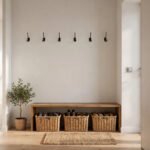
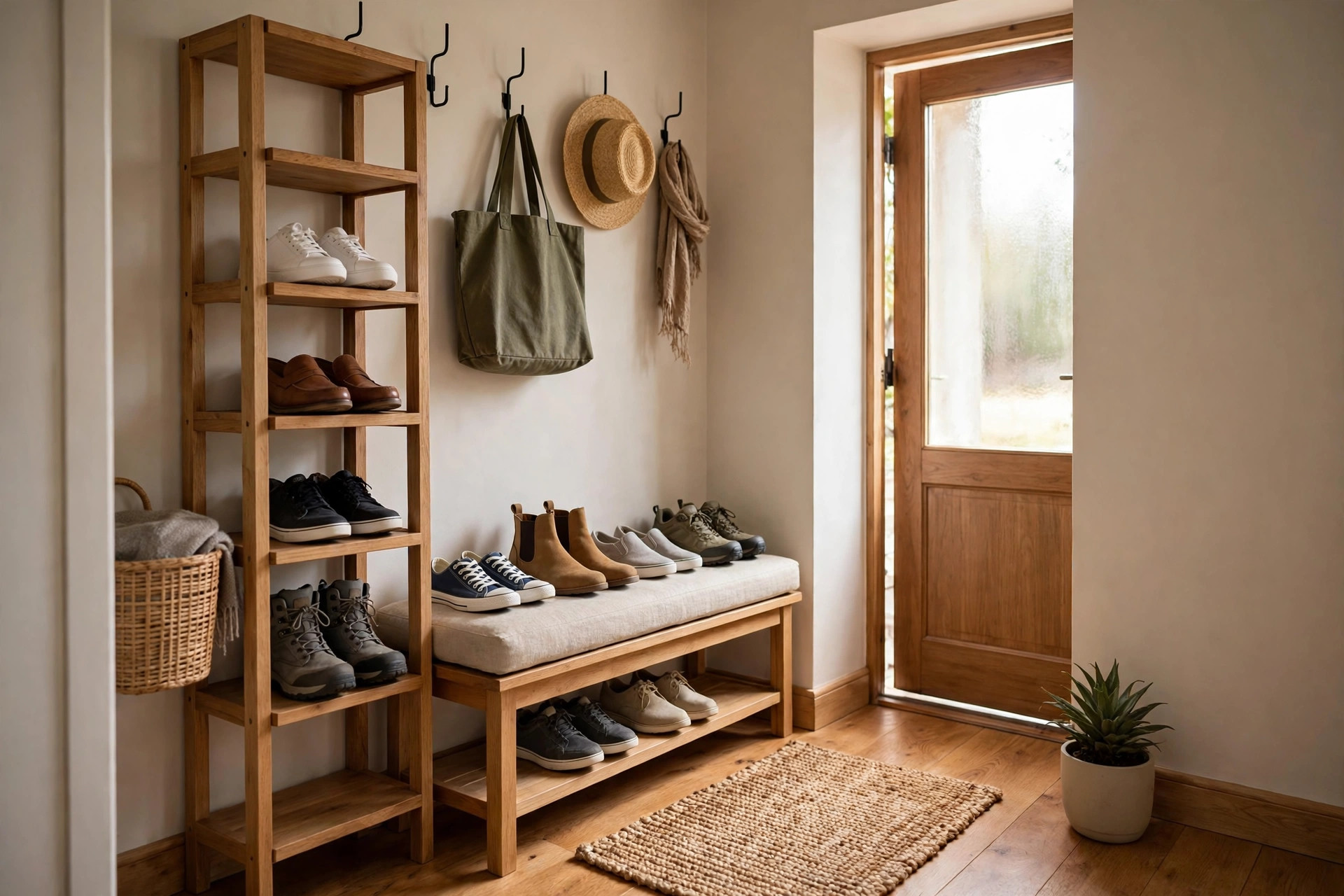
The entryway is where shoes enter your life, so it needs the first line of defense. A slim two- or three-tier rack ($15 to $30) tucked against the wall or behind the door catches daily pairs before they spread across the floor. Choose a narrow profile — 8 to 10 inches deep — so it never blocks the walkway. Limit it to two pairs per person; when the rack is full, extras go to the closet. This single rule keeps the entryway looking intentional instead of like a shoe store exploded, and it pairs perfectly with the hooks and benches in our small entryway ideas with no closet.
2. Edit the Collection Before You Organize It
Storage cannot fix a collection that includes shoes you never wear. Pull out every pair you own — yes, all of them, from every room — and sort into keep, donate and toss. Worn-out soles, single shoes and pairs that hurt your feet go first. Most people find 5 to 10 pairs they can release without missing them, which instantly shrinks the storage you need to buy. If a full shoe edit feels overwhelming, our 7-day declutter challenge gives shoes their own short session on the closet day. Organize what survives, not what you started with.
3. Use an Over-Door Shoe Organizer
A closet door or bedroom door is a vertical storage wall you are probably ignoring. Clear-pocket over-door organizers ($12 to $18) hold 12 to 24 pairs of flats, sneakers and sandals, and you can see every pair at a glance. They need no tools and no floor space, which makes them perfect for renters and kids’ rooms. Heavier boots are too bulky for pockets, but for everyday shoes this is the cheapest capacity boost on the list. Hang one on the inside of the closet door and the floor problem often solves itself.

4. Try Stackable Clear Shoe Boxes
Clear drop-front shoe boxes ($20 to $35 for a set of 6 to 12) turn a messy shelf or floor corner into a neat, stackable wall of shoes. Because they open from the front, you can stack them five or six high without unstacking to reach the bottom pair. They protect good shoes from dust and from being crushed, and the uniform look calms a closet instantly. Label the end of each box if your shoes look similar. This is the system collectors and sneaker lovers swear by, scaled down for normal humans.

5. Build a Two-Tier Rack Under Short Hanging Clothes
The floor under your shirts and blouses is prime wasted space — usually 12 to 18 inches of height doing nothing. A two-tier rack ($15 to $25) slides right in and holds 6 to 8 pairs off the floor while your clothes hang above them. Keep daily pairs here and move occasion shoes higher or into boxes. This is one of the easiest wins inside a reach-in closet, and it works even better once you have applied the double-rod layout from our small closet organization ideas that double your space.
6. Add a Shoe Cabinet That Hides Everything
If visual clutter is your main complaint, a slim tilt-out shoe cabinet ($50 to $90) hides 12 to 18 pairs behind a clean flat front, in only 6 to 8 inches of depth. It works in entryways, hallways and bedrooms, and the top surface doubles as a landing strip for keys and mail. Measure your largest pairs first — deep cabinets fit men’s shoes and chunky sneakers better. For a small home that needs storage to disappear, this is the most furniture-like, least “storage product” option there is.

7. Use the Space Under the Bed
The gap under your bed is a free storage room. Low rolling bins and flat shoe organizers ($12 to $20) hold 8 to 12 pairs of off-season or rarely worn shoes, dust-free and out of sight. Boots in winter, sandals in summer — swap them twice a year with your seasonal clothing rotation. Clear lids matter here: if you cannot see what is under there, you will forget it exists. Keep one pair of guest slippers in the bin too, and you will always look impressively prepared.
8. Hang Boots With Clips and Boot Shapers
Boots flop, crease and eat floor space like nothing else. Hanging boot clips ($10 to $15 for a set) let you hang pairs from a closet rod or a tension rod in a hall closet, keeping shafts upright and pairs together. Inflatable or foam boot shapers ($8 to $12 a pair) hold tall boots in shape on a shelf. Either way, boots stop being the pile in the corner that falls over every time you reach past it. Store your best pair with shapers; hang the everyday pair where you can grab it fast.
9. Make a Bench With Shoe Storage Inside
In an entryway or at the foot of a bed, a storage bench ($40 to $80) does three jobs: a seat for putting shoes on, hidden storage for 6 to 10 pairs, and a visual anchor that makes the space look finished. Cubby-style benches suit families — one cubby per person ends the morning scramble. A lift-top bench hides everything completely, which is better for formal entryways. Measure your entry width first; a bench that blocks the door swing creates more chaos than it solves.
10. Use Tension Rods as Instant Shoe Shelves
Two tension rods ($8 to $14 for a pair) installed a few inches apart in a closet corner, an alcove or under a bench create an instant angled shoe shelf — heels hook over the back rod, toes rest on the front. It is a classic small-space trick because it fits spaces no rack will: slanted under-stair walls, narrow nooks, the dead corner of a closet. Add a second pair of rods above for another row. Renters love it because it leaves zero marks when it comes down.
11. Give Kids’ Shoes a Low, Open Home
Kids’ shoes fail every closed system — lids and doors are just obstacles between a child and the playground. A low open bin or a single-tier rack at their height ($10 to $18) by the door works because it asks for one motion: drop shoes in. One bin per child, labeled with a name or photo, keeps pairs findable. Accept a little visible mess here in exchange for shoes that are never lost; a tidy-looking system kids will not use is worse than a basket they will.
12. Store Occasion Shoes Up High and Labeled
Heels, dress shoes and special-occasion pairs get worn a few times a year, so they should not occupy prime reachable space. Box them — clear boxes or original boxes with a label or photo on the end — and put them on the closet’s top shelf or above the door frame on a mounted shelf ($12 to $20). Out of the daily traffic, protected from dust, and findable in seconds when an event comes up. The daily rotation below stays lean, which is what makes the whole system feel easy.
13. Add a Rolling Shoe Cart for Tight Spots
A narrow rolling cart with angled shelves ($25 to $40) fits the awkward gaps: between a dresser and the wall, inside a deep closet, beside the entryway bench. Roll it out, pick your pair, roll it back. Carts hold 9 to 12 pairs and work especially well in apartments where every storage piece has to earn its footprint twice. Choose metal over fabric if you wear heavy boots — sagging shelves are the main reason cheap carts get abandoned.
14. Set a One-In, One-Out Rule and a Home for Every Pair
The best storage system fails if the collection keeps growing and pairs have no fixed home. Finish with two habits. First, one in, one out: a new pair means an old pair gets donated, so your storage never outgrows its space. Second, every pair gets one assigned home — entryway rack for daily pairs, closet rack for weekly pairs, boxes for occasion pairs — and returns there the same day. Do a five-minute shoe sweep once a month, reuniting strays with their homes, and the piles never come back.
What to Avoid
Avoid storing shoes in their original cardboard boxes stacked in a pile — you cannot see inside, the bottom boxes crush, and the pile topples. Avoid cheap fabric hanging organizers for heavy shoes; the pockets stretch and tear within a season. Avoid keeping every pair at the entryway: the door zone should hold only what you wear daily, or it becomes the pile you were trying to escape. Avoid storing dirty or damp shoes in closed boxes, which traps odor and mildew — wipe and air them first. And avoid buying storage before your edit; organizing 40 pairs when you only wear 20 just hides the problem at extra cost.
Frequently Asked Questions
How do I store shoes in a small apartment with no closet space? Combine three zones: a slim rack or cabinet at the entryway for daily pairs, an over-door organizer on a bedroom door for the regular rotation, and flat under-bed bins for off-season pairs. That trio holds about 30 pairs using zero closet space. Keep each zone to its category so nothing migrates into piles.
What is the cheapest shoe storage that actually works? An over-door clear-pocket organizer ($12 to $18) and a basic two-tier rack ($15 to $25). Together, under $40, they cover most households’ daily and weekly pairs. Add tension rods in a corner for a few dollars more if you need a heels solution.
How do I keep shoe storage from smelling? Let shoes air out for a few hours before they go into any closed storage, rotate pairs so you are not wearing the same ones daily, and drop a small baking soda pouch or cedar insert ($5 to $10) into cabinets and boxes. Wash or replace insoles on athletic shoes — that is where most of the odor lives.
How many pairs of shoes should I keep? There is no magic number, but most people wear about 8 to 12 pairs regularly: daily sneakers, work shoes, one dress pair, seasonal boots or sandals, workout shoes and house slippers. If your storage holds your regular rotation plus a small occasion section comfortably, your number is right. If you are buying storage for shoes you have not worn in a year, edit first instead.
Can shoe storage be renter-friendly? Yes — over-door organizers, freestanding racks, stackable boxes, tension rods and under-bed bins all need no screws and leave no marks. Even a shoe cabinet is just furniture. The only ideas to skip in a rental are wall-mounted shelves, and tension rods usually do the same job.
Conclusion
Shoes stop being clutter the moment every pair has a home that matches how often it is worn: daily pairs at the door, weekly pairs in the closet, occasion pairs up high, off-season pairs under the bed. Edit first, then add the two or three ideas here that fit your space and budget. Save this list to your organization board for your next weekend project, and share it with a friend whose entryway is a shoe minefield too.