A small closet is not really a space problem — it is a layout problem. Most reach-in closets waste half their volume: one rod hung at one height, a dead zone of air above the shirts, a pile of shoes on the floor, and a top shelf stacked like a game of Jenga. These small closet organization ideas fix the layout instead of the square footage. None of them require a remodel, most cost under $30, and together they genuinely can double what your closet holds — not by cramming, but by using every vertical inch on purpose. Start with Idea 1 (it is free), then add the rest as your budget allows.
1. Edit First — Organization Cannot Fix Too Much Stuff

Before you buy a single hanger, pull out everything you have not worn in a year. Doubling space starts with halving the load, and no organizer can save a closet that holds three wardrobes’ worth of clothes. Work category by category — all tops, then all pants, then shoes — and be honest about fit and condition. If a full edit feels big, our 7-day declutter challenge breaks the wardrobe day into one 45-minute session. Aim for a closet that ends up about 80 percent full; that breathing room is what keeps it tidy.
2. Double Your Hanging Space With a Second Rod
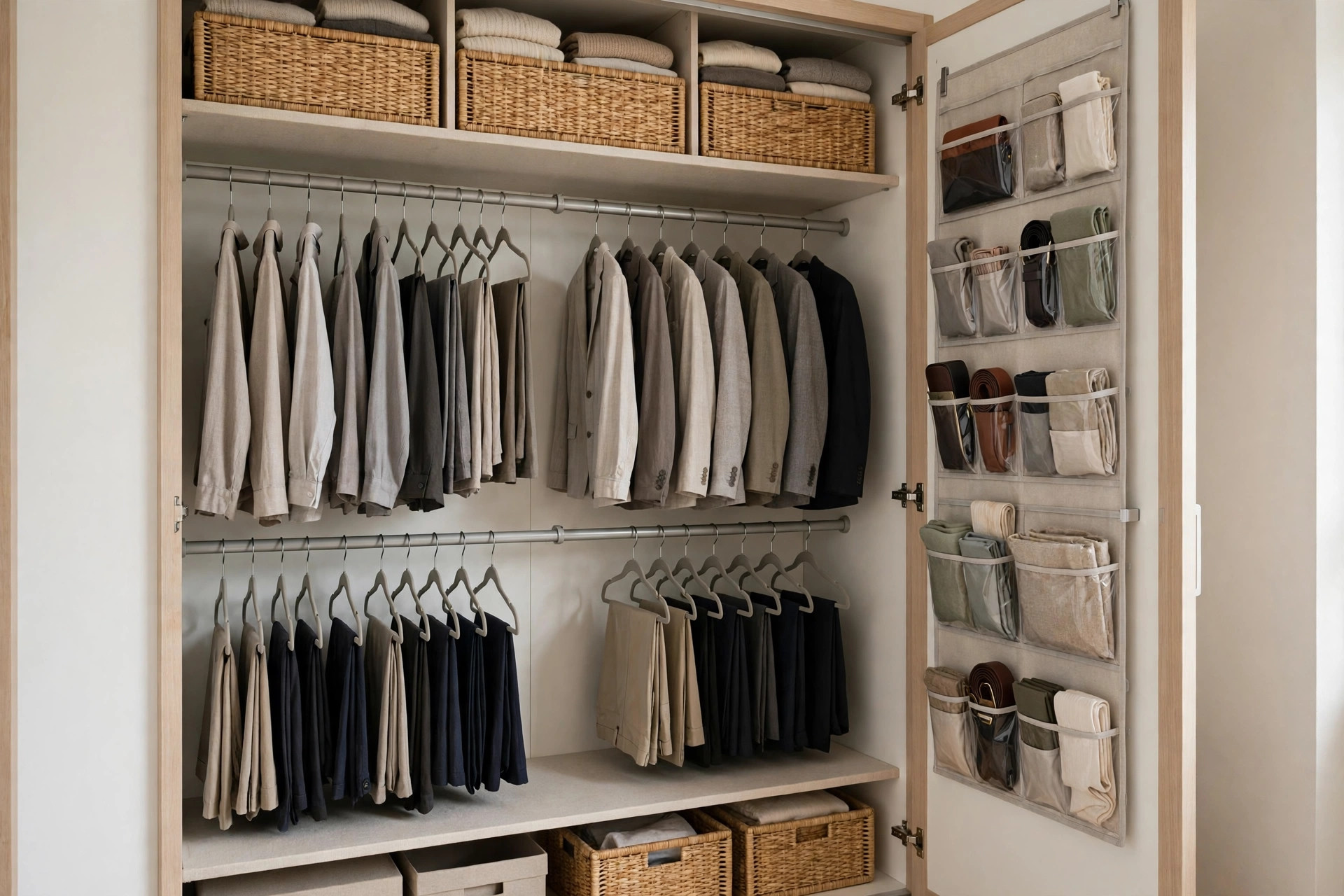
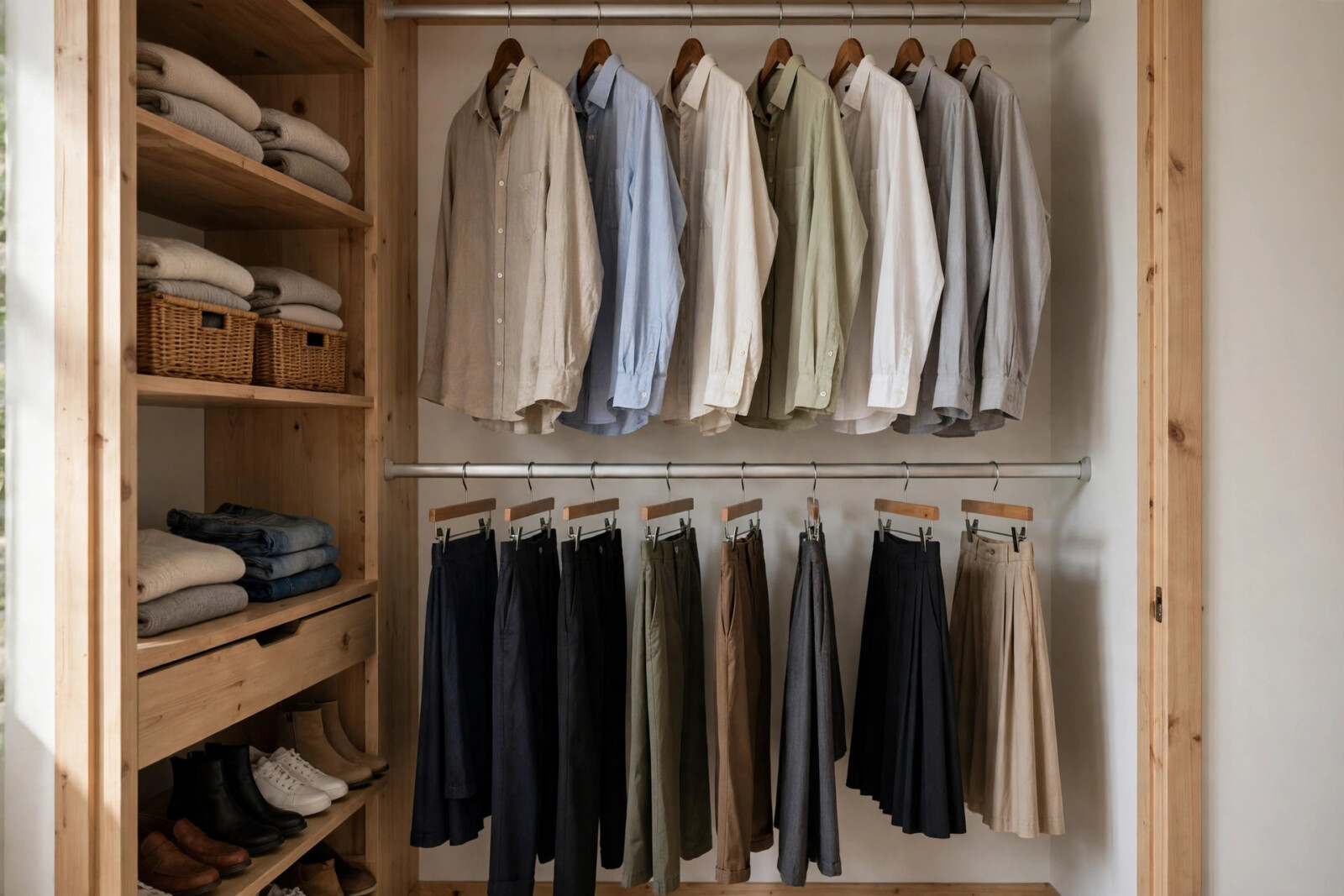
This is the single highest-impact change on the list. Most clothes — shirts, blouses, pants folded over hangers, skirts — are short, yet they hang on one rod at full-dress height, wasting three feet of air below them. Add a second rod underneath: a tension rod ($10 to $15) or a hanging rod that hooks over the existing one ($12 to $20), no drilling required. Instantly, your short-hang capacity doubles. Keep long dresses and coats in one narrow section at one end, and let everything else live on the double rods.
3. Switch to Slim Matching Hangers
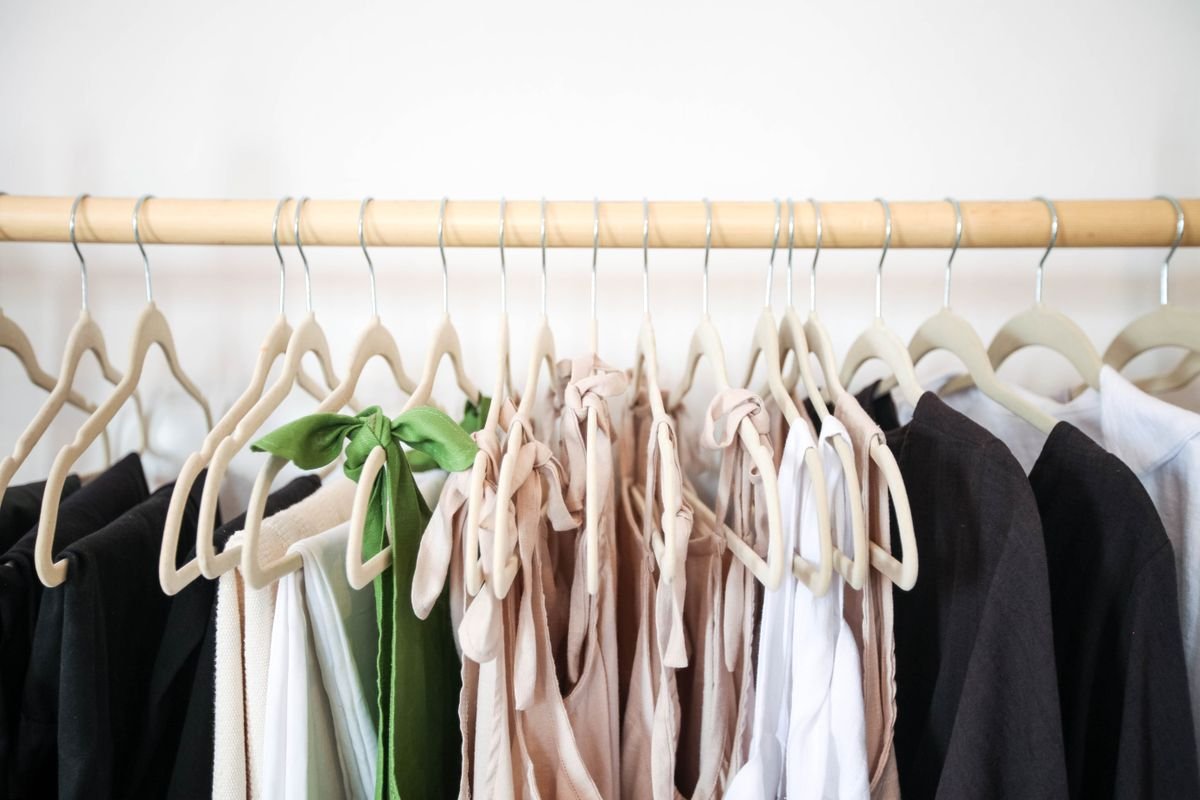
Bulky wooden and mixed plastic hangers eat inches on every rod. Slim velvet hangers ($12 to $18 for a pack of 30) are a third as thick, so the same rod holds noticeably more — and because they grip, clothes stop sliding onto the floor. Matching hangers also calm the visual noise, which matters more than people expect: a closet that looks orderly is easier to keep orderly. This is the core of the famous $20 closet makeover — one pack of hangers, one honest edit, transformation done.
4. Use the Back of the Closet Door
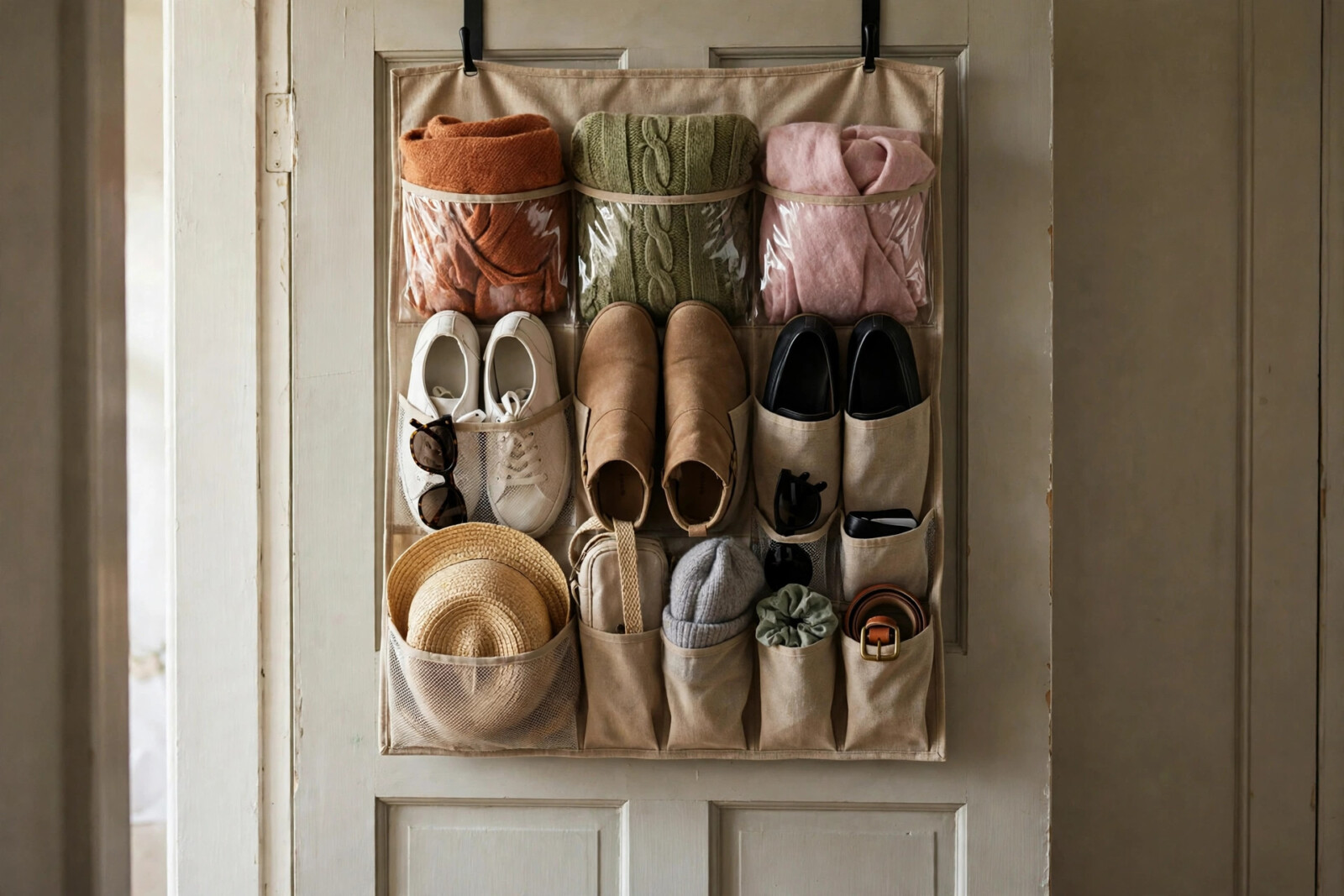
A closet door is a flat, unused storage wall. An over-door rack with hooks ($12 to $20) holds tomorrow’s outfit, belts, scarves and bags. Clear-pocket organizers ($15) are perfect for accessories, gloves and small items that vanish in drawers. In kids’ closets, door pockets corral everything from socks to small toys. Just check the clearance: the door needs to close without the rack pressing into hanging clothes, so keep door storage slim and soft where it meets the rod.
5. Add Shelves Above the Rod
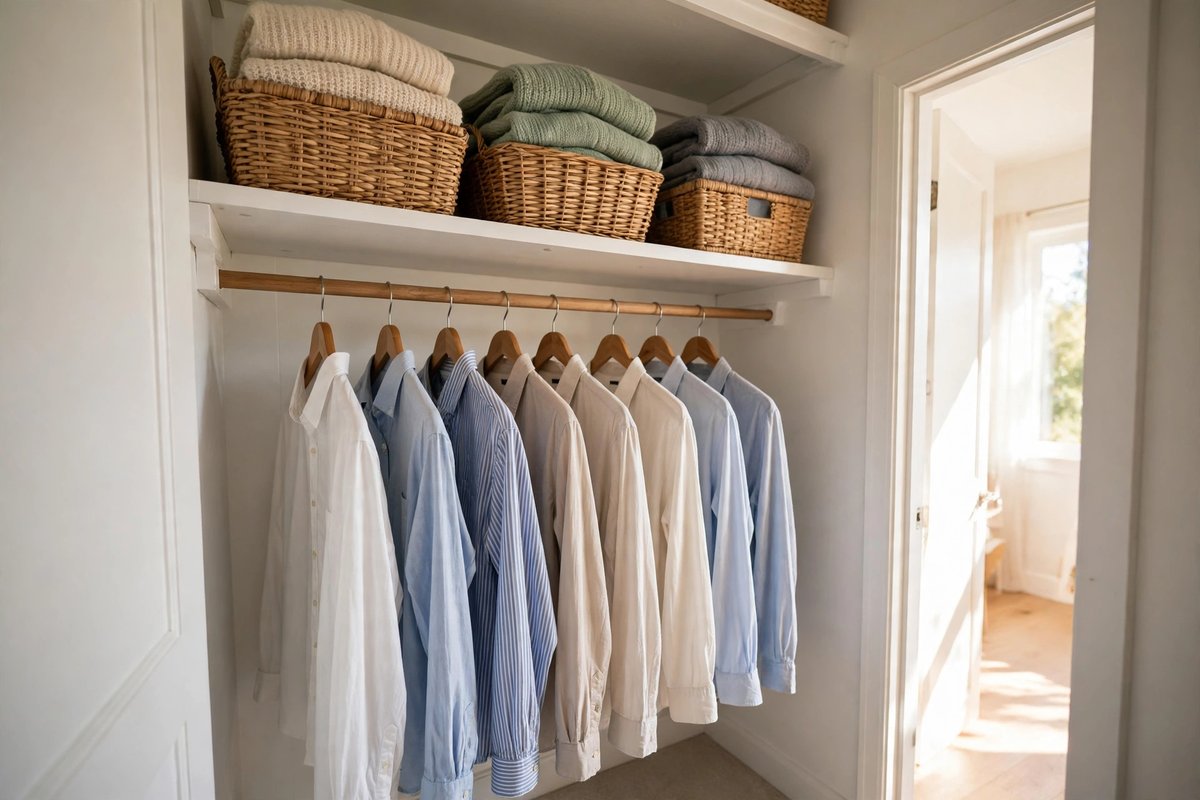
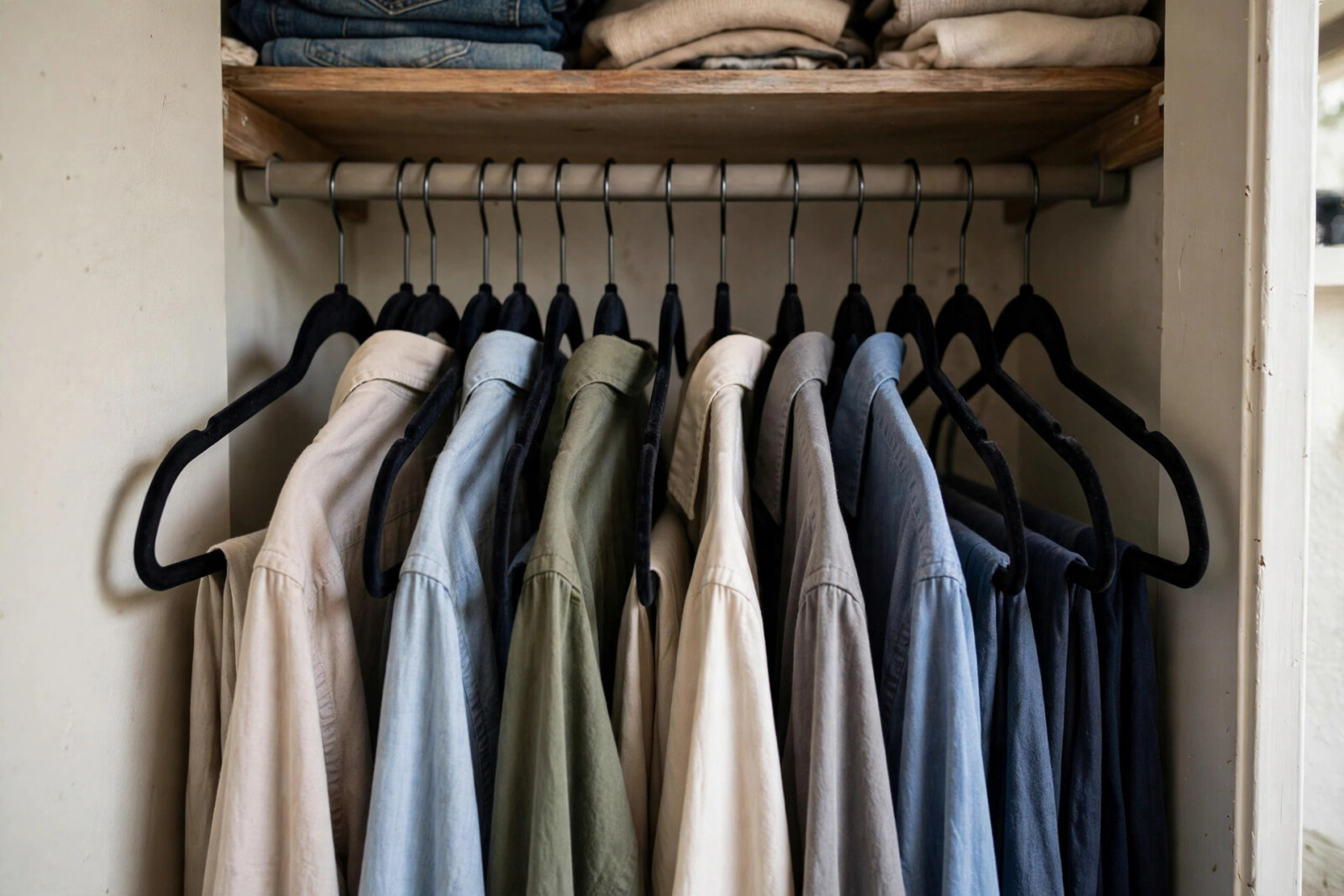
The gap between the top shelf and the ceiling — often 12 to 18 inches — usually holds one wobbly stack. Add a second shelf board ($10 to $20 with brackets) or stack sturdy bins two high to use the full height safely. This top zone is for things you reach for rarely: off-season clothes, extra bedding, occasion shoes. Keep a small step stool nearby if you are short; storage you cannot reach is storage you will not use, and it quietly becomes storage you forget you own.
6. Divide the Top Shelf With Bins and Dividers

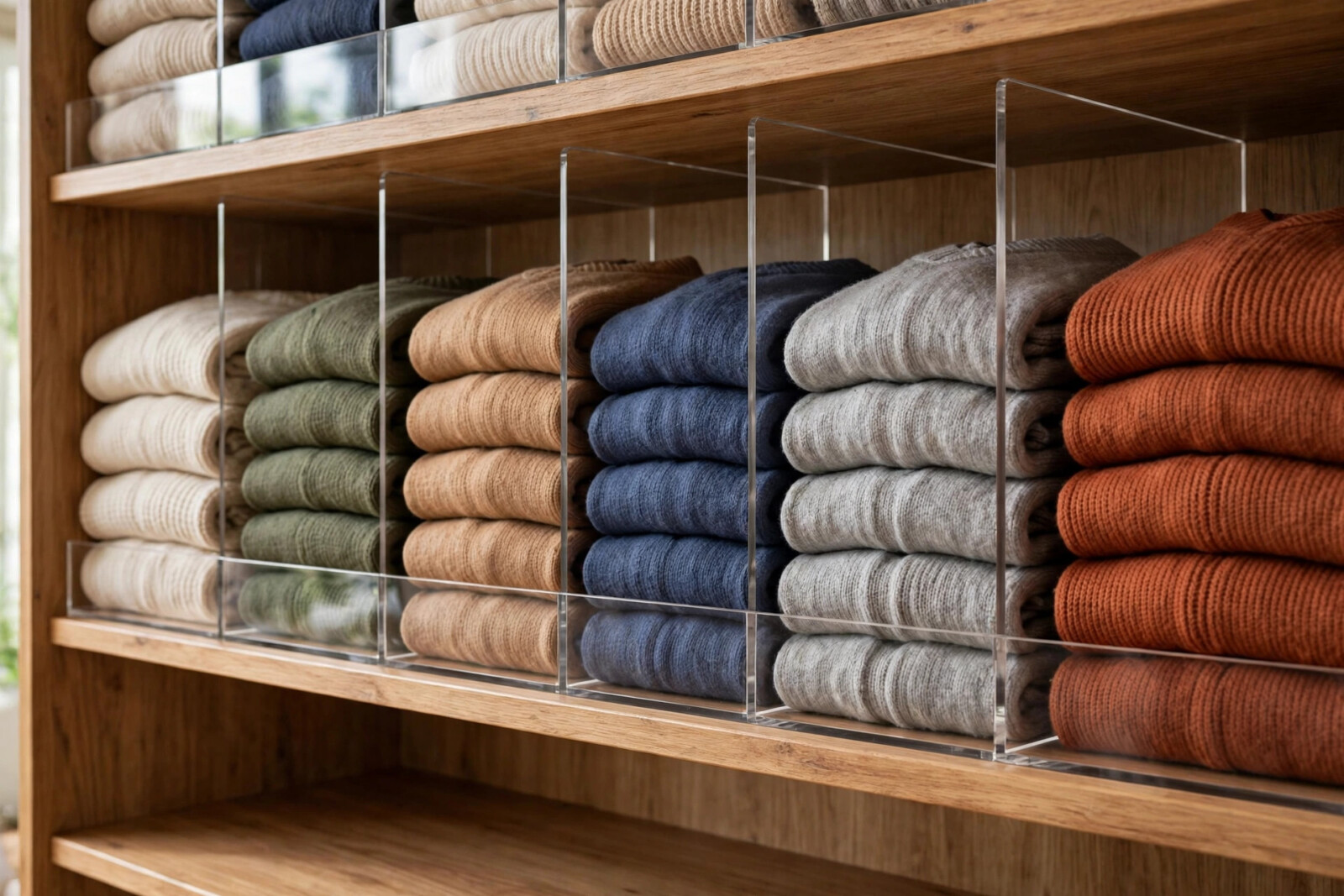
If your top shelf is one long dumping ground, shelf dividers ($10 to $15 for a set) or matching bins turn it into sections that stay put. One bin for sweaters, one for bags, one for hats — pull a bin down like a drawer instead of excavating a pile. Label the front of each bin; in a dim closet, a label beats memory every time. Uniform bins in one color make the shelf look built-in, and they stop the slow avalanche that buries the back of the shelf.
7. Build a Shoe System Off the Floor
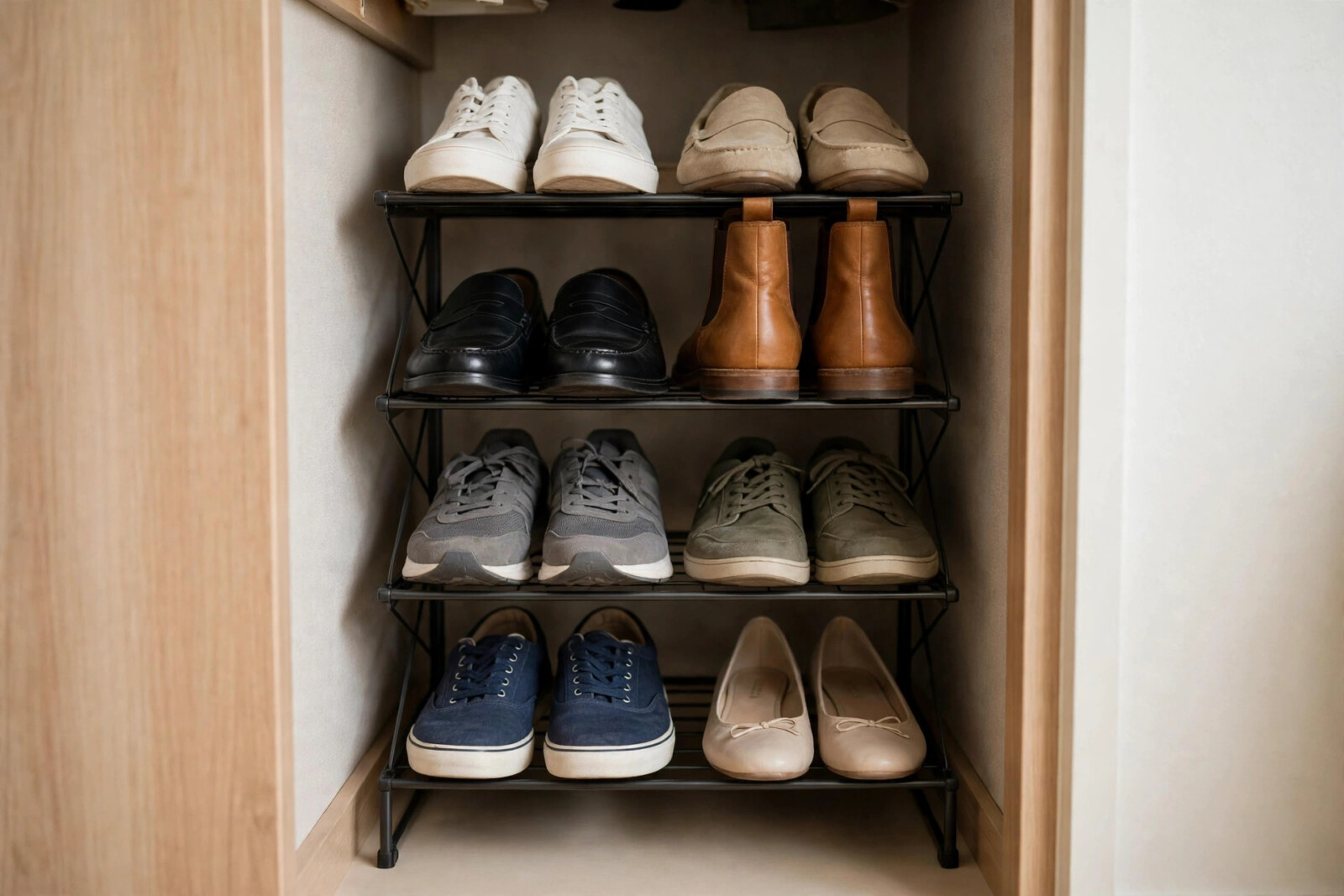
Shoes piled on the closet floor make the whole space feel chaotic and eat the room your hanging clothes need to breathe. A two-tier rack ($15 to $25) fits under short hanging sections, stackable clear boxes ($20 to $30 a set) protect good shoes and let you see every pair, and an over-door shoe organizer moves the whole collection to the door. Keep daily pairs on the rack and occasion shoes in boxes up high. Rule of thumb: if you cannot see a pair, you will not wear it.
8. Move Off-Season Clothes Out of the Closet Entirely
Your closet should hold this season’s wardrobe, not a year-round archive. Off-season clothes in labeled bins under the bed free an astonishing amount of rod and shelf space — our under-bed storage ideas show how to store them flat and dust-free. Vacuum bags ($15 to $20 a pack) shrink bulky winter coats and sweaters to a fraction of their size. Swap twice a year, and each swap is a natural mini-edit: anything you did not miss for six months is a donation candidate.
9. Hang Smarter With Cascading Tricks

When rod space is tight, hang vertically: cascading hanger hooks or soda-tab tricks let one hanger hang from another, turning horizontal rod space into vertical drops. Multi-pants hangers ($10 for a pack) hold five pairs in the space of one. Use these for lightweight items — blouses, camisoles, pants — and keep heavy coats on their own hangers so rods and hooks do not bend. Cascading works best in the double-rod sections from Idea 2, where the drops stay short and nothing drags on the floor.
10. Add Light So You Can See What You Own
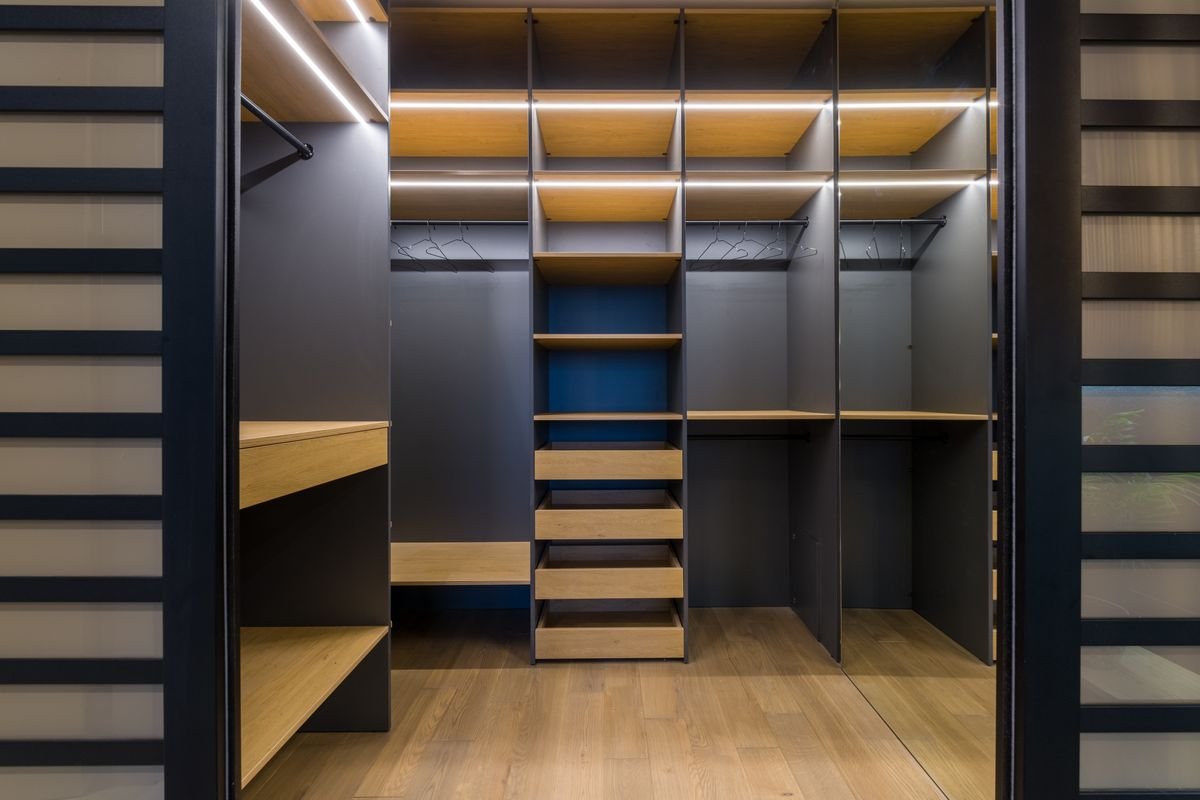
Small closets are caves, and in a cave, clothes at the back might as well not exist. A battery LED strip or motion-sensor light bar ($10 to $18, adhesive-mounted, renter-friendly) changes everything: you see colors accurately, find items in seconds, and notice when a section starts sliding into mess. Light also makes a small closet feel bigger and more boutique than basic. It is the cheapest “renovation” on this list and the one people rave about most.
11. Create Zones and Keep Categories Together
A doubled closet still fails if finding things is a treasure hunt. Assign zones: work clothes together, weekend clothes together, one section per person in a shared closet. Within zones, a loose color order (light to dark) makes outfits faster to build and gaps easier to spot. Keep the clothes you wear most at eye level and front; formal and rare pieces go to the ends and the back. Zoning takes ten minutes after your edit and costs nothing — it is pure system.

12. Match the Closet to the Bedroom System

A closet works best as part of the bedroom, not a separate universe. Dresser drawers take folded categories (underwear, tees, workout clothes), the closet takes hanging and shelved items, and the nightstand zone stays clear — the same division of labor in our small bedroom storage ideas for a calm, clutter-free room. When each storage spot has one job, nothing overflows into piles on chairs. If the closet is still straining after your edit, the honest fix is usually moving one category — like bulky sweaters — to a dresser drawer, not buying more organizers.
13. Do a 10-Minute Seasonal Reset
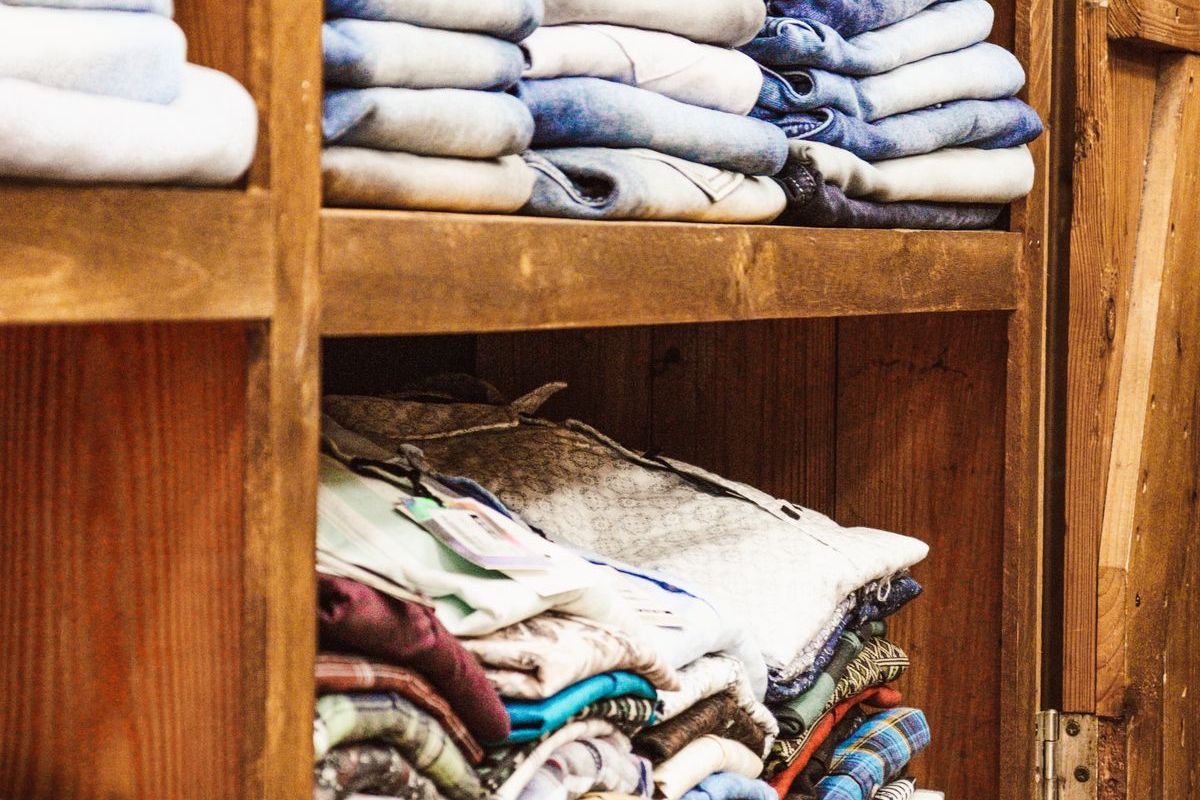
Systems drift; resets fix drift. Twice a year, when you swap seasonal clothes, spend ten minutes: re-hang anything on the floor, return strays to their zones, check bins and labels, and pull anything unworn for donation. That small appointment is what separates closets that stay doubled from closets that slowly re-collapse. Put it on the calendar with the season change and it never becomes a project again.
What to Avoid
Avoid buying an expensive closet system before doing the free edit — most “I need a bigger closet” problems are really “I own too much and hang it badly” problems. Avoid one long rod at dress height for everything; it is the default layout and the biggest space-waster there is. Avoid storing non-clothes clutter (luggage, boxes of random stuff) in prime closet space if any other home exists for it. Avoid wire shelves without liners for small items, which tip and slip through the gaps. And avoid overfilling after your makeover: a closet crammed back to 100 percent loses the calm you just built, usually within a month.
Small Closet Organization Ideas: FAQs
How can I double my closet space without remodeling? The three big moves: edit what you own, add a second hanging rod under your short clothes, and switch to slim hangers. Together they routinely double usable capacity in a standard reach-in closet for under $35 total. Then claim the door and the full height of the top shelf for the overflow categories like shoes and off-season items.
What is the best organizer for a very small closet? A hanging rod extender or tension second rod gives the most space per dollar, followed by slim hangers. After that, choose based on your overflow: over-door pockets for accessories, stackable boxes for shoes, bins for the top shelf. Avoid large multi-piece closet kits in tiny closets — they consume the space they promise to save.
How do two people share one small closet? Split it into strict zones — half the rods and shelves each — and keep categories together within each half. Share only the top shelf for seasonal storage. Matching slim hangers keep it looking unified, and the 80-percent-full rule matters twice as much: a shared closet at capacity becomes an argument, not a system.
Should I store off-season clothes in the closet or elsewhere? Elsewhere, if you can: labeled under-bed bins or vacuum bags in a storage corner keep the closet focused on what you actually wear now. If the closet is truly the only space, confine off-season items to the top shelf in bins, clearly labeled, so they never mix with the current rotation.
Conclusion
Your closet is probably not too small — it is just using one rod, thick hangers and a pile-based shoe system. Edit honestly, hang a second rod, slim down the hangers, light it up, and give every category a zone, and the same four walls will hold twice as much with room to breathe. Start with the free edit this weekend and the $20 hanger-and-rod upgrade next. Save these ideas to your organization board, and share them with a friend who swears she needs a walk-in to be happy.
Enjoying these ideas?
Get our free 7-Day Small Home Reset Checklist and one practical small-home idea every week.