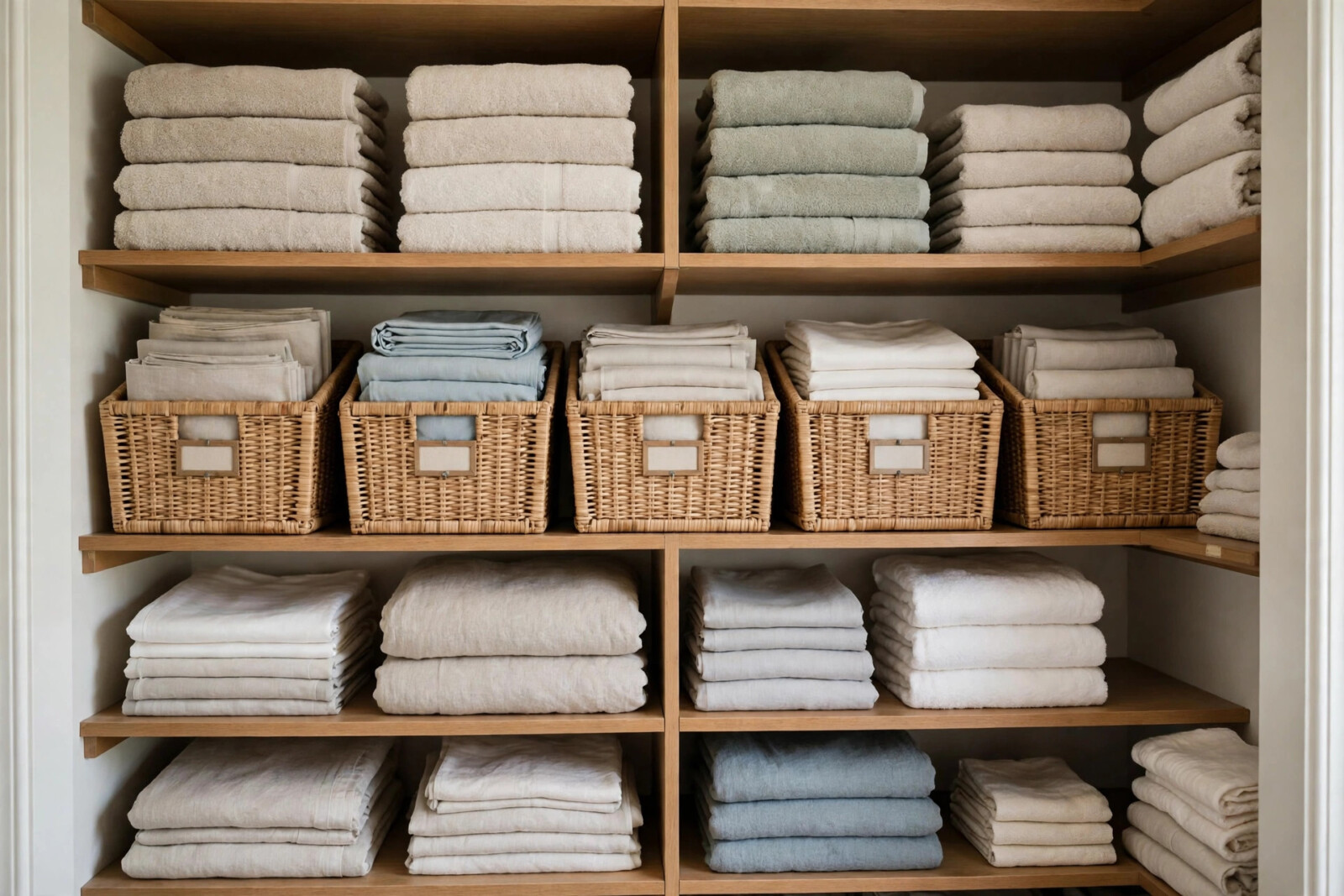
The linen closet is where good intentions go to avalanche. Towels get shoved in straight from the dryer, sheet sets separate and never reunite, and the shelf you organized in spring is a leaning tower by summer. The fix is not a bigger closet — it is a system simple enough to survive laundry day: every category folded the same way, stored in sets, labeled clearly, and given a shelf it never leaves. These linen closet organization ideas take one afternoon and $20 to $50 in basic supplies, and they work in a full hall closet, a single bathroom cabinet or even a spare dresser drawer.
1. Empty It Completely and Start Clean
Pull out every towel, sheet, blanket and random bottle hiding in the back. You cannot organize around the mess — you have to see what you own first. Wipe the shelves down while they are empty; linen closets collect dust and lint fast, and this is the reset moment our room-by-room deep cleaning checklist builds into every storage space in the house. Check for the forgotten extras that migrate here — expired medicines, old toiletries, mystery cords — and return them to their real homes or toss them. A clean, empty closet makes every next step obvious.
2. Sort Into Categories and Set Honest Limits
Group everything on the floor or bed: bath towels, hand towels, washcloths, sheet sets by bed size, blankets, and extras like table linens and guest supplies. Now set limits. Two bath towels per person plus two guest sets is plenty for most homes; three sheet sets per bed (one on, one in the wash, one spare) is the hotel standard. Stained, scratchy or threadbare linens become cleaning rags or donations. Most linen closets are 30 percent overflow — removing it is what makes the remaining space feel twice as big.
3. Store Sheet Sets Inside Their Own Pillowcase
This is the single most satisfying trick in linen storage. Fold the fitted sheet, flat sheet and one pillowcase, then tuck the whole set inside the second pillowcase. Every set becomes one neat, grab-able packet: no hunting for the matching pillowcase, no sets separating in the stack. Stand the packets upright in a row or stack them by bed size. When it is time to change the bed, you pull one packet and everything you need is in your hand. It takes one extra minute per set on laundry day and saves ten minutes of searching later.

4. Fold Towels One Way, Every Time
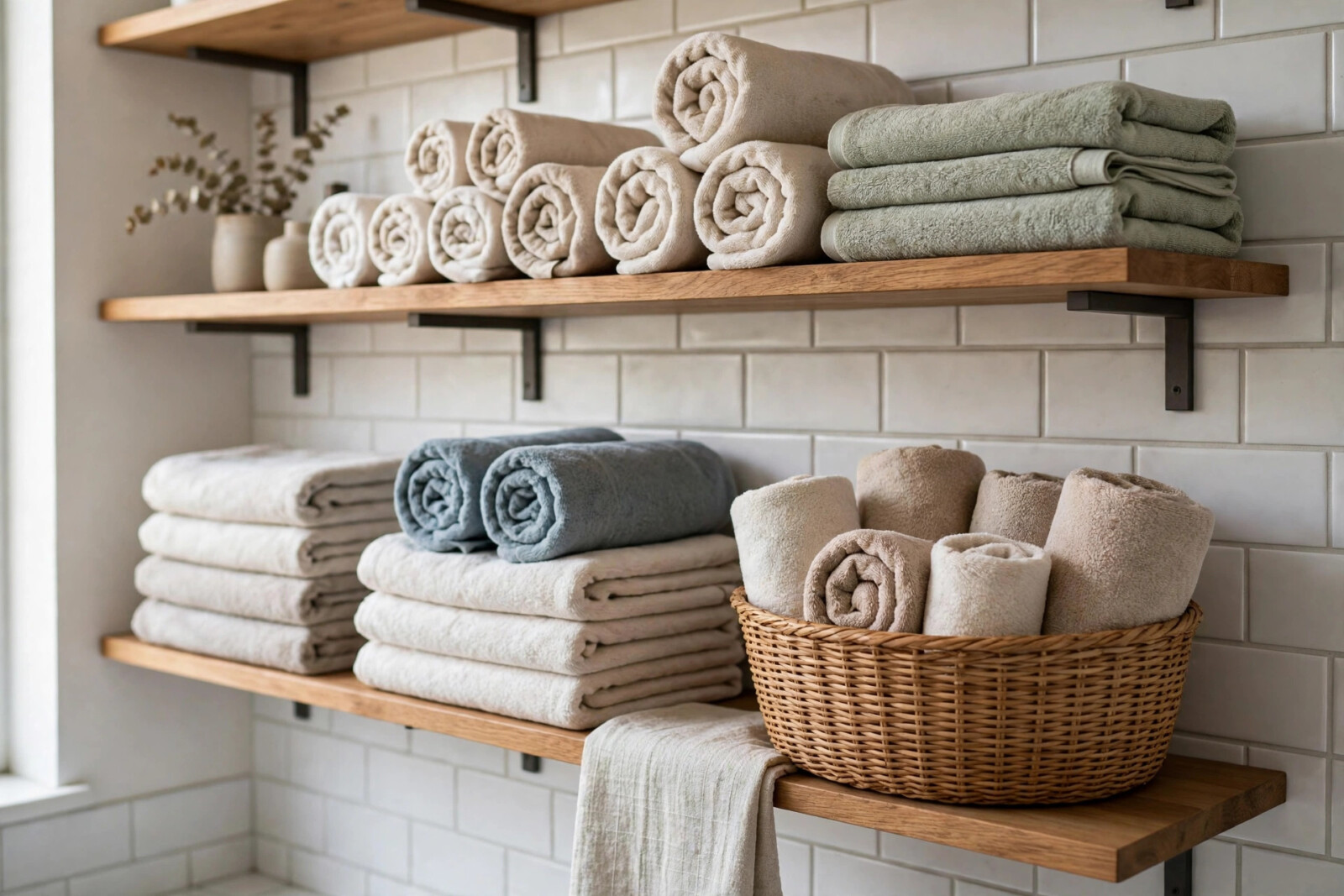
Towel stacks collapse because every towel is folded differently. Pick one fold — the simple tri-fold (fold into thirds lengthwise, then in half) fits most shelves and looks like a spa display — and use it for every towel, every time. Stack no more than four or five high; taller stacks lean and topple when you pull one from the middle. Roll towels instead if your shelves are deep and narrow — rolls never collapse and squeeze into odd spaces. Consistency is the whole secret: a stack folded one way stays a stack.
5. Give Every Shelf One Job
Assign each shelf a single category and never let them mix: top shelf for rarely used extras and off-season blankets, middle shelves for towels and sheet sets you reach for weekly, bottom shelf for heavy items and back-stock supplies. Daily items live between knee and eye level, where you can grab them with an armful of laundry. When every shelf has one job, anyone in the house can put laundry away correctly without asking — and that is what keeps a system alive after the first month.
6. Use Baskets and Bins for the Small Stuff
Washcloths, hand towels and small extras are what make linen closets look messy — they are too small to stack and too many to line up. Corral them in baskets or bins ($3 to $8 each at dollar and discount stores): one for washcloths, one for hand towels, one for cleaning cloths. Pull the whole basket down like a drawer, take what you need, slide it back. Matching baskets in one color make even a tiny closet look designed, and they stop small items from drifting across shelves and disappearing behind the towel stacks.
7. Label Every Shelf Edge and Basket
Labels are the difference between a closet that was organized once and a closet that stays organized. Label maker, chalk tags or simple printed labels ($5 to $15 for supplies) on each shelf edge and basket front: TOWELS, QUEEN SHEETS, GUEST, WASHCLOTHS. It feels like overkill for exactly one day — then a partner, kid or houseguest puts laundry away perfectly without a single question, and you are converted. Labels also police your limits: when the QUEEN SHEETS section is full, a new set means an old set leaves.
8. Add Shelf Dividers to Keep Stacks Upright
If your stacks still lean, slide-on shelf dividers ($10 to $16 for a set) act like bookends for linens, keeping each category in its lane. They are especially useful on long shelves where towels, sheets and blankets share one level. Acrylic or coated wire dividers need no tools and move whenever your categories change. Place one every 12 to 18 inches and the whole shelf holds its shape when you pull items out. This small purchase is what makes the closet still look organized in a quick photo six months later.
9. Use the Back of the Door and the Full Height
Linen closets have the same hidden zones as every small space: the door and the top foot of height. An over-door rack or clear-pocket organizer ($12 to $20) holds extras like pillow protectors, small toiletries for guests or the iron. A sturdy bin on the top shelf stores off-season blankets and extra pillows you touch twice a year. These are the same go-up-not-out principles behind our vertical storage ideas for walls you are not using — in a closet, height and door space are free storage most people never claim.

10. No Linen Closet? Create One From What You Have
Plenty of apartments have no linen closet at all — and the system still works, just distributed. A spare dresser drawer or an under-bed bin ($12 to $20) holds sheet sets in their pillowcases. A bathroom cabinet or an over-toilet shelf holds the towel rotation, exactly like the zones in our small bathroom storage ideas with no counter space. A lidded basket in the bedroom closet keeps guest linens together. The rule is the same: categories together, folded one way, labeled — the “closet” is wherever those three things happen.
11. Keep Extras and Back Stock Under Control
Extras are where linen closets go to die: the third set of guest towels, five spare blankets, a bag of hotel soaps. Give extras one bin and one shelf zone, clearly labeled, and cap it — when the bin is full, something leaves before anything new enters. Keep cleaning rags in their own small basket so they never mix with guest linens. Once or twice a year, do a five-minute extras audit: anything untouched since the last audit gets donated. Back stock should serve the household, not archive its shopping history.
12. Finish With a Laundry-Day Rule That Protects the System
Every system needs one rule for the moment it is most likely to break — and here that moment is laundry day, when clean linens come back warm and get shoved wherever they fit. The rule: linens go back folded the standard way, in their labeled spot, the same day they are washed. No “temporary” stacks on top, no sets split across shelves. It takes three extra minutes and it is the entire reason some linen closets stay neat for years while others collapse in a month. Protect the system at its weakest moment and it will basically run itself.
What to Avoid
Avoid folding towels and sheets however they land — mixed folds are the number one cause of collapsing stacks. Avoid storing sheet sets as loose pieces; separated sets waste more time than every other linen problem combined. Avoid keeping medicines and cleaning chemicals in the linen closet if kids can reach them, and avoid storing linens even slightly damp — that musty smell is mildew starting, and it transfers to everything on the shelf. Avoid buying baskets and dividers before you sort and set limits; containers bought for clutter you are about to donate are wasted money. And avoid the top-shelf graveyard habit: if you cannot name what is in a bin, it is probably safe to donate its contents.
Frequently Asked Questions
How many towels and sheet sets do I actually need? For most households: two bath towels per person (one in use, one in the wash), plus one guest set of two. For sheets, two to three sets per bed — one on the bed, one ready, one spare at most. Hotels run lean on purpose: fewer sets means faster laundry turnover and a closet that never overflows.
What is the best way to fold a fitted sheet for storage? Tuck each corner into the next to make a flat-ish rectangle, fold in the elastic edges to square it off, then fold into thirds. It will not be perfect — it does not need to be, because the pillowcase trick hides it: fold the fitted sheet small enough to slide into the set’s pillowcase packet and it stays neat forever.
How do I organize a very small linen closet? Shrink the inventory first (Idea 2’s limits matter twice as much), then go vertical: shelf dividers, stackable baskets for small items, and the door for extras. Store only weekly-use linens inside; move off-season blankets and spare bedding to an under-bed bin. A small closet with strict limits beats a big closet with none.
How do I keep stored linens smelling fresh? Never store them damp, keep the closet door cracked or vented if humidity is an issue, and tuck a dryer sheet, cedar block or lavender sachet ($4 to $8) on each shelf. Wash stored linens every few months even if unused — fabric absorbs stale air over time. If something already smells musty, rewash with a cup of white vinegar in the rinse cycle.
Where should I store linens if I have no linen closet? Split the system by room: towels in the bathroom (cabinet, over-toilet shelf or rolling cart), sheet sets in a bedroom dresser drawer or under-bed bin near the bed they belong to, guest linens in one labeled basket in a closet. Same folds, same labels, same categories — the storage spots change, the system does not.
Conclusion
A linen closet stays neat when the system is simpler than the mess: sort honestly, fold everything one way, keep sheet sets together in their pillowcases, label every shelf, and let laundry day put things back where the labels say. One afternoon builds it; three extra minutes per wash protects it. Save this guide to your organization board before your next laundry day, and share it with a friend whose linen closet avalanches every time the door opens.